
Bald Eagle
Haliaeetus leucocephalus
Bald Eagles are iconic raptors and a conservation success story in Oregon, with healthy populations throughout the state, particularly near large bodies of water. While their plumage is identical in adulthood, male and female Bald Eagles exhibit sexual dimorphism primarily in size, with females being noticeably larger and heavier than males.
Male Bald Eagle
Size: Males are the smaller of the two sexes.
Length: Approximately 30-34 inches (76-86 cm)
Wingspan: Around 6-7 feet (1.8-2.1 meters)
Weight: Typically 7-10 pounds (3.2-4.5 kg)
Plumage (Adult): Identical to the female adult.
Head and Tail: Striking pure white head and tail.
Body and Wings: Dark brown to black body and wings.
Beak: Large, hooked, bright yellow beak.
Eyes: Bright yellow eyes.
Legs and Feet: Yellow legs and powerful yellow feet with large, black talons.
Voice: A series of high-pitched chirps and whistles, often described as a "laughing" or "peeping" sound.
Female Bald Eagle
Size: Females are significantly larger and more robust than males. This size difference is often the most reliable way to distinguish sexes when observing pairs.
Length: Approximately 35-37 inches (89-94 cm)
Wingspan: Around 7-8 feet (2.1-2.4 meters), with some exceptionally large individuals reaching over 8 feet.
Weight: Typically 10-14 pounds (4.5-6.4 kg), with some individuals even heavier.
Plumage (Adult): Identical to the male adult.
Head and Tail: Pure white head and tail.
Body and Wings: Dark brown to black body and wings.
Beak: Large, hooked, bright yellow beak.
Eyes: Bright yellow eyes.
Legs and Feet: Yellow legs and powerful yellow feet with large, black talons.
Voice: Similar calls to the male, but often slightly lower in pitch and harsher due to their larger size.
Key Characteristics (Both Sexes - Adult)
Distinctive Plumage: The classic white head and tail contrasting with a dark brown body are unmistakable. It takes about 4-5 years for a Bald Eagle to achieve this full adult plumage.
Powerful Hunters: Bald Eagles are opportunistic predators, feeding primarily on fish, but also taking waterfowl, small mammals, and carrion.
Habitat in Oregon: They are found throughout Oregon, especially along major rivers (like the Columbia and Willamette), lakes, reservoirs, and coastal areas. Nests are typically large stick structures built in tall trees near water.
Flight: Powerful and graceful flight, often soaring on thermal currents. When actively hunting, they perform strong wing beats followed by glides.
Juvenile and Immature Bald Eagles
It's important to note that juvenile and immature Bald Eagles look very different from adults and from each other at different stages of their development (which lasts up to 5 years). They are typically mottled brown and white, with varying amounts of white on the underparts and wings. Their heads are dark, and their beaks and eyes are darker, gradually lightening to yellow as they mature. This can lead to misidentification, as they might be confused with Golden Eagles by inexperienced observers.
Male Bald Eagle
Size: Males are the smaller of the two sexes.
Length: Approximately 30-34 inches (76-86 cm)
Wingspan: Around 6-7 feet (1.8-2.1 meters)
Weight: Typically 7-10 pounds (3.2-4.5 kg)
Plumage (Adult): Identical to the female adult.
Head and Tail: Striking pure white head and tail.
Body and Wings: Dark brown to black body and wings.
Beak: Large, hooked, bright yellow beak.
Eyes: Bright yellow eyes.
Legs and Feet: Yellow legs and powerful yellow feet with large, black talons.
Voice: A series of high-pitched chirps and whistles, often described as a "laughing" or "peeping" sound.
Female Bald Eagle
Size: Females are significantly larger and more robust than males. This size difference is often the most reliable way to distinguish sexes when observing pairs.
Length: Approximately 35-37 inches (89-94 cm)
Wingspan: Around 7-8 feet (2.1-2.4 meters), with some exceptionally large individuals reaching over 8 feet.
Weight: Typically 10-14 pounds (4.5-6.4 kg), with some individuals even heavier.
Plumage (Adult): Identical to the male adult.
Head and Tail: Pure white head and tail.
Body and Wings: Dark brown to black body and wings.
Beak: Large, hooked, bright yellow beak.
Eyes: Bright yellow eyes.
Legs and Feet: Yellow legs and powerful yellow feet with large, black talons.
Voice: Similar calls to the male, but often slightly lower in pitch and harsher due to their larger size.
Key Characteristics (Both Sexes - Adult)
Distinctive Plumage: The classic white head and tail contrasting with a dark brown body are unmistakable. It takes about 4-5 years for a Bald Eagle to achieve this full adult plumage.
Powerful Hunters: Bald Eagles are opportunistic predators, feeding primarily on fish, but also taking waterfowl, small mammals, and carrion.
Habitat in Oregon: They are found throughout Oregon, especially along major rivers (like the Columbia and Willamette), lakes, reservoirs, and coastal areas. Nests are typically large stick structures built in tall trees near water.
Flight: Powerful and graceful flight, often soaring on thermal currents. When actively hunting, they perform strong wing beats followed by glides.
Juvenile and Immature Bald Eagles
It's important to note that juvenile and immature Bald Eagles look very different from adults and from each other at different stages of their development (which lasts up to 5 years). They are typically mottled brown and white, with varying amounts of white on the underparts and wings. Their heads are dark, and their beaks and eyes are darker, gradually lightening to yellow as they mature. This can lead to misidentification, as they might be confused with Golden Eagles by inexperienced observers.
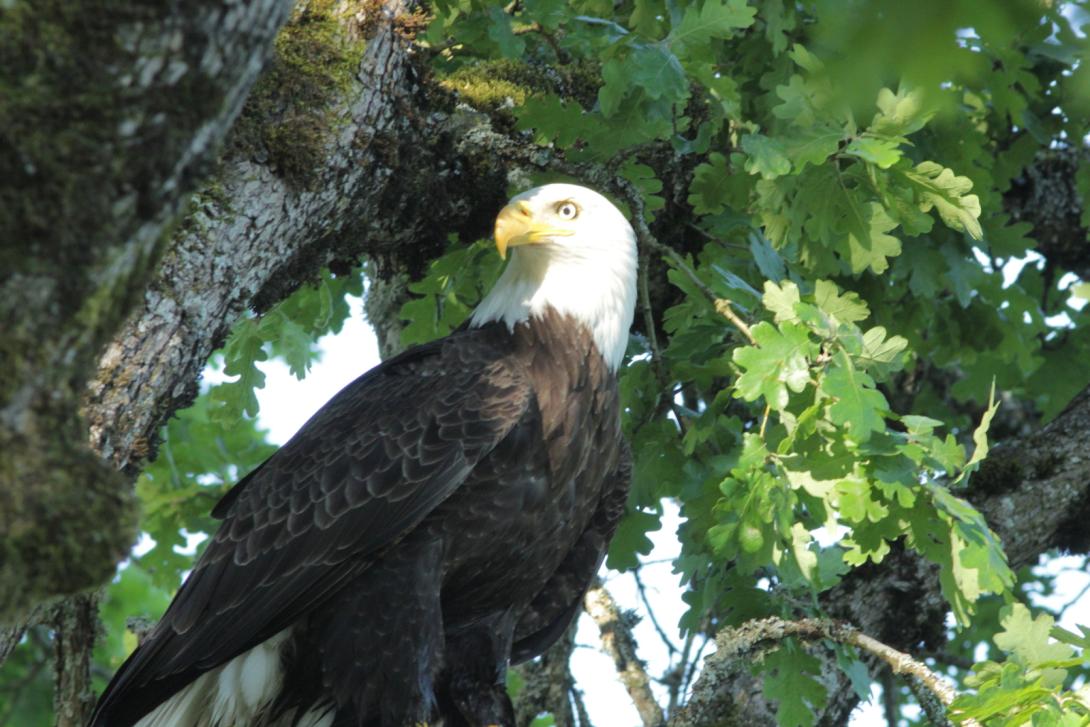
Taken by Steve Bennett at Willamette View on
.
Bald Eagle
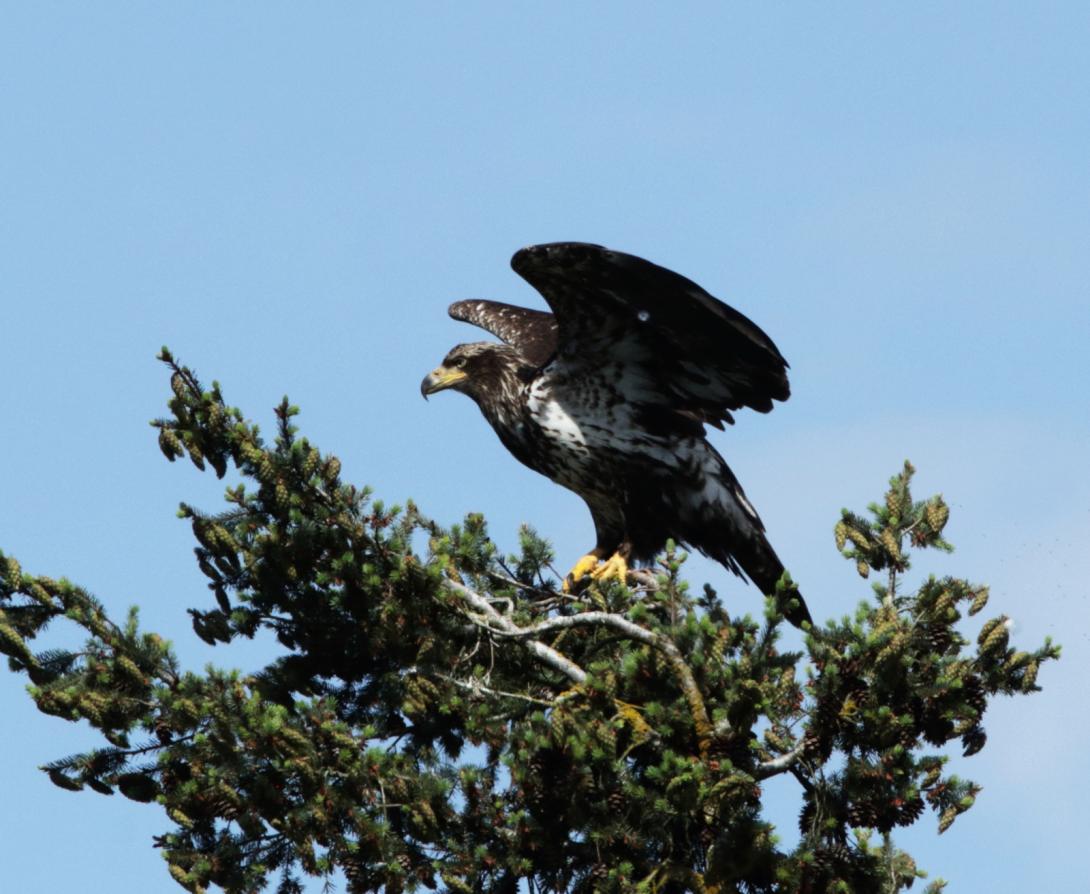
Taken by Steve Bennett at Willamette View on
.
Immature (1st year) Bald Eagle