
Black-headed Grosbeak
Pheucticus melanocephalus
Black-headed Grosbeaks are beautiful and melodious birds that are common summer residents throughout much of Oregon, particularly in deciduous and mixed forests, riparian woodlands, suburban gardens, and orchards. Their striking appearance and rich, complex song make them a delightful presence.
Male Black-headed Grosbeak (Breeding Plumage - Spring/Summer in Oregon):
Head: The most defining feature is their solid, glossy black head, which includes the face, crown, and nape.
Throat and Upper Breast: This black extends down to the throat and upper breast, creating a distinct "hood."
Underparts: Below the black, the breast and belly transition to a rich, warm cinnamon-orange or rusty orange color. This orange often extends onto the flanks. The undertail coverts are typically white.
Back: The back is a mix of black and white, often appearing streaky or mottled black and white.
Wings: Boldly patterned with black and large white patches. They have two prominent white wing bars, and a large patch of white at the base of the primaries (flight feathers) that is very noticeable in flight.
Tail: Black with noticeable white spots on the outer tail feathers.
Bill: A very distinctive feature of all grosbeaks: a large, conical, very thick, and pale (often whitish or horn-colored) bill, perfectly adapted for cracking seeds.
Song: Males are renowned for their beautiful, rich, hurried, and melodious song, often described as a "robin-like song with a purpose," delivered from a prominent perch.
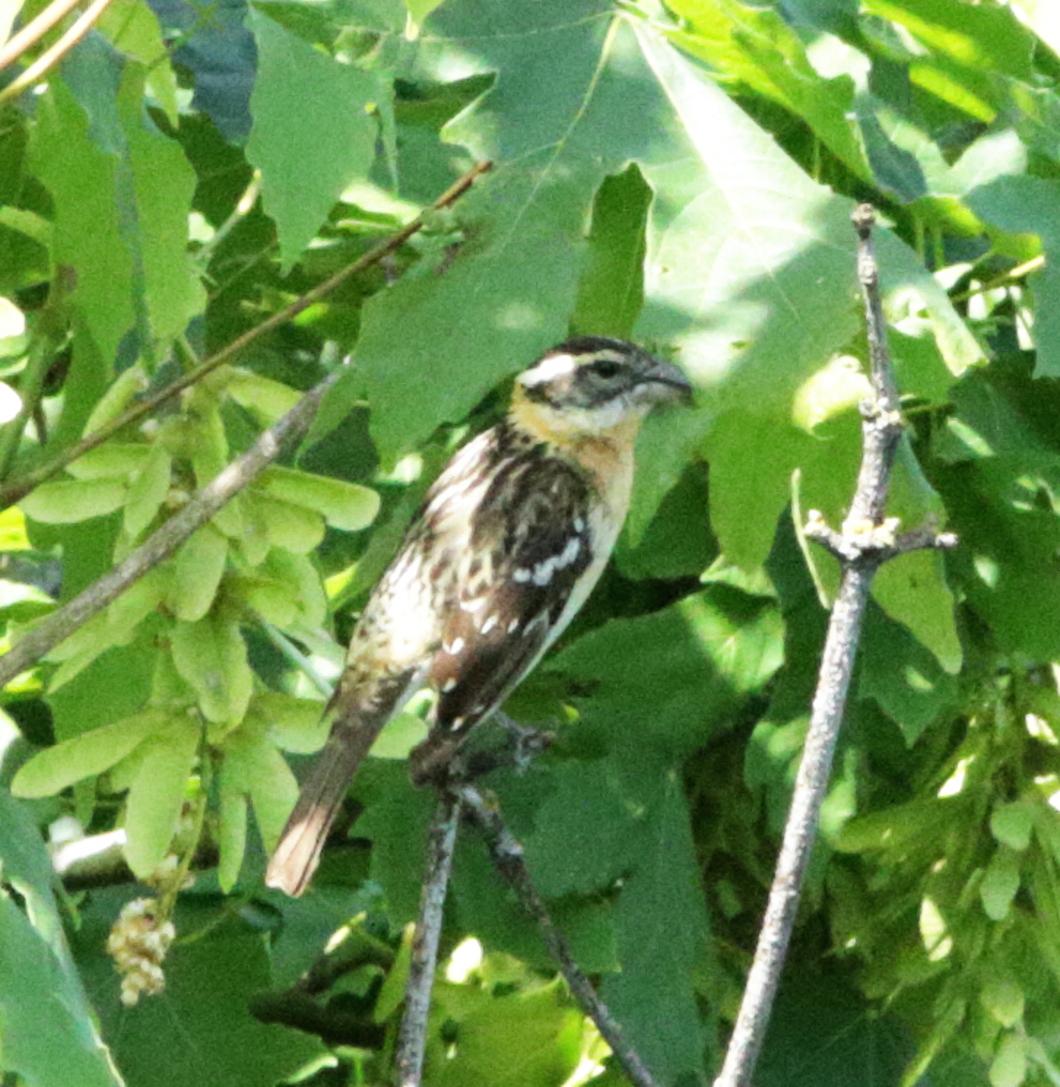
Female Black-headed Grosbeak (Breeding Plumage - Spring/Summer in Oregon):
Overall Color: Females are much more subdued and patterned than males, designed for camouflage on the nest. They are a mix of browns, buffs, and whites, often with distinct streaking.
Head: Lacks the male's black hood. The head is typically brown with distinct streaking. They have a prominent white supercilium (eyebrow stripe) and a dark eye line. There's often a pale median stripe on the crown.
Throat and Underparts: The throat is typically white or buffy white, and the breast and belly are a dull cinnamon-buff or tawny color, often with heavy dark brown streaking on the breast and flanks.
Back: The back is brown with distinct dark streaking.
Wings: Dark brown with two buffy-white or whitish wing bars. The white patches at the base of the primaries are still present but are usually less extensive and duller than on the male.
Tail: Dark brown with duller white spots on the outer tail feathers.
Bill: The same large, thick, conical, pale bill as the male.
Song: Females also sing, though their song is often softer and less frequent than the male's.
Key Identification Points for both sexes in Oregon:
Large, Thick, Pale Bill: This is the most consistent feature across all ages and sexes. If you see a medium-sized songbird with a huge, pale, conical bill, think grosbeak.
Male's Black Head + Orange Breast + Black & White Wings: This combination is unmistakable.
Female's Streaky Brown + Pale Eyebrow + Large Bill: The overall streaky brown plumage with a clear supercilium and the signature large bill helps identify the female.
Habitat: Look for them in areas with a good mix of trees and shrubs, including suburban yards with feeders. They are particularly fond of mature deciduous trees.
Song: Learning the male's rich, warbling song is often the easiest way to detect their presence.
Black-headed Grosbeaks are omnivorous, eating a variety of insects (including large ones like beetles and caterpillars), seeds, and fruits. They are frequent visitors to bird feeders, especially if sunflower seeds are offered. They arrive in Oregon in late April to May and typically depart for their wintering grounds in Mexico in September.
Male Black-headed Grosbeak (Breeding Plumage - Spring/Summer in Oregon):
Head: The most defining feature is their solid, glossy black head, which includes the face, crown, and nape.
Throat and Upper Breast: This black extends down to the throat and upper breast, creating a distinct "hood."
Underparts: Below the black, the breast and belly transition to a rich, warm cinnamon-orange or rusty orange color. This orange often extends onto the flanks. The undertail coverts are typically white.
Back: The back is a mix of black and white, often appearing streaky or mottled black and white.
Wings: Boldly patterned with black and large white patches. They have two prominent white wing bars, and a large patch of white at the base of the primaries (flight feathers) that is very noticeable in flight.
Tail: Black with noticeable white spots on the outer tail feathers.
Bill: A very distinctive feature of all grosbeaks: a large, conical, very thick, and pale (often whitish or horn-colored) bill, perfectly adapted for cracking seeds.
Song: Males are renowned for their beautiful, rich, hurried, and melodious song, often described as a "robin-like song with a purpose," delivered from a prominent perch.
Female Black-headed Grosbeak (Breeding Plumage - Spring/Summer in Oregon):
Overall Color: Females are much more subdued and patterned than males, designed for camouflage on the nest. They are a mix of browns, buffs, and whites, often with distinct streaking.
Head: Lacks the male's black hood. The head is typically brown with distinct streaking. They have a prominent white supercilium (eyebrow stripe) and a dark eye line. There's often a pale median stripe on the crown.
Throat and Underparts: The throat is typically white or buffy white, and the breast and belly are a dull cinnamon-buff or tawny color, often with heavy dark brown streaking on the breast and flanks.
Back: The back is brown with distinct dark streaking.
Wings: Dark brown with two buffy-white or whitish wing bars. The white patches at the base of the primaries are still present but are usually less extensive and duller than on the male.
Tail: Dark brown with duller white spots on the outer tail feathers.
Bill: The same large, thick, conical, pale bill as the male.
Song: Females also sing, though their song is often softer and less frequent than the male's.
Key Identification Points for both sexes in Oregon:
Large, Thick, Pale Bill: This is the most consistent feature across all ages and sexes. If you see a medium-sized songbird with a huge, pale, conical bill, think grosbeak.
Male's Black Head + Orange Breast + Black & White Wings: This combination is unmistakable.
Female's Streaky Brown + Pale Eyebrow + Large Bill: The overall streaky brown plumage with a clear supercilium and the signature large bill helps identify the female.
Habitat: Look for them in areas with a good mix of trees and shrubs, including suburban yards with feeders. They are particularly fond of mature deciduous trees.
Song: Learning the male's rich, warbling song is often the easiest way to detect their presence.
Black-headed Grosbeaks are omnivorous, eating a variety of insects (including large ones like beetles and caterpillars), seeds, and fruits. They are frequent visitors to bird feeders, especially if sunflower seeds are offered. They arrive in Oregon in late April to May and typically depart for their wintering grounds in Mexico in September.
Taken by Steve Bennett at Willamette View on
.
Female Black-headed Grosbeak