
Black-throated Gray Warbler
Setophaga nigrescens
Black-throated Gray Warblers are striking and elegant warblers found throughout Oregon during their breeding season, primarily in dry oak and mixed conifer-hardwood forests, chaparral, and juniper woodlands. They are known for their distinctive buzzy song and often skulk in the mid-canopy or understory.
Male Black-throated Gray Warblers in Oregon (Breeding Plumage):
Head and Face: The most striking feature is a bold, intricate black-and-white pattern on the head.
They have a solid black cap.
A broad black mask extends from the bill through the eye and covers the ear coverts (cheeks).
This black mask is sharply outlined by prominent white stripes: a clear white supercilium (eyebrow) above the eye, and a distinct white stripe that extends from below the eye, curving around the cheek.
A small but noticeable yellow spot is present just in front of the eye (at the lores), offering a subtle splash of color in an otherwise monochromatic face.
Throat: A prominent, solid black throat and upper breast patch.
Underparts: The belly is clean white, with strong black streaks along the flanks (sides).
Upperparts: The back is a medium gray, often with fine black streaking.
Wings: Dark wings with two clear white wing bars.
Tail: Dark tail feathers, with white patches on the outer tail feathers, especially noticeable in flight or when the tail is fanned.
Bill: A thin, pointed bill, dark on top and paler on the bottom.
Song: Their song is a distinctive, buzzy, often rising and falling series of notes, sometimes described as "zee-zee-zee-zoo-zee" or "zeedle-zeedle-zeedle-zeet-chee."
Female Black-throated Gray Warblers in Oregon (Breeding Plumage):
Overall: Females are similar to males but are duller and have less extensive black patterning.
Head and Face:
The cap is dark gray rather than solid black.
The facial mask is also dark gray, not as intensely black as the male's, and the contrast with the white stripes may be slightly less stark. The white supercilium and sub-ocular stripe are still present and distinctive.
The yellow spot in front of the eye is usually present but may be fainter.
Throat: This is the most variable part for females. The black throat patch of the male is usually reduced or entirely absent. Instead, the throat is typically white or grayish-white, often with some dusky streaking or a dusky wash, especially on the upper breast where the male would have solid black.
Underparts: The belly is white with fewer and less prominent black streaks on the flanks compared to the male.
Upperparts: The back is grayish, often with less distinct streaking than the male.
Wings: Two white wing bars are present, similar to the male, but perhaps slightly less bright.
Tail: Dark tail with white outer tail feathers.
Key Identification Points for both sexes in Oregon:
"Black-throated Gray" Look: The combination of gray, black, and white is their hallmark.
Yellow Lores (Spot in front of eye): A tiny but consistent feature that helps distinguish them from other similar-looking warblers.
White Face Stripes: The bold white lines outlining the dark cheek patch are diagnostic.
Habitat: Look for them in dry, open woodlands, especially those with oak, ponderosa pine, or juniper, often with a shrubby understory.
Song: Learning their buzzy song is crucial for detection, as they can be hard to spot in dense foliage.
Black-throated Gray Warblers are agile gleaners, typically foraging for insects in the mid-canopy and understory. They are summer residents in Oregon, arriving in April and departing for wintering grounds in Mexico by late August to early September.
Male Black-throated Gray Warblers in Oregon (Breeding Plumage):
Head and Face: The most striking feature is a bold, intricate black-and-white pattern on the head.
They have a solid black cap.
A broad black mask extends from the bill through the eye and covers the ear coverts (cheeks).
This black mask is sharply outlined by prominent white stripes: a clear white supercilium (eyebrow) above the eye, and a distinct white stripe that extends from below the eye, curving around the cheek.
A small but noticeable yellow spot is present just in front of the eye (at the lores), offering a subtle splash of color in an otherwise monochromatic face.
Throat: A prominent, solid black throat and upper breast patch.
Underparts: The belly is clean white, with strong black streaks along the flanks (sides).
Upperparts: The back is a medium gray, often with fine black streaking.
Wings: Dark wings with two clear white wing bars.
Tail: Dark tail feathers, with white patches on the outer tail feathers, especially noticeable in flight or when the tail is fanned.
Bill: A thin, pointed bill, dark on top and paler on the bottom.
Song: Their song is a distinctive, buzzy, often rising and falling series of notes, sometimes described as "zee-zee-zee-zoo-zee" or "zeedle-zeedle-zeedle-zeet-chee."
Female Black-throated Gray Warblers in Oregon (Breeding Plumage):
Overall: Females are similar to males but are duller and have less extensive black patterning.
Head and Face:
The cap is dark gray rather than solid black.
The facial mask is also dark gray, not as intensely black as the male's, and the contrast with the white stripes may be slightly less stark. The white supercilium and sub-ocular stripe are still present and distinctive.
The yellow spot in front of the eye is usually present but may be fainter.
Throat: This is the most variable part for females. The black throat patch of the male is usually reduced or entirely absent. Instead, the throat is typically white or grayish-white, often with some dusky streaking or a dusky wash, especially on the upper breast where the male would have solid black.
Underparts: The belly is white with fewer and less prominent black streaks on the flanks compared to the male.
Upperparts: The back is grayish, often with less distinct streaking than the male.
Wings: Two white wing bars are present, similar to the male, but perhaps slightly less bright.
Tail: Dark tail with white outer tail feathers.
Key Identification Points for both sexes in Oregon:
"Black-throated Gray" Look: The combination of gray, black, and white is their hallmark.
Yellow Lores (Spot in front of eye): A tiny but consistent feature that helps distinguish them from other similar-looking warblers.
White Face Stripes: The bold white lines outlining the dark cheek patch are diagnostic.
Habitat: Look for them in dry, open woodlands, especially those with oak, ponderosa pine, or juniper, often with a shrubby understory.
Song: Learning their buzzy song is crucial for detection, as they can be hard to spot in dense foliage.
Black-throated Gray Warblers are agile gleaners, typically foraging for insects in the mid-canopy and understory. They are summer residents in Oregon, arriving in April and departing for wintering grounds in Mexico by late August to early September.
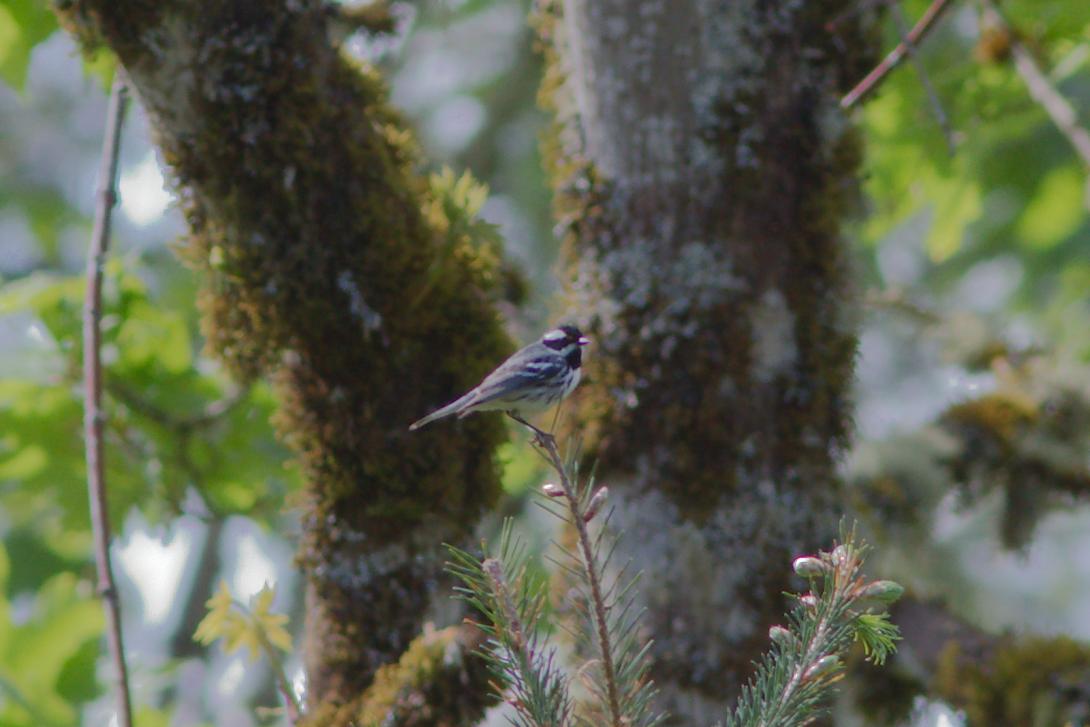
Taken by Steve Bennett at Mt. Talbert, Oregon on
.
Black-throated Gray Warbler