
Canada Goose
Branta canadensis
Male and female Canada geese are visually very similar, with the main difference being size; males are typically larger than females. Both sexes have a black head and neck, white cheek patches, and gray-brown bodies. They also share the same plumage, making visual identification challenging according to Ducks Unlimited.
Here's a more detailed breakdown:
• Size: Males, also known as ganders, are generally larger than females, also known as geese. The size difference can be subtle, but males tend to have a more robust build.
• Plumage: Both males and females have a black head and neck, with distinctive white cheek patches extending under the chin and up the sides of the head. Their bodies are gray-brown, with darker black tails, feet, legs, and bills.
• Behavior: While both parents participate in raising the young, males are often more involved in territorial defense and acting as sentinels. They are known for their loud honking and aggressive behavior when protecting their nests or young.
• Subspecies: There can be some variation in size and coloration among different Canada goose subspecies, but the general appearance remains consistent.
Here's a more detailed breakdown:
• Size: Males, also known as ganders, are generally larger than females, also known as geese. The size difference can be subtle, but males tend to have a more robust build.
• Plumage: Both males and females have a black head and neck, with distinctive white cheek patches extending under the chin and up the sides of the head. Their bodies are gray-brown, with darker black tails, feet, legs, and bills.
• Behavior: While both parents participate in raising the young, males are often more involved in territorial defense and acting as sentinels. They are known for their loud honking and aggressive behavior when protecting their nests or young.
• Subspecies: There can be some variation in size and coloration among different Canada goose subspecies, but the general appearance remains consistent.
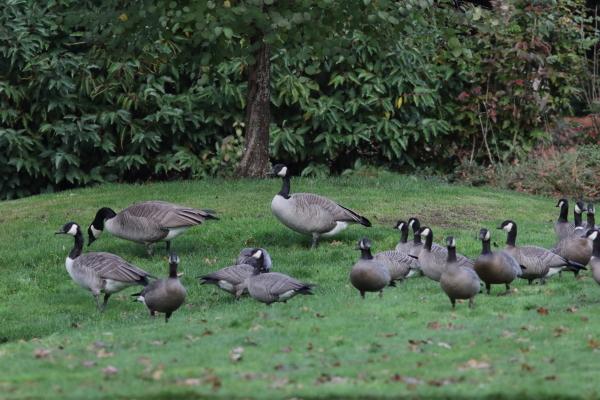
Taken by Steve Bennett at Willamette View on
.
Compare the size of the three Canada on the left to the smaller Cackling Geese to the right. In addition to the overall size difference (Canada are much larger that Cackling), note also the length of the necks and the color of the breasts of the birds.