
Caspian Tern
Hydroprogne caspia
Caspian Terns are the largest terns in the world, a regal presence in Oregon's coastal estuaries, large rivers (like the Columbia), and inland lakes. They are easily recognized by their massive, bright red bill and their deep, raspy calls.
However, when it comes to distinguishing between male and female Caspian Terns, it's important to note that they exhibit very little to no sexual dimorphism in their plumage. This means that adult males and females look virtually identical in their feather coloration and patterns, making them extremely difficult to sex reliably in the field based on visual appearance alone.
General Appearance of Adult Caspian Terns (both sexes) - during summer (July), they would primarily be in breeding plumage in Oregon:
Size and Build: Large and robust, about the size of a crow or a small gull. They have a powerful body, a relatively large head, and a very thick, heavy bill.
Plumage (Breeding/Summer):
Head: A prominent, solid black cap that extends from the forehead to just below the eye and covers the nape. This cap can sometimes be slightly raised, giving a subtle crest.
Upperparts: Pale gray mantle (back and upperwings).
Underparts: Clean white throat, breast, belly, flanks, rump, and tail.
Wingtips (underside): When in flight, the underside of the outer primary feathers appears dark gray or blackish, contrasting with the paler underwing coverts.
Tail: White, with only a shallow fork (less deeply forked than many other terns).
Plumage (Non-breeding/Winter):
In non-breeding plumage (present in fall/winter), the black cap recedes and becomes mottled or streaked with white and gray, giving a "salt and pepper" appearance to the crown.
Bill: The most striking feature: a massive, stout, bright coral red bill, often with a dusky or dark gray colored tip.
Legs and Feet: Blackish.
Eyes: Dark.
**Subtle Differences (Males vs. Females):**
1. Size:
Males average slightly larger and heavier than females. This difference can sometimes be noticeable when a mated pair is standing side-by-side, where the male might appear a bit more robust or have a proportionally larger head and bill.
However, there is considerable overlap in size between individuals, making it difficult to definitively sex a single bird based on size alone. Studies on other terns have shown that bill and head length are often the most sexually dimorphic measurements, but these differences are typically small in percentage.
2. Bill Proportions:
Following the general size trend, males may have a slightly larger or deeper bill; compared to females.
3. Behavior (especially during breeding season, common in Oregon):
Courtship Feeding: During courtship, the male often performs a "fish flight," carrying a fish over the colony or near a female. He then lands and offers the fish to the female. Courtship feeding (male feeding female) is a strong and often definitive indicator of sex in the field.
Nest Building: Both sexes help build the nest (a shallow scrape on the ground, often lined with debris). Males may bring more material.
Incubation and Parental Care: Both parents share incubation duties (typically 1-3 eggs) for about 20-28 days. Females may do slightly more incubation. Both parents bring food for the chicks.
Territoriality: Males tend to be more aggressive in defending the nest and colony from intruders.
However, when it comes to distinguishing between male and female Caspian Terns, it's important to note that they exhibit very little to no sexual dimorphism in their plumage. This means that adult males and females look virtually identical in their feather coloration and patterns, making them extremely difficult to sex reliably in the field based on visual appearance alone.
General Appearance of Adult Caspian Terns (both sexes) - during summer (July), they would primarily be in breeding plumage in Oregon:
Size and Build: Large and robust, about the size of a crow or a small gull. They have a powerful body, a relatively large head, and a very thick, heavy bill.
Plumage (Breeding/Summer):
Head: A prominent, solid black cap that extends from the forehead to just below the eye and covers the nape. This cap can sometimes be slightly raised, giving a subtle crest.
Upperparts: Pale gray mantle (back and upperwings).
Underparts: Clean white throat, breast, belly, flanks, rump, and tail.
Wingtips (underside): When in flight, the underside of the outer primary feathers appears dark gray or blackish, contrasting with the paler underwing coverts.
Tail: White, with only a shallow fork (less deeply forked than many other terns).
Plumage (Non-breeding/Winter):
In non-breeding plumage (present in fall/winter), the black cap recedes and becomes mottled or streaked with white and gray, giving a "salt and pepper" appearance to the crown.
Bill: The most striking feature: a massive, stout, bright coral red bill, often with a dusky or dark gray colored tip.
Legs and Feet: Blackish.
Eyes: Dark.
**Subtle Differences (Males vs. Females):**
1. Size:
Males average slightly larger and heavier than females. This difference can sometimes be noticeable when a mated pair is standing side-by-side, where the male might appear a bit more robust or have a proportionally larger head and bill.
However, there is considerable overlap in size between individuals, making it difficult to definitively sex a single bird based on size alone. Studies on other terns have shown that bill and head length are often the most sexually dimorphic measurements, but these differences are typically small in percentage.
2. Bill Proportions:
Following the general size trend, males may have a slightly larger or deeper bill; compared to females.
3. Behavior (especially during breeding season, common in Oregon):
Courtship Feeding: During courtship, the male often performs a "fish flight," carrying a fish over the colony or near a female. He then lands and offers the fish to the female. Courtship feeding (male feeding female) is a strong and often definitive indicator of sex in the field.
Nest Building: Both sexes help build the nest (a shallow scrape on the ground, often lined with debris). Males may bring more material.
Incubation and Parental Care: Both parents share incubation duties (typically 1-3 eggs) for about 20-28 days. Females may do slightly more incubation. Both parents bring food for the chicks.
Territoriality: Males tend to be more aggressive in defending the nest and colony from intruders.
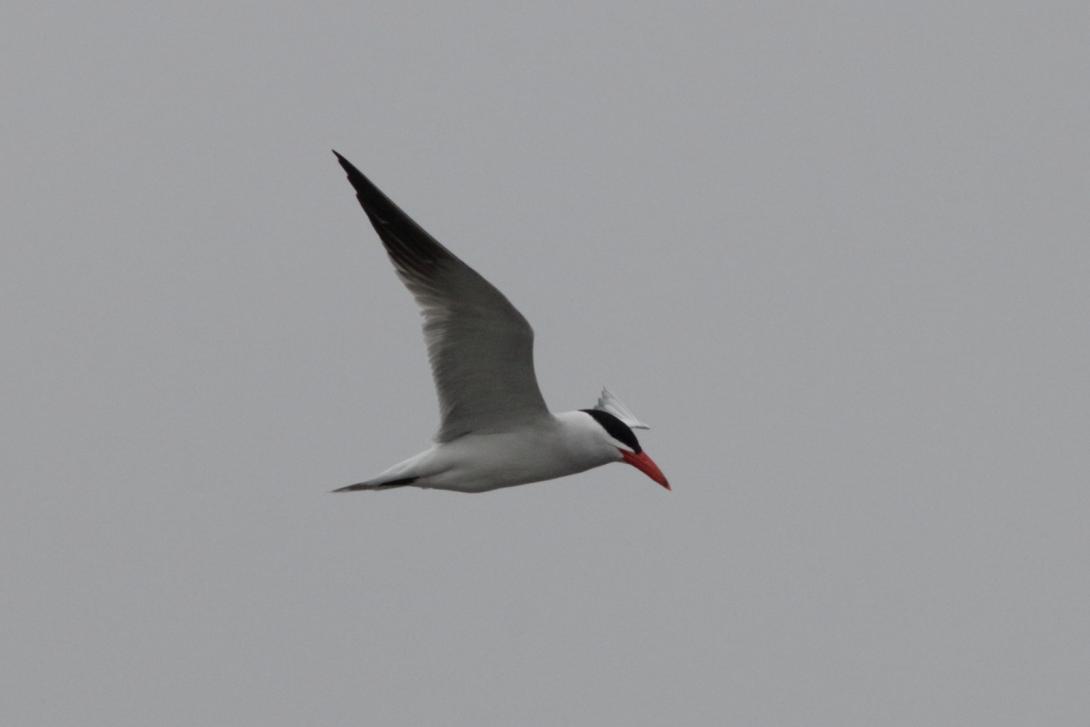
Taken by Steve Bennett at Oregon Coast on
.
Caspian Tern
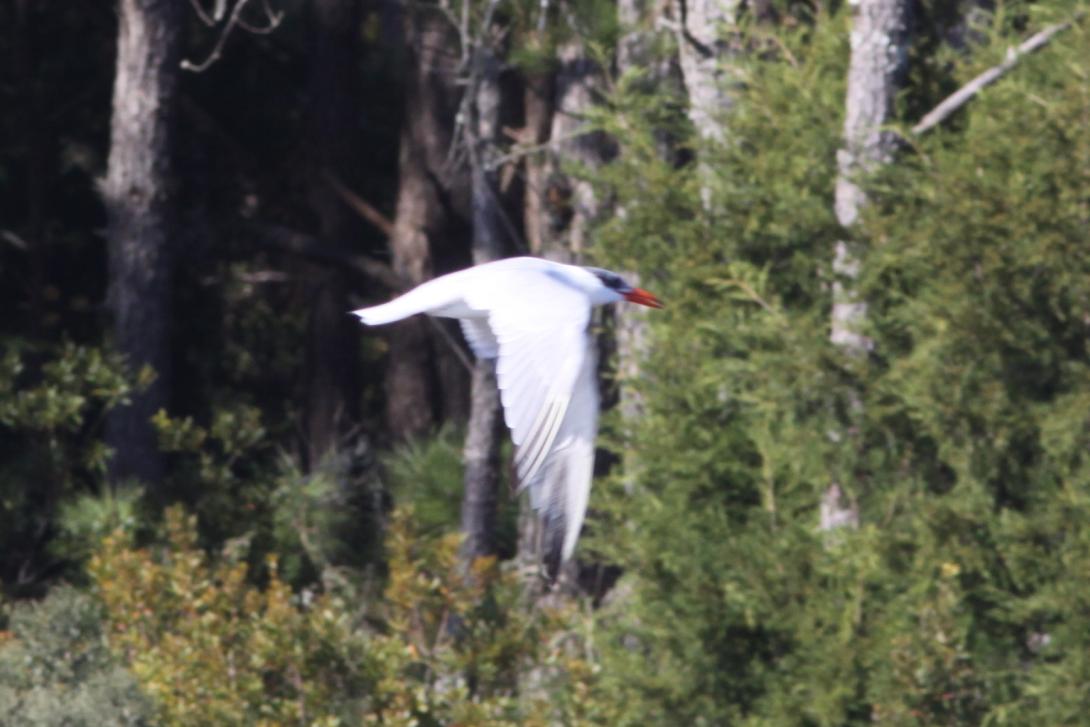
Taken by Steve Bennett at Huntington Beach, South Carolina on
.
Caspian Tern

Taken by Steve Bennett at Willamette View on
.
Caspian Tern. This out of focus photo was shot quickly and without realizing, at the time, what the bird was. It is clear enough to show that it is a Caspian Tern.