
Cedar Waxwing
Bombycilla cedrorum
Cedar Waxwings are sleek, medium-sized songbirds found throughout Oregon, often recognized by their distinctive crest, black mask, and a somewhat "silky" appearance to their plumage. While males and females share many striking similarities, there are subtle differences that can help distinguish them.
Overall Appearance (Both Sexes):
Size and Shape: They are about 6-7 inches long with a short neck, wide bill, and a prominent crest that often lies flat or droops over the back of the head. Their wings are broad and pointed, and their tail is fairly short and square-tipped.
Coloration: They are predominantly pale brown on the head and chest, fading to a soft gray on the wings. The belly is a pale yellow, and the tail is typically gray with a bright yellow tip.
Facial Mask: Both sexes have a striking black mask across their eyes, neatly outlined in white.
Waxy Tips: The "waxwing" name comes from the small, bright red, waxy-looking tips on some of their secondary wing feathers. These are visible when the wings are folded and in flight, and tend to become larger as the birds age, potentially serving as a sign of maturity.
Calls* They are not known for singing, but both sexes produce high-pitched, thin "bzee" trills and rising whistle-like calls.
Key Differences Between Male and Female:
While the differences are subtle and birders often don't attempt to sex them in the field, experienced observers can look for:
Chin and Throat Patch:
Males: Generally have a more extensive and darker, black chin and throat patch.
Females: Their black chin/throat patch is slightly duller and more restricted, often a brownish patch rather than a deep black.
Tail Tip:
Males: Tend to have a broader yellow terminal band on their tail.
Females: The yellow tail band is usually narrower.
Waxy Wingtips: While both have them, adult males on average may have a larger number and more prominent waxy tips than females, though this can be variable.
Weight (Breeding Season): During the breeding season, females are reported to be marginally heavier than males.
Behavior (Courtship/Nesting):
During courtship, males often initiate a "mutual feeding ritual" where they present a berry or other small item to the female, and they pass it back and forth before the female ultimately eats it.
Females are primarily responsible for nest building and incubating eggs.
Males bring food to the nesting female and later to the hatchlings, often taking a larger share of feeding duties for the young after the first few days.
Cedar Waxwings are found year-round in Oregon, though their movements can be nomadic as they search for food, particularly fruit. They are common residents of mixed forests and urban areas throughout the state, especially in lowlands.
In some cases, Cedar Waxwings in Oregon (and elsewhere) may have orange instead of yellow tail tips. This unusual coloration is caused by the birds consuming berries from introduced Eurasian honeysuckles while their tail feathers are growing, as the red pigment from the berries can be incorporated into the feathers.
Overall Appearance (Both Sexes):
Size and Shape: They are about 6-7 inches long with a short neck, wide bill, and a prominent crest that often lies flat or droops over the back of the head. Their wings are broad and pointed, and their tail is fairly short and square-tipped.
Coloration: They are predominantly pale brown on the head and chest, fading to a soft gray on the wings. The belly is a pale yellow, and the tail is typically gray with a bright yellow tip.
Facial Mask: Both sexes have a striking black mask across their eyes, neatly outlined in white.
Waxy Tips: The "waxwing" name comes from the small, bright red, waxy-looking tips on some of their secondary wing feathers. These are visible when the wings are folded and in flight, and tend to become larger as the birds age, potentially serving as a sign of maturity.
Calls* They are not known for singing, but both sexes produce high-pitched, thin "bzee" trills and rising whistle-like calls.
Key Differences Between Male and Female:
While the differences are subtle and birders often don't attempt to sex them in the field, experienced observers can look for:
Chin and Throat Patch:
Males: Generally have a more extensive and darker, black chin and throat patch.
Females: Their black chin/throat patch is slightly duller and more restricted, often a brownish patch rather than a deep black.
Tail Tip:
Males: Tend to have a broader yellow terminal band on their tail.
Females: The yellow tail band is usually narrower.
Waxy Wingtips: While both have them, adult males on average may have a larger number and more prominent waxy tips than females, though this can be variable.
Weight (Breeding Season): During the breeding season, females are reported to be marginally heavier than males.
Behavior (Courtship/Nesting):
During courtship, males often initiate a "mutual feeding ritual" where they present a berry or other small item to the female, and they pass it back and forth before the female ultimately eats it.
Females are primarily responsible for nest building and incubating eggs.
Males bring food to the nesting female and later to the hatchlings, often taking a larger share of feeding duties for the young after the first few days.
Cedar Waxwings are found year-round in Oregon, though their movements can be nomadic as they search for food, particularly fruit. They are common residents of mixed forests and urban areas throughout the state, especially in lowlands.
In some cases, Cedar Waxwings in Oregon (and elsewhere) may have orange instead of yellow tail tips. This unusual coloration is caused by the birds consuming berries from introduced Eurasian honeysuckles while their tail feathers are growing, as the red pigment from the berries can be incorporated into the feathers.
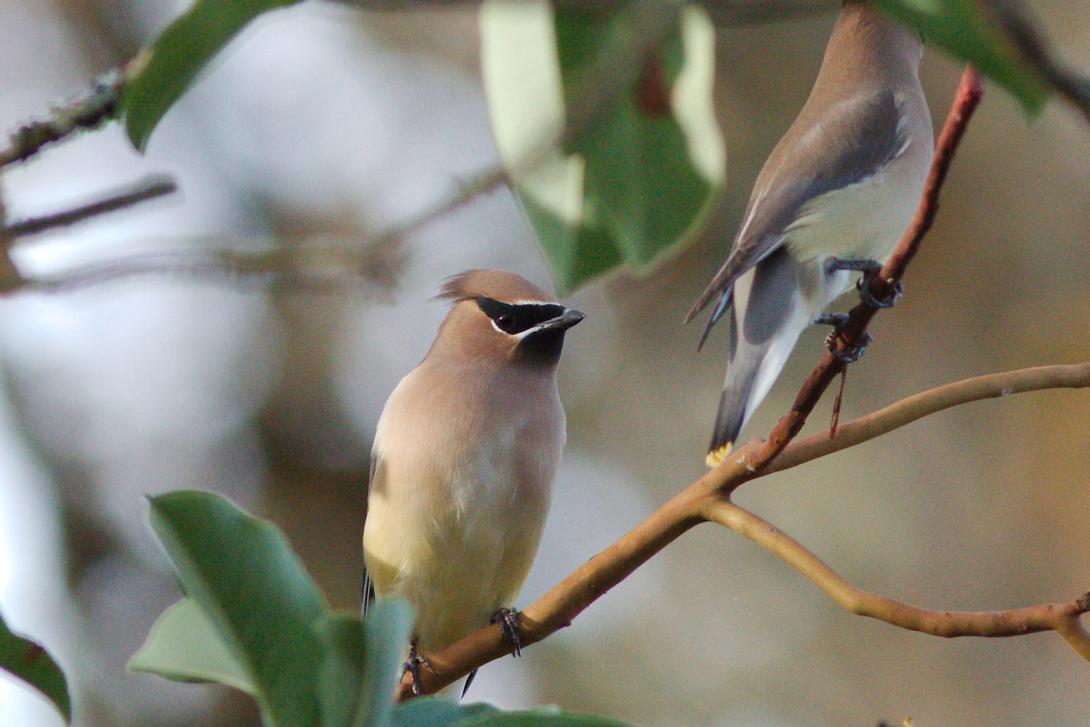
Taken by Steve Bennett at Willamette View on
.
Male Cedar Waxwing