
Chipping Sparrow
Spizella passerina
In Oregon, Chipping Sparrows are common summer residents, particularly in open forests and drier woodland edges, and are especially abundant in the Blue Mountains.
A key point for identification of Chipping Sparrows is that male and female chipping sparrows look very similar in plumage. While males may be slightly larger on average, and females may be slightly heavier in summer, these differences are not typically discernible in the field.
Breeding Plumage (Adults - Male and Female)
Crown: Bright rufous (chestnut brown) cap.
Face: Distinct white superciliary line (eyebrow), a prominent black eye-stripe that extends through the lores (area between the eye and bill) to the base of the bill, and often a gray cheek. This black eye line is a good field mark.
Underparts: Unstreaked gray breast and flanks blending into a dull white belly.
Rump: Gray.
Back and Wings: Streaked black and brown.
Bill: Black (often pale brown at the base of the lower mandible).
Size: Small and slender, typically 4.7-5.9 inches (12-15 cm) in length.
Non-breeding/Winter Plumage (Adults - Male and Female):
After the nesting season, both male and female Chipping Sparrows lose their distinct bright cap for a duller, streaky brown head pattern, making them more similar to other winter sparrows.
Crown: More subdued reddish-brown, often finely flecked or with dark brown veins and sometimes a vague cream-colored central stripe.
Face: The black eye-stripe is still visible but may be greatly reduced.
Underparts: Subdued, buff brown.
Upperparts: Darkly streaked.
Bill: Dark, with the base of the lower mandible often a creamy color.
Juvenile Plumage:
Juvenile Chipping Sparrows are streaked and generally retain this plumage through the fall migration. They can be more challenging to distinguish from other sparrows due to their beige feathers and common brown streaks. However, they will still typically show the black eye-stripe.
Habitat and Behavior in Oregon:
Chipping Sparrows are often found in open woodlands and forests with grassy clearings. They adapt well to suburban environments, including parks and backyards with feeders and trees. They typically feed on the ground, taking cover in shrubs, and sing their distinctive simple, trilling song from the tops of small trees (often evergreens). They frequently forage in loose groups, except during the breeding season.
While male and female Chipping Sparrows look very similar, their distinct chestnut cap and eye-stripe in breeding plumage, along with their characteristic "chip" call and trilling song, are good indicators for identification in Oregon.
A key point for identification of Chipping Sparrows is that male and female chipping sparrows look very similar in plumage. While males may be slightly larger on average, and females may be slightly heavier in summer, these differences are not typically discernible in the field.
Breeding Plumage (Adults - Male and Female)
Crown: Bright rufous (chestnut brown) cap.
Face: Distinct white superciliary line (eyebrow), a prominent black eye-stripe that extends through the lores (area between the eye and bill) to the base of the bill, and often a gray cheek. This black eye line is a good field mark.
Underparts: Unstreaked gray breast and flanks blending into a dull white belly.
Rump: Gray.
Back and Wings: Streaked black and brown.
Bill: Black (often pale brown at the base of the lower mandible).
Size: Small and slender, typically 4.7-5.9 inches (12-15 cm) in length.
Non-breeding/Winter Plumage (Adults - Male and Female):
After the nesting season, both male and female Chipping Sparrows lose their distinct bright cap for a duller, streaky brown head pattern, making them more similar to other winter sparrows.
Crown: More subdued reddish-brown, often finely flecked or with dark brown veins and sometimes a vague cream-colored central stripe.
Face: The black eye-stripe is still visible but may be greatly reduced.
Underparts: Subdued, buff brown.
Upperparts: Darkly streaked.
Bill: Dark, with the base of the lower mandible often a creamy color.
Juvenile Plumage:
Juvenile Chipping Sparrows are streaked and generally retain this plumage through the fall migration. They can be more challenging to distinguish from other sparrows due to their beige feathers and common brown streaks. However, they will still typically show the black eye-stripe.
Habitat and Behavior in Oregon:
Chipping Sparrows are often found in open woodlands and forests with grassy clearings. They adapt well to suburban environments, including parks and backyards with feeders and trees. They typically feed on the ground, taking cover in shrubs, and sing their distinctive simple, trilling song from the tops of small trees (often evergreens). They frequently forage in loose groups, except during the breeding season.
While male and female Chipping Sparrows look very similar, their distinct chestnut cap and eye-stripe in breeding plumage, along with their characteristic "chip" call and trilling song, are good indicators for identification in Oregon.
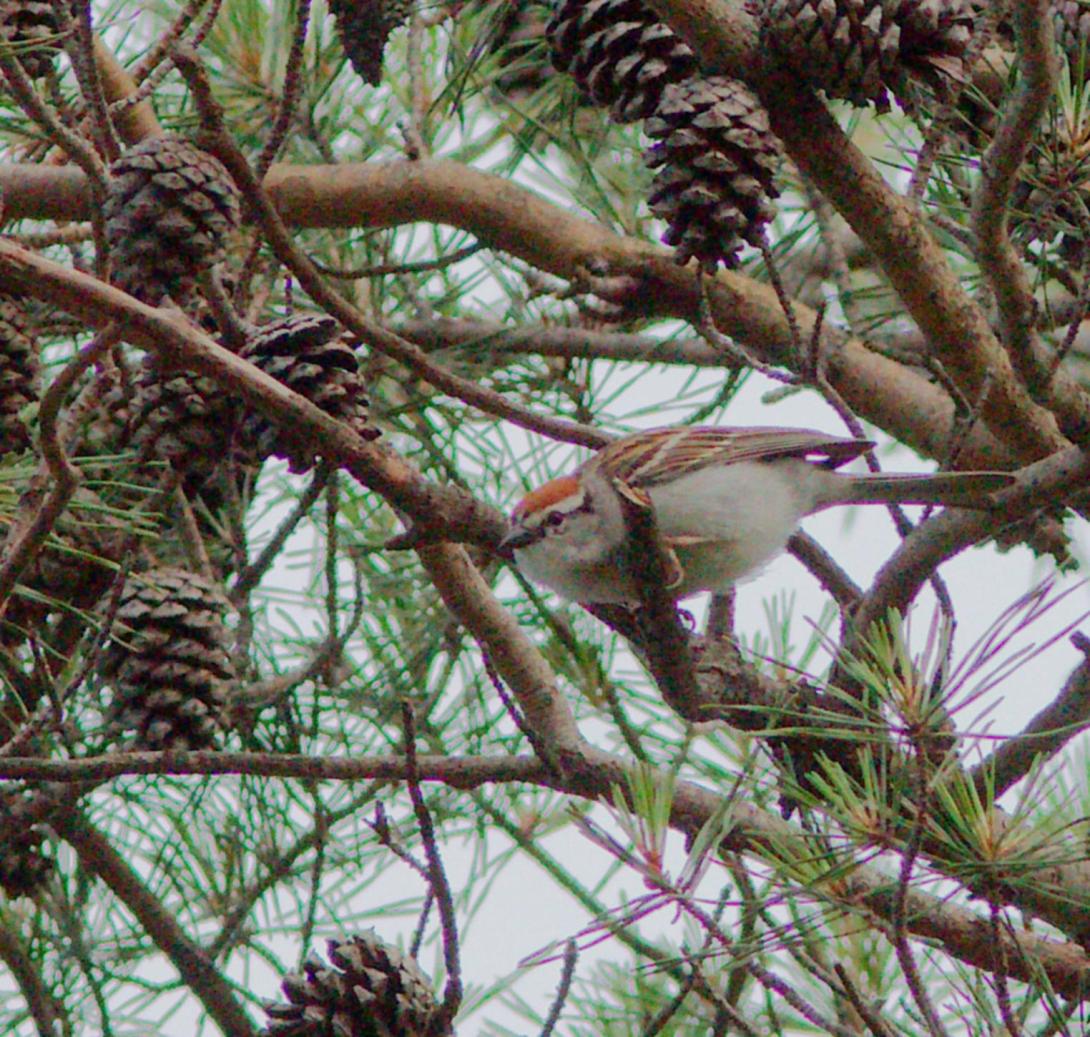
Taken by Steve Bennett at Soldiers Delight, Maryland on
.
Chipping Sparrow
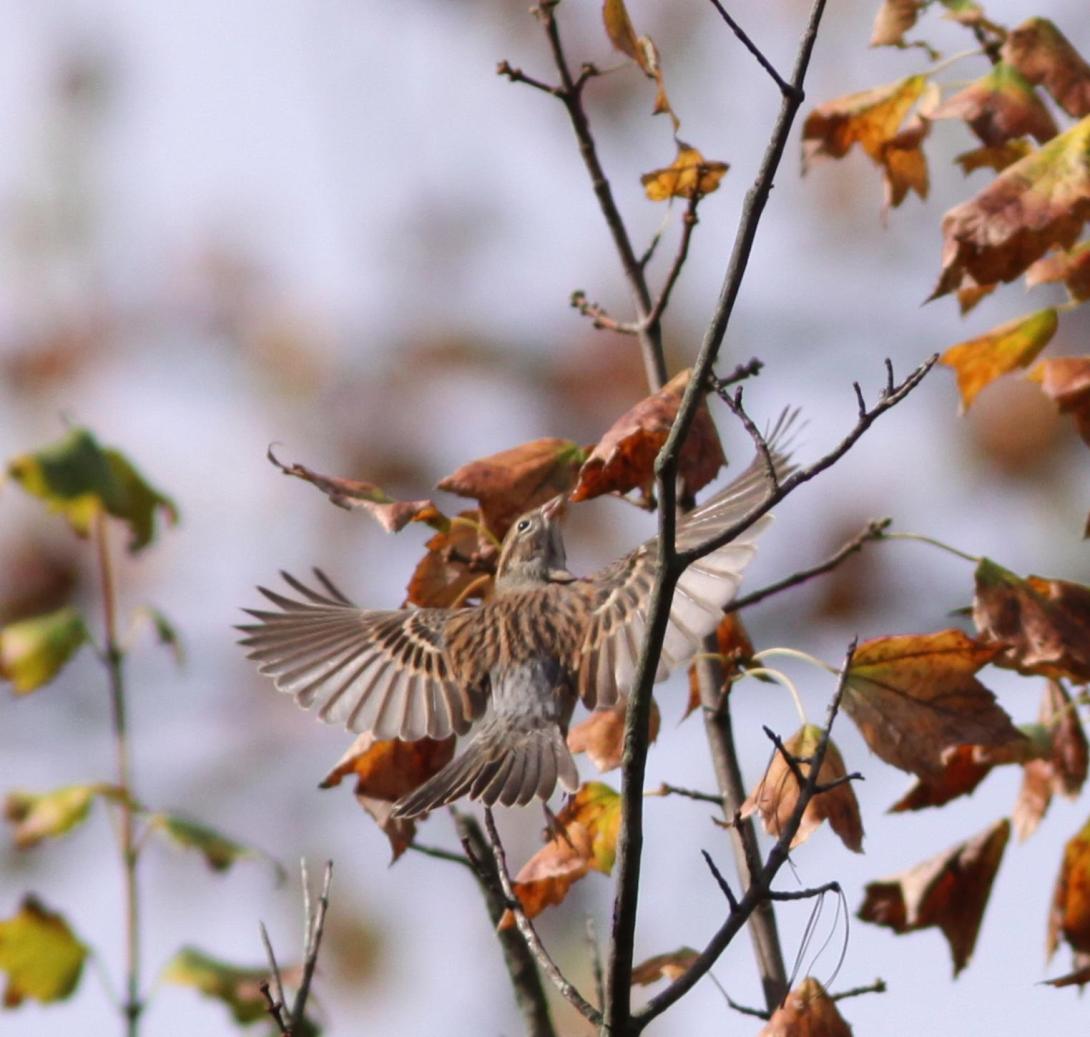
Taken by Steve Bennett at Rodgers Forge, Maryland on
.
Chipping Sparrow