
Dark-eyed Junco
Junco hyemalis
In Oregon, when people refer to Dark-eyed Juncos, they are almost always talking about the Oregon Junco subspecies (Junco hyemalis oreganus), which is the most common and widespread form in the Pacific Northwest. While there are other subspecies of Dark-eyed Juncos that can sometimes be seen in Oregon (like the Slate-colored or Cassiar Juncos, especially in winter), the Oregon Junco is the resident and breeding population.
A key characteristic of Dark-eyed Juncos is that they exhibit sexual dimorphism, meaning males and females have different plumages, though the differences can be subtle, especially in some subspecies or in younger birds.
Oregon Junco (most common in Oregon)
Male Oregon Junco:
Hood: Distinctive dark brown to almost black hood covering the head, throat, and upper breast. This "hood" is a defining feature.
Back: A warm, reddish-brown or chestnut back. This color can vary in intensity.
Sides/Flanks: Pinkish-buff or cinnamon wash on the sides, contrasting with the white belly.
Belly: Clean white.
Tail: Dark tail with prominent white outer tail feathers, which are very noticeable in flight or when the bird hops and flashes its tail.
Bill: A distinctive pale, pinkish bill.
Eyes: Dark eyes, which is where the "Dark-eyed" part of their name comes from.
Size: Medium-sized sparrow, typically 5.5-6.3 inches (14-16 cm) long.
Female Oregon Junco:
Hood: The hood is present but typically paler and duller than the male's. It's often a grayish-brown rather than dark brown or black, and the contrast with the white belly is less stark.
Back: The reddish-brown or chestnut on the back is usually less vibrant and more muted than in the male, often with a grayish wash.
Sides/Flanks: The pinkish-buff or cinnamon wash on the flanks is also paler and less extensive.
Belly: White, similar to the male.
Tail: Dark tail with white outer tail feathers, same as the male.
Bill: Pale, pinkish bill, similar to the male.
Eyes: Dark.
Key Differences to Look For:
The primary difference is the intensity and contrast of the plumage. Males have a more sharply defined and darker "hood" and richer brown on the back and sides. Females are generally more "washed out" or muted in their coloring, with less contrast, particularly in the hood and back.
Juvenile Juncos:
Juvenile Dark-eyed Juncos are streaky all over, making them look quite different from adults. They are brownish with streaking on the breast and back. They will, however, still show the distinctive white outer tail feathers. They gradually molt into adult plumage.
Behavioral Differences:
While visual cues are primary, some behavioral differences can also hint at sex:
Singing: Only male juncos sing their distinctive trilling song, especially during the breeding season, to defend territory and attract mates.
Territoriality: Males tend to be more aggressive and dominant at feeding sites, posturing and sometimes chasing other birds (including females) to secure food. Females might appear more timid and forage at the edges of a group.
Nesting: Only the female incubates the eggs and builds the nest, though the male will bring her food and help feed the young after hatching.
A key characteristic of Dark-eyed Juncos is that they exhibit sexual dimorphism, meaning males and females have different plumages, though the differences can be subtle, especially in some subspecies or in younger birds.
Oregon Junco (most common in Oregon)
Male Oregon Junco:
Hood: Distinctive dark brown to almost black hood covering the head, throat, and upper breast. This "hood" is a defining feature.
Back: A warm, reddish-brown or chestnut back. This color can vary in intensity.
Sides/Flanks: Pinkish-buff or cinnamon wash on the sides, contrasting with the white belly.
Belly: Clean white.
Tail: Dark tail with prominent white outer tail feathers, which are very noticeable in flight or when the bird hops and flashes its tail.
Bill: A distinctive pale, pinkish bill.
Eyes: Dark eyes, which is where the "Dark-eyed" part of their name comes from.
Size: Medium-sized sparrow, typically 5.5-6.3 inches (14-16 cm) long.
Female Oregon Junco:
Hood: The hood is present but typically paler and duller than the male's. It's often a grayish-brown rather than dark brown or black, and the contrast with the white belly is less stark.
Back: The reddish-brown or chestnut on the back is usually less vibrant and more muted than in the male, often with a grayish wash.
Sides/Flanks: The pinkish-buff or cinnamon wash on the flanks is also paler and less extensive.
Belly: White, similar to the male.
Tail: Dark tail with white outer tail feathers, same as the male.
Bill: Pale, pinkish bill, similar to the male.
Eyes: Dark.
Key Differences to Look For:
The primary difference is the intensity and contrast of the plumage. Males have a more sharply defined and darker "hood" and richer brown on the back and sides. Females are generally more "washed out" or muted in their coloring, with less contrast, particularly in the hood and back.
Juvenile Juncos:
Juvenile Dark-eyed Juncos are streaky all over, making them look quite different from adults. They are brownish with streaking on the breast and back. They will, however, still show the distinctive white outer tail feathers. They gradually molt into adult plumage.
Behavioral Differences:
While visual cues are primary, some behavioral differences can also hint at sex:
Singing: Only male juncos sing their distinctive trilling song, especially during the breeding season, to defend territory and attract mates.
Territoriality: Males tend to be more aggressive and dominant at feeding sites, posturing and sometimes chasing other birds (including females) to secure food. Females might appear more timid and forage at the edges of a group.
Nesting: Only the female incubates the eggs and builds the nest, though the male will bring her food and help feed the young after hatching.
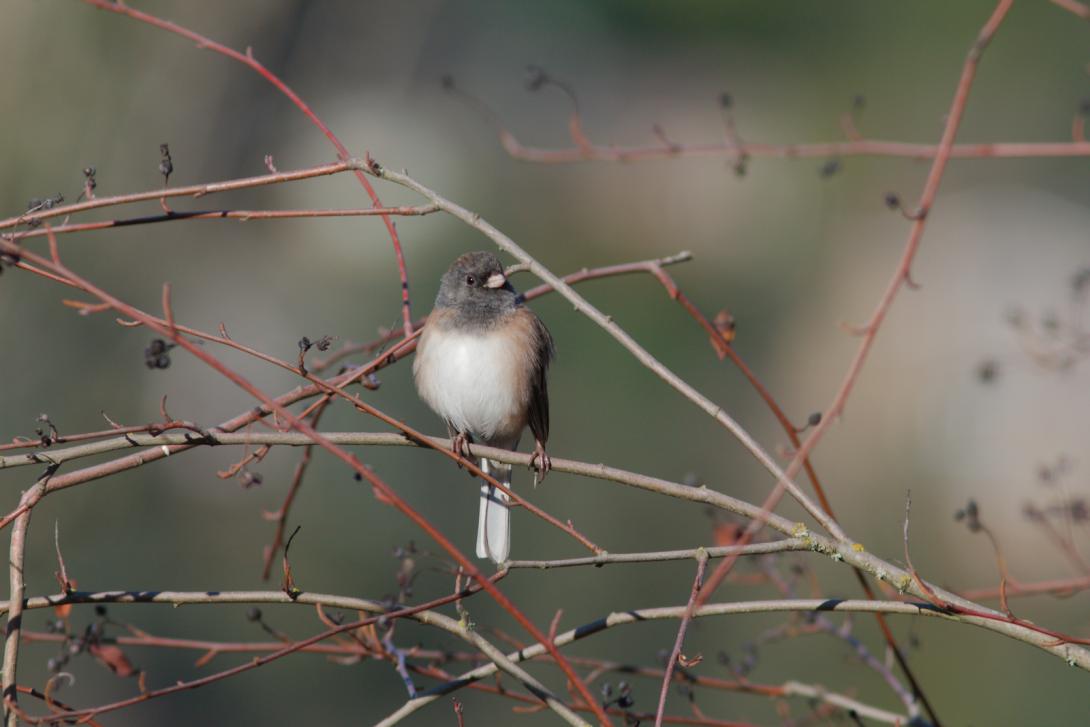
Taken by Steve Bennett at Willamette View on
.
Dark-eyed (Oregon) Junco
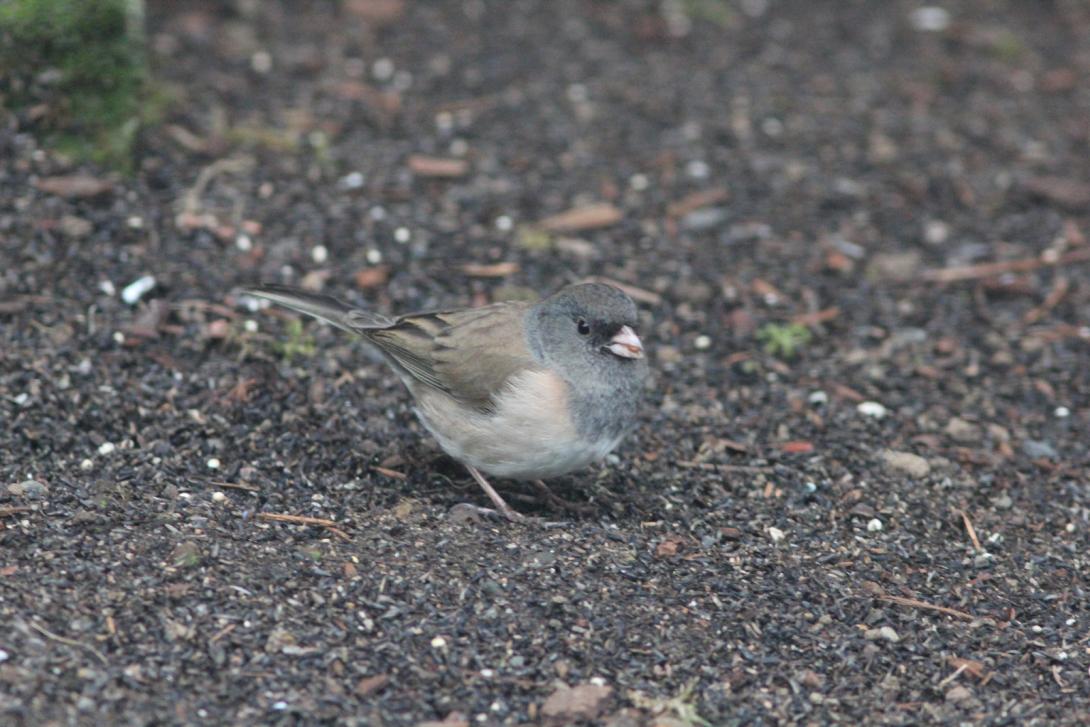
Taken by Steve Bennett at Rodgers Forge, Maryland on
.
Dark-eyed (Oregon) Junco
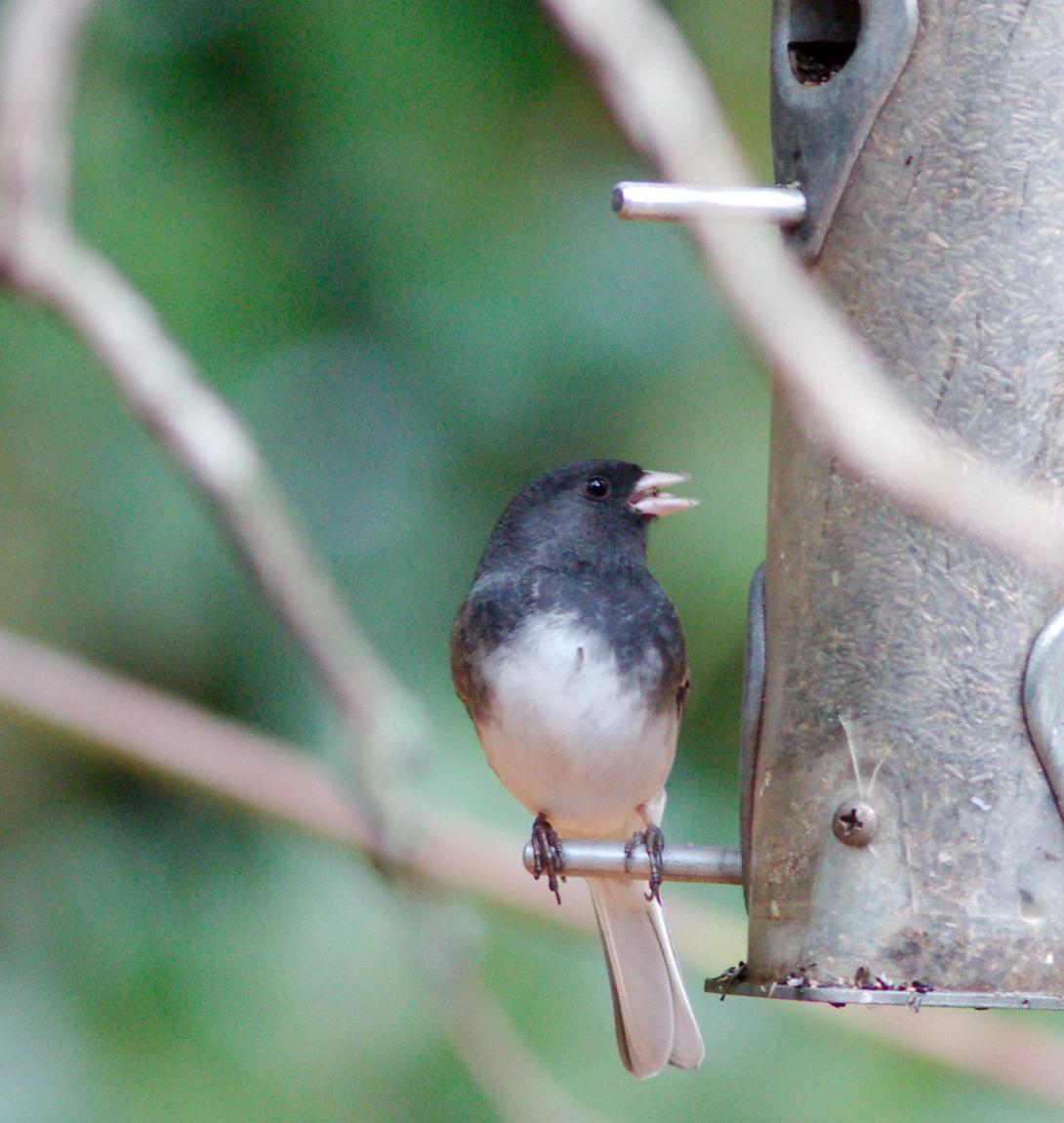
Taken by Steve Bennett at Milwaukie, Oregon on
.
Dark-eyed (Slate Colored) Junco
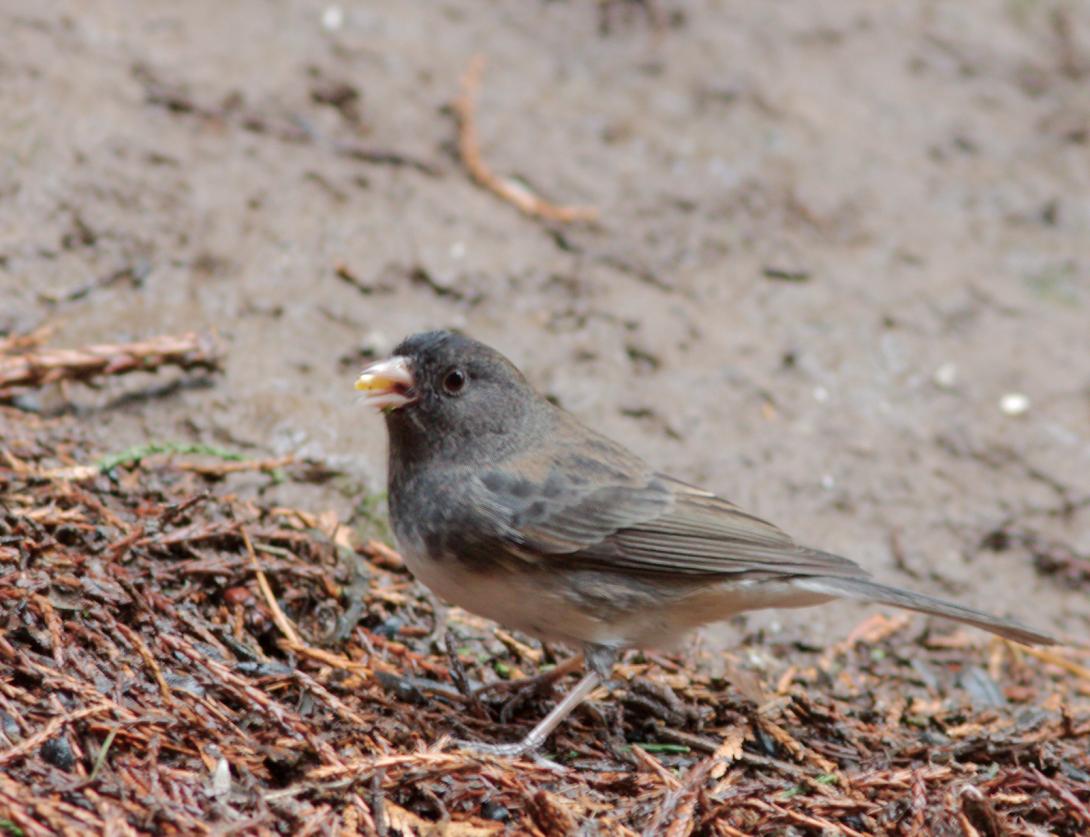
Taken by Steve Bennett at Milwaukie, Oregon on
.
Dark-eyed (Montana) Junco