
Dunlin
Calidris alpina
Dunlin are a common shorebird found in Oregon, particularly along the coast during migration and in winter. While there are no striking differences in plumage color between male and female Dunlin, they do exhibit **reverse sexual dimorphism**, meaning the **females are generally larger than the males** and tend to have slightly longer bills.
General Characteristics of Dunlin (both sexes):
Size: Medium-sized sandpipers, typically 16-22 cm (6.3-8.7 inches) long with a wingspan of 32-44 cm (12.6-17.3 inches). They are about the size of a robin.
Bill: A distinctive feature is their long, tapered, black bill that points slightly downward (decurved).
Legs: Short and black, with a short, elevated hind toe.
In Flight: All ages show a narrow white wingbar and a dark stripe down the center of the tail with white outer tail feathers.
Plumage:
Breeding Plumage (Spring/Summer - rarely seen in Oregon as they breed further north):
This is their most distinctive and striking plumage, leading to their former name, "Red-backed Sandpiper."
Back and Cap: Bright rufous-brown (rusty) and mottled.
Underparts: White with a prominent, large black belly patch. This black belly is unique among similar-sized waders.
Head and Breast: Light-colored, sometimes with dark stippling on the white underparts.
Non-breeding (Winter) Plumage (Commonly seen in Oregon from late fall through mid-May):
Considerably duller and more subdued, giving them their "dun" (gray-brown) name.
Upperparts, Head, and Breast: Uniformly brownish-gray. They often appear "hooded" with this grayish color extending across the breast.
Underparts: Whitish, sometimes with faint gray streaks on the lower breast sides and flanks.
Distinguishing Male from Female in Oregon:
As mentioned, the primary difference is size, with females being larger and having longer bills. This can be subtle and difficult to discern without direct comparison to another individual. In non-breeding plumage, there are no distinct color differences to help differentiate the sexes.
Behavioral Notes (relevant to sex-specific roles):
Arrival on Breeding Grounds: Males typically arrive on the breeding grounds (far north of Oregon) before females.
Territory Establishment: Males choose and establish territories, performing elaborate flight displays with vocalizations to attract females.
Nesting: Males make several scrapes, and the female chooses the actual nest site. Both parents incubate the eggs, though the female may depart the brood earlier, leaving the male to tend the young until they are close to fledging.
General Characteristics of Dunlin (both sexes):
Size: Medium-sized sandpipers, typically 16-22 cm (6.3-8.7 inches) long with a wingspan of 32-44 cm (12.6-17.3 inches). They are about the size of a robin.
Bill: A distinctive feature is their long, tapered, black bill that points slightly downward (decurved).
Legs: Short and black, with a short, elevated hind toe.
In Flight: All ages show a narrow white wingbar and a dark stripe down the center of the tail with white outer tail feathers.
Plumage:
Breeding Plumage (Spring/Summer - rarely seen in Oregon as they breed further north):
This is their most distinctive and striking plumage, leading to their former name, "Red-backed Sandpiper."
Back and Cap: Bright rufous-brown (rusty) and mottled.
Underparts: White with a prominent, large black belly patch. This black belly is unique among similar-sized waders.
Head and Breast: Light-colored, sometimes with dark stippling on the white underparts.
Non-breeding (Winter) Plumage (Commonly seen in Oregon from late fall through mid-May):
Considerably duller and more subdued, giving them their "dun" (gray-brown) name.
Upperparts, Head, and Breast: Uniformly brownish-gray. They often appear "hooded" with this grayish color extending across the breast.
Underparts: Whitish, sometimes with faint gray streaks on the lower breast sides and flanks.
Distinguishing Male from Female in Oregon:
As mentioned, the primary difference is size, with females being larger and having longer bills. This can be subtle and difficult to discern without direct comparison to another individual. In non-breeding plumage, there are no distinct color differences to help differentiate the sexes.
Behavioral Notes (relevant to sex-specific roles):
Arrival on Breeding Grounds: Males typically arrive on the breeding grounds (far north of Oregon) before females.
Territory Establishment: Males choose and establish territories, performing elaborate flight displays with vocalizations to attract females.
Nesting: Males make several scrapes, and the female chooses the actual nest site. Both parents incubate the eggs, though the female may depart the brood earlier, leaving the male to tend the young until they are close to fledging.
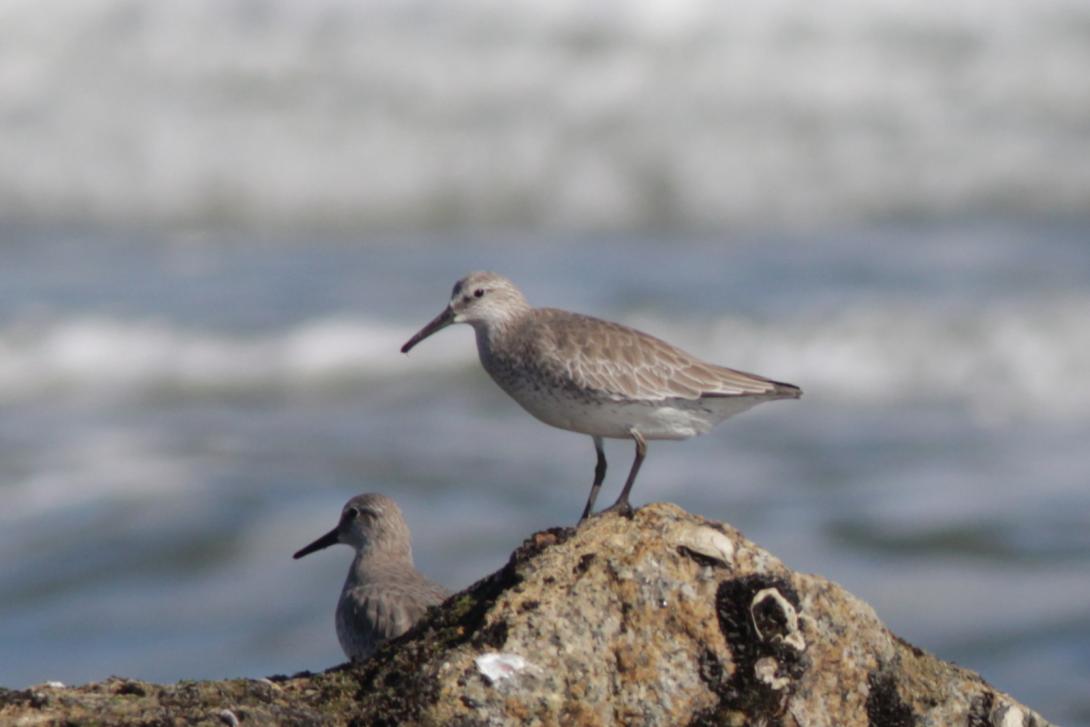
Taken by Steve Bennett at Pawley's Island, South Carolina on
.
Dunlin