
Glaucous-winged Gull
Larus glaucescens
Glaucous-winged Gulls are large, robust gulls commonly found along Oregon's coastlines, estuaries, and sometimes even inland at landfills or large bodies of water. They are a distinctive species due to their pale appearance, particularly the absence of black on their wingtips.
However, like many large gull species, Glaucous-winged Gulls exhibit very little to no sexual dimorphism in their plumage. This means that adult males and females are nearly identical in their feather coloration and patterns, making it extremely difficult, if not impossible, to reliably determine their sex in the field based solely on appearance.
General Appearance of Adult Glaucous-winged Gulls (both sexes):
Size and Build: They are large, powerfully built gulls, larger than California or Ring-billed Gulls, and comparable in size to a Western Gull. They have a heavy body, a relatively large and somewhat flat head, and a long, heavy bill with a pronounced gonydeal angle (the angle on the lower mandible).
Plumage:
Mantle (Back and Upperwings): Pearly gray, a medium shade that is paler than a Western Gull but darker than a Glaucous Gull.
Wingtips: This is their most distinctive feature – the wingtips are the same pearly gray color as the rest of the mantle, lacking any black. They may have small white spots near the very tip of the outermost primaries.
Head and Underparts: Clean white. In non-breeding plumage (fall and winter), they often develop variable amounts of dusky streaking or smudging on the head, nape, and sometimes the breast, but this is present in both sexes.
Tail: White.
Bill: Yellow, with a prominent red subterminal spot (a red spot near the tip of the lower mandible). The bill is heavy and can appear somewhat thick.
Legs and Feet: Pinkish.
Eyes: Typically dark brown, often surrounded by pink orbital skin.
Subtle Differences (Males vs. Females):
While plumage is not a reliable indicator, there are average differences in size and observable behaviors, especially during the breeding season:
1. Size:
Males tend to be noticeably larger and heavier than females on average. This difference can sometimes be observed when a mated pair is standing side-by-side, with the male appearing more robust, with a larger head and a proportionally heavier bill.
However, there's considerable overlap in size between individual males and females, so trying to sex a single bird based on size alone is often unreliable.
2. Bill and Head Proportions:
As part of the overall size difference, males may have a slightly larger, broader head and a more substantial bill compared to females. The bill's depth and total head length are often the most sexually dimorphic external measurements when precise biometric data is collected.
3. Behavior (especially during breeding season):
Territoriality: Males tend to be more active in defending their breeding territories.
Courtship: Males often perform courtship displays, including head-tossing, "long calls," and "choking" displays (where they crouch with their bill pointed down and heave their chest). Males also engage in courtship feeding, regurgitating food for the female. Observing these behaviors can be a strong indicator of sex.
Copulation: During copulation, the male mounts the female, which is a definitive sign of sex.
Incubation and Chick Rearing:** Both parents share incubation duties (typically 2-3 eggs) and caring for the chicks.
Important Note on Hybrids in Oregon:
It's crucial to mention that Glaucous-winged Gulls frequently hybridize with Western Gulls in areas where their ranges overlap, particularly along the coast from British Columbia through Oregon and California. These hybrids are often referred to as "Olympic Gulls" and can present a huge challenge for identification, as they show intermediate characteristics of both parent species. A hybrid might have a slightly darker mantle and sometimes even some dusky or smudgy gray on the wingtips, making them appear "between" the two species. The prevalence of these hybrids in Oregon can further complicate any attempt to discern subtle sexual differences, as individual variation due to hybridization can be more pronounced than sexual dimorphism.
In summary, for observers in Oregon, distinguishing male and female Glaucous-winged Gulls by sight based on plumage is generally not possible. Any differences are subtle and relate to average size or bill/head proportions, best observed when comparing a known pair. Behavioral observations during the breeding season offer the most reliable, though often still challenging, way to infer sex.** Given the prevalence of hybrids, careful identification of the species itself is often the first and most significant challenge.
However, like many large gull species, Glaucous-winged Gulls exhibit very little to no sexual dimorphism in their plumage. This means that adult males and females are nearly identical in their feather coloration and patterns, making it extremely difficult, if not impossible, to reliably determine their sex in the field based solely on appearance.
General Appearance of Adult Glaucous-winged Gulls (both sexes):
Size and Build: They are large, powerfully built gulls, larger than California or Ring-billed Gulls, and comparable in size to a Western Gull. They have a heavy body, a relatively large and somewhat flat head, and a long, heavy bill with a pronounced gonydeal angle (the angle on the lower mandible).
Plumage:
Mantle (Back and Upperwings): Pearly gray, a medium shade that is paler than a Western Gull but darker than a Glaucous Gull.
Wingtips: This is their most distinctive feature – the wingtips are the same pearly gray color as the rest of the mantle, lacking any black. They may have small white spots near the very tip of the outermost primaries.
Head and Underparts: Clean white. In non-breeding plumage (fall and winter), they often develop variable amounts of dusky streaking or smudging on the head, nape, and sometimes the breast, but this is present in both sexes.
Tail: White.
Bill: Yellow, with a prominent red subterminal spot (a red spot near the tip of the lower mandible). The bill is heavy and can appear somewhat thick.
Legs and Feet: Pinkish.
Eyes: Typically dark brown, often surrounded by pink orbital skin.
Subtle Differences (Males vs. Females):
While plumage is not a reliable indicator, there are average differences in size and observable behaviors, especially during the breeding season:
1. Size:
Males tend to be noticeably larger and heavier than females on average. This difference can sometimes be observed when a mated pair is standing side-by-side, with the male appearing more robust, with a larger head and a proportionally heavier bill.
However, there's considerable overlap in size between individual males and females, so trying to sex a single bird based on size alone is often unreliable.
2. Bill and Head Proportions:
As part of the overall size difference, males may have a slightly larger, broader head and a more substantial bill compared to females. The bill's depth and total head length are often the most sexually dimorphic external measurements when precise biometric data is collected.
3. Behavior (especially during breeding season):
Territoriality: Males tend to be more active in defending their breeding territories.
Courtship: Males often perform courtship displays, including head-tossing, "long calls," and "choking" displays (where they crouch with their bill pointed down and heave their chest). Males also engage in courtship feeding, regurgitating food for the female. Observing these behaviors can be a strong indicator of sex.
Copulation: During copulation, the male mounts the female, which is a definitive sign of sex.
Incubation and Chick Rearing:** Both parents share incubation duties (typically 2-3 eggs) and caring for the chicks.
Important Note on Hybrids in Oregon:
It's crucial to mention that Glaucous-winged Gulls frequently hybridize with Western Gulls in areas where their ranges overlap, particularly along the coast from British Columbia through Oregon and California. These hybrids are often referred to as "Olympic Gulls" and can present a huge challenge for identification, as they show intermediate characteristics of both parent species. A hybrid might have a slightly darker mantle and sometimes even some dusky or smudgy gray on the wingtips, making them appear "between" the two species. The prevalence of these hybrids in Oregon can further complicate any attempt to discern subtle sexual differences, as individual variation due to hybridization can be more pronounced than sexual dimorphism.
In summary, for observers in Oregon, distinguishing male and female Glaucous-winged Gulls by sight based on plumage is generally not possible. Any differences are subtle and relate to average size or bill/head proportions, best observed when comparing a known pair. Behavioral observations during the breeding season offer the most reliable, though often still challenging, way to infer sex.** Given the prevalence of hybrids, careful identification of the species itself is often the first and most significant challenge.
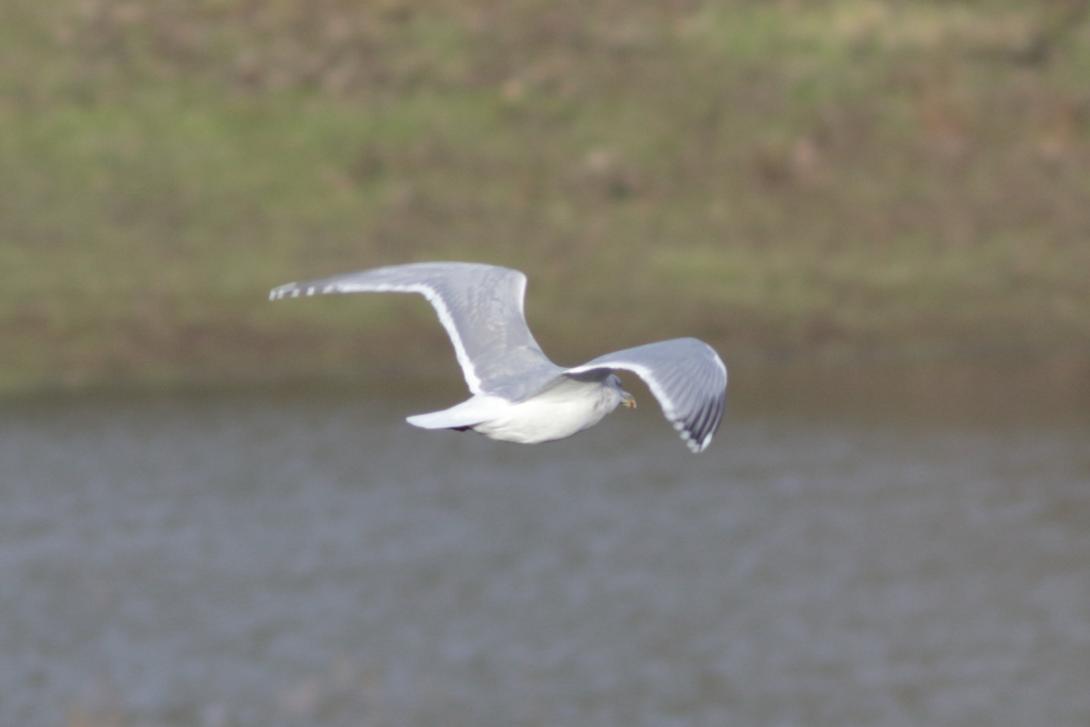
Taken by Steve Bennett at Willamette View on
.
Glaucous-winged Gull