
Golden-crowned Sparrow
Zonotrichia atricapilla
Golden-crowned Sparrows are a common sight in Oregon during the non-breeding season, as they migrate south from their breeding grounds in Alaska and northwestern Canada to winter along the Pacific Coast.
Similar to their close relatives, the White-crowned Sparrows, adult male and female Golden-crowned Sparrows are very similar in appearance and generally cannot be reliably distinguished by plumage alone in the field. They are also considered a monomorphic species in terms of their adult plumage.
Overall Appearance (Adult Male & Female):
Size and Shape: They are relatively large, chunky sparrows, typically 6-7 inches (15-18 cm) long. They have a stout bill and a relatively long, square-tipped tail.
Head Pattern (Breeding Plumage - late winter/spring): This is their most distinctive feature. They have a bright, prominent golden-yellow patch on the center of their crown, which fades to pale gray towards the back of the head. This golden patch is bordered by two bold black stripes on either side.
Head Pattern (Non-breeding/Winter Plumage - common in Oregon): During the fall and winter, the golden crown is often duller and less vibrant, and the black borders may be less defined or even absent, appearing more as dusky smudges. The crown can sometimes look more uniformly brownish-gray with just a hint of yellow. This can make them a bit trickier to identify compared to their breeding plumage.
Bill: Their bill is typically dark, often with the upper mandible darker than the lower. This helps distinguish them from White-crowned Sparrows, which usually have pale bills.
Body Plumage:
Underparts: Gray, usually paler on the belly and slightly buffier on the flanks. They have a plain gray nape (back of the neck) and generally unstreaked underparts.
Upperparts: Grayish-brown with broad brownish-black streaks on the back and scapulars (shoulder feathers). The rump is unstreaked and brownish-gray, extending into the tail.
Wings: They have two subtle white wing bars.
Legs: Pale brown.
Key Considerations for Male and Female Distinction in Oregon:
Plumage: As stated, adult males and females largely share the same plumage. Any subtle differences in the vibrancy of the golden crown, especially during the breeding season, might average slightly brighter in males, but this is not a reliable field mark for sexing an individual bird. Studies have shown that the boldness of the crown pattern can be related to age and dominance within a flock, with older males tending to have more "advanced" (bolder) crown types. However, some females can also display advanced crowns.
Size (Subtle): Males generally average slightly larger than females in terms of measurements (e.g., weight, wing length), but this is not discernible during typical birdwatching.
Behavior (Breeding Season - not in Oregon): Golden-crowned Sparrows breed far north in Alaska and northwestern Canada. During the breeding season, males are known to sing frequently from exposed perches to defend their territory. Females build the nest and incubate the eggs, though both parents participate in feeding the young. Since they are primarily winter visitors and migrants in Oregon, you won't observe these breeding behaviors here.
Immature Birds: Young Golden-crowned Sparrows (first-year birds) lack the distinctive yellow and black crown of adults. Their head patterns are much more muted, typically brownish and gray, and they may have little to no yellow on the crown during their first winter. As they mature, the yellow and black patterns gradually develop.
Similar to their close relatives, the White-crowned Sparrows, adult male and female Golden-crowned Sparrows are very similar in appearance and generally cannot be reliably distinguished by plumage alone in the field. They are also considered a monomorphic species in terms of their adult plumage.
Overall Appearance (Adult Male & Female):
Size and Shape: They are relatively large, chunky sparrows, typically 6-7 inches (15-18 cm) long. They have a stout bill and a relatively long, square-tipped tail.
Head Pattern (Breeding Plumage - late winter/spring): This is their most distinctive feature. They have a bright, prominent golden-yellow patch on the center of their crown, which fades to pale gray towards the back of the head. This golden patch is bordered by two bold black stripes on either side.
Head Pattern (Non-breeding/Winter Plumage - common in Oregon): During the fall and winter, the golden crown is often duller and less vibrant, and the black borders may be less defined or even absent, appearing more as dusky smudges. The crown can sometimes look more uniformly brownish-gray with just a hint of yellow. This can make them a bit trickier to identify compared to their breeding plumage.
Bill: Their bill is typically dark, often with the upper mandible darker than the lower. This helps distinguish them from White-crowned Sparrows, which usually have pale bills.
Body Plumage:
Underparts: Gray, usually paler on the belly and slightly buffier on the flanks. They have a plain gray nape (back of the neck) and generally unstreaked underparts.
Upperparts: Grayish-brown with broad brownish-black streaks on the back and scapulars (shoulder feathers). The rump is unstreaked and brownish-gray, extending into the tail.
Wings: They have two subtle white wing bars.
Legs: Pale brown.
Key Considerations for Male and Female Distinction in Oregon:
Plumage: As stated, adult males and females largely share the same plumage. Any subtle differences in the vibrancy of the golden crown, especially during the breeding season, might average slightly brighter in males, but this is not a reliable field mark for sexing an individual bird. Studies have shown that the boldness of the crown pattern can be related to age and dominance within a flock, with older males tending to have more "advanced" (bolder) crown types. However, some females can also display advanced crowns.
Size (Subtle): Males generally average slightly larger than females in terms of measurements (e.g., weight, wing length), but this is not discernible during typical birdwatching.
Behavior (Breeding Season - not in Oregon): Golden-crowned Sparrows breed far north in Alaska and northwestern Canada. During the breeding season, males are known to sing frequently from exposed perches to defend their territory. Females build the nest and incubate the eggs, though both parents participate in feeding the young. Since they are primarily winter visitors and migrants in Oregon, you won't observe these breeding behaviors here.
Immature Birds: Young Golden-crowned Sparrows (first-year birds) lack the distinctive yellow and black crown of adults. Their head patterns are much more muted, typically brownish and gray, and they may have little to no yellow on the crown during their first winter. As they mature, the yellow and black patterns gradually develop.
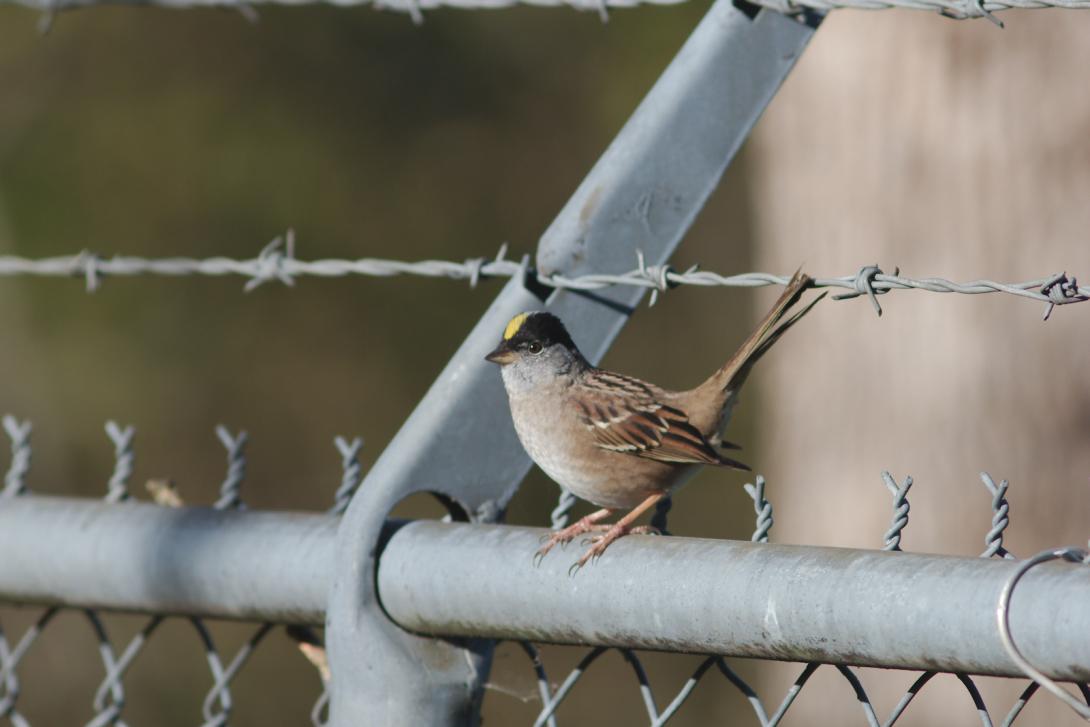
Taken by Steve Bennett at Willamette View on
.
Golden-crowned Sparrow, Spring plumage
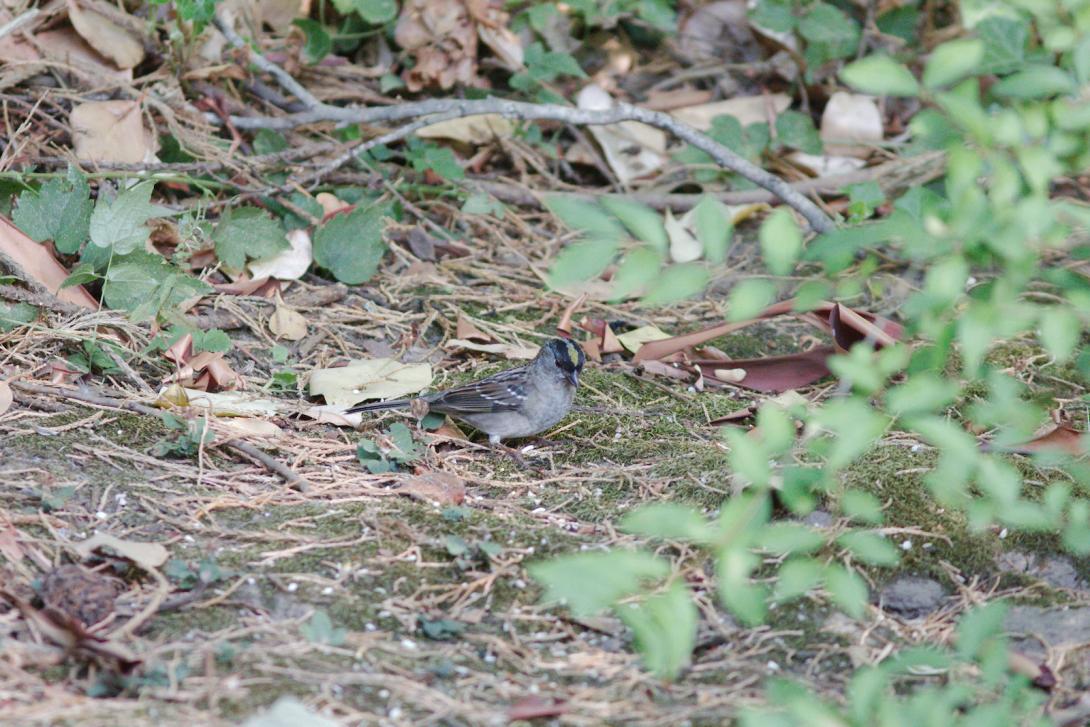
Taken by Steve Bennett at Milwaukie, Oregon on
.
Golden-crowned Sparrow, Fall plumage