
House Finch
Haemorhous mexicanus
House Finches are common residents in Oregon, found in a variety of habitats including urban, rural, and agricultural areas. They are often seen at bird feeders.
Male House Finch in Oregon:
Coloration: The most striking feature of the male is his rosy-red plumage. This red typically appears on his forehead, eyebrow, throat, upper breast, and rump. The amount and intensity of red can vary significantly, ranging from bright red to orange, yellow-orange, or even yellow. This color is derived from pigments in their diet, so a bird with a diet rich in carotenoids will be redder.
Body: Beyond the red, males have a streaky brown back, belly, and tail. Their cheeks may have a reddish wash, but the cap (top of the head) is usually brown.
Bill: They have a relatively short, thick, conical bill, adapted for seed-eating.
Behavior: Males are known for their long, twittering songs, which they sing year-round. During courtship, they may perform a "butterfly flight" display, fluttering high into the air and gliding down while singing. They also feed the female during courtship and incubation.
Female House Finch in Oregon:
Coloration: Females are much more subdued in color, typically an overall drab grayish-brown. They lack the vibrant red of the males.
Streaking: Their underparts (belly and flanks) are heavily streaked with blurry brown markings. They have indistinct streaking on their back as well.
Face: Their face is generally plain brown, without the distinct markings seen on males.
Bill: Similar to males, they have a short, thick, conical bill.
Behavior: Females are primarily responsible for building the nest and incubating the eggs. They may sing, but usually in duet with the male during breeding season or to solicit food.
General Characteristics (Both Sexes):
Size: They are small-bodied finches, similar in size to a House Sparrow, typically 5-6 inches (13-15 cm) long.
Tail: They have a somewhat long tail with a relatively shallow notch at the tip.
Habitat: Common in human-modified environments like backyards, parks, and agricultural areas.
Diet: Primarily eat seeds, buds, and berries, and are frequent visitors to bird feeders.
Male House Finch in Oregon:
Coloration: The most striking feature of the male is his rosy-red plumage. This red typically appears on his forehead, eyebrow, throat, upper breast, and rump. The amount and intensity of red can vary significantly, ranging from bright red to orange, yellow-orange, or even yellow. This color is derived from pigments in their diet, so a bird with a diet rich in carotenoids will be redder.
Body: Beyond the red, males have a streaky brown back, belly, and tail. Their cheeks may have a reddish wash, but the cap (top of the head) is usually brown.
Bill: They have a relatively short, thick, conical bill, adapted for seed-eating.
Behavior: Males are known for their long, twittering songs, which they sing year-round. During courtship, they may perform a "butterfly flight" display, fluttering high into the air and gliding down while singing. They also feed the female during courtship and incubation.
Female House Finch in Oregon:
Coloration: Females are much more subdued in color, typically an overall drab grayish-brown. They lack the vibrant red of the males.
Streaking: Their underparts (belly and flanks) are heavily streaked with blurry brown markings. They have indistinct streaking on their back as well.
Face: Their face is generally plain brown, without the distinct markings seen on males.
Bill: Similar to males, they have a short, thick, conical bill.
Behavior: Females are primarily responsible for building the nest and incubating the eggs. They may sing, but usually in duet with the male during breeding season or to solicit food.
General Characteristics (Both Sexes):
Size: They are small-bodied finches, similar in size to a House Sparrow, typically 5-6 inches (13-15 cm) long.
Tail: They have a somewhat long tail with a relatively shallow notch at the tip.
Habitat: Common in human-modified environments like backyards, parks, and agricultural areas.
Diet: Primarily eat seeds, buds, and berries, and are frequent visitors to bird feeders.
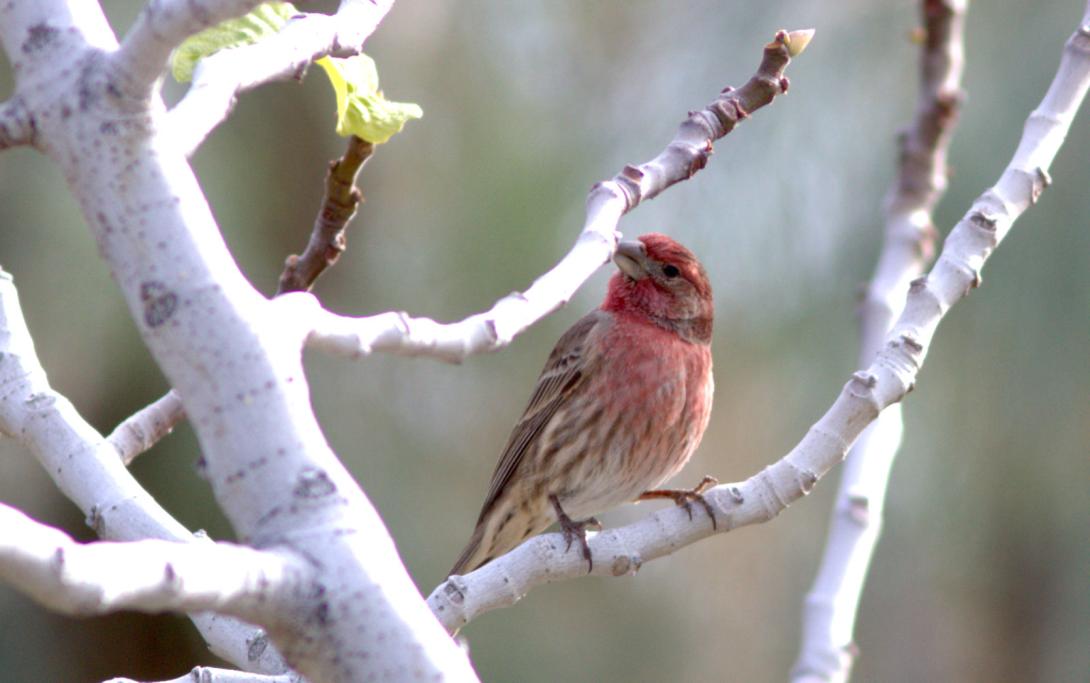
Taken by Steve Bennett at Palm Springs, CA on
.
Male House Finch
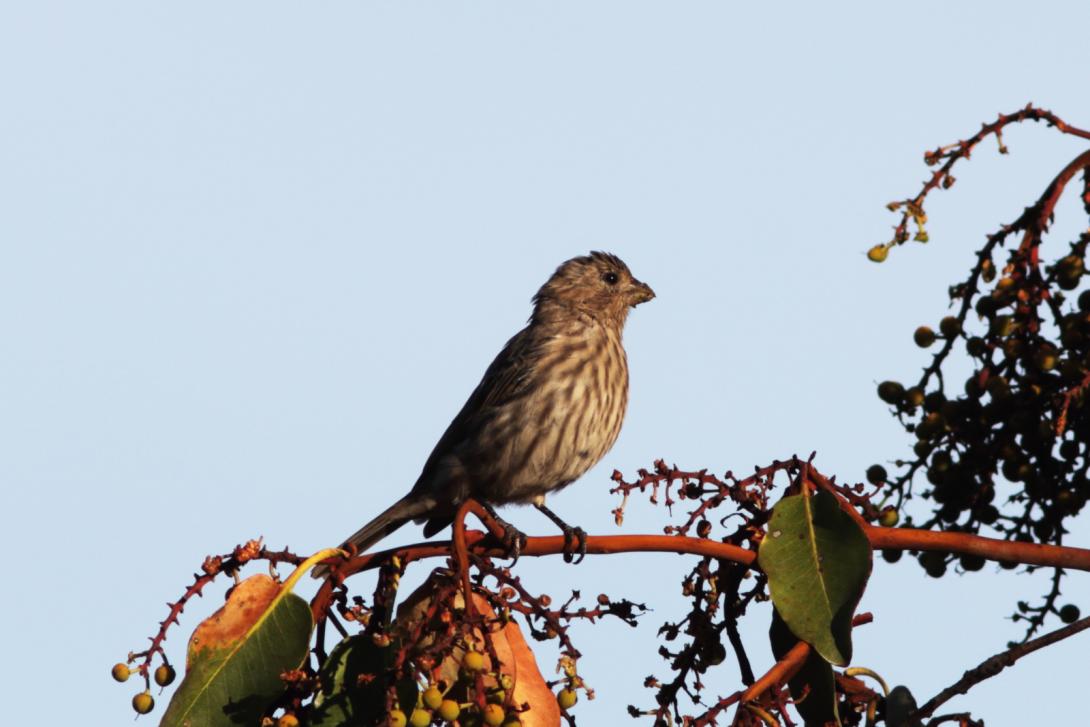
Taken by Steve Bennett at Willamette View on
.
Female House Finch