
Lesser Goldfinch
Spinus psaltria
Lesser Goldfinches are small, active, and increasingly common in many parts of Oregon, particularly in the Willamette Valley and southward. They are often found in open woodlands, weedy fields, and increasingly in suburban areas where they visit feeders.
Male Lesser Goldfinch in Oregon (Breeding Plumage):
Coloration: The male is a striking bird, characterized by a bright lemon-yellow on his underparts (belly and breast).
Head: He has a distinct, glossy black cap that covers the top of his head down to his eyes.
Back: This is a key distinguishing feature for Oregon's Lesser Goldfinches. In western Oregon (and much of the southwestern US), males typically have a dull green or olive-green back. This contrasts with males found further east (like in Texas) who often have solid black backs.
Wings: The wings are black with prominent white patches. You'll usually see two whitish wingbars, and a noticeable white rectangle or patch at the base of the primary feathers (outer wing feathers). This white wing patterning is often quite extensive and helps differentiate them from American Goldfinches.
Tail: The tail is black with large, noticeable white corners on the outer tail feathers.
Bill* Small, conical, and grayish.
Overall Impression: A tiny, vibrant finch with a neat black cap, yellow underparts, a green back, and striking white in the wings and tail.
Female Lesser Goldfinch in Oregon (All Year):
Coloration: Females are much more subdued than males, lacking the vibrant yellow and black cap. They are generally an overall olive-green or dull yellowish-olive on their back and head. Their underparts are a duller, more washed-out yellow or pale yellowish-gray.
Wings: Like the males, females have blackish wings, but their white wing markings are often less extensive and less bright than on the males. They typically show two whitish wingbars and some white at the base of the primaries. The conspicuous white wing patch is a key feature for identifying them from female American Goldfinches, which have buffy wingbars.
Tail: The tail is dark, often lacking the distinct white corners seen on the male, though some might have faint white edgings.
Bill: Similar to the male's, small, conical, and grayish.
Overall Impression: A small, generally olive and dull yellow finch with distinctive white on the wings.
Key Differences from American Goldfinches (common in Oregon too):
Male Breeding Plumage: Male Lesser Goldfinches in Oregon have a black cap and a green back (or a partially green/black back), whereas breeding male American Goldfinches have a solid black forehead and a completely bright yellow body with black wings (no green back).
Female/Non-breeding Plumage: Female and non-breeding male Lesser Goldfinches retain more olive or yellowish tones year-round, and crucially, they have white wingbars and white patches in the wings. American Goldfinches in non-breeding plumage become duller, buffy-brown, and have buffy (not white) wingbars.
Size: Lesser Goldfinches are, as their name suggests, slightly smaller and more slender than American Goldfinches.
Vocalizations: Lesser Goldfinches have a distinctive, often plaintive "tee-yee" or "cheeo" call, and their song is a lively, often wheezy series of warbles that often incorporate mimicked snippets of other birds' songs.
Male Lesser Goldfinch in Oregon (Breeding Plumage):
Coloration: The male is a striking bird, characterized by a bright lemon-yellow on his underparts (belly and breast).
Head: He has a distinct, glossy black cap that covers the top of his head down to his eyes.
Back: This is a key distinguishing feature for Oregon's Lesser Goldfinches. In western Oregon (and much of the southwestern US), males typically have a dull green or olive-green back. This contrasts with males found further east (like in Texas) who often have solid black backs.
Wings: The wings are black with prominent white patches. You'll usually see two whitish wingbars, and a noticeable white rectangle or patch at the base of the primary feathers (outer wing feathers). This white wing patterning is often quite extensive and helps differentiate them from American Goldfinches.
Tail: The tail is black with large, noticeable white corners on the outer tail feathers.
Bill* Small, conical, and grayish.
Overall Impression: A tiny, vibrant finch with a neat black cap, yellow underparts, a green back, and striking white in the wings and tail.
Female Lesser Goldfinch in Oregon (All Year):
Coloration: Females are much more subdued than males, lacking the vibrant yellow and black cap. They are generally an overall olive-green or dull yellowish-olive on their back and head. Their underparts are a duller, more washed-out yellow or pale yellowish-gray.
Wings: Like the males, females have blackish wings, but their white wing markings are often less extensive and less bright than on the males. They typically show two whitish wingbars and some white at the base of the primaries. The conspicuous white wing patch is a key feature for identifying them from female American Goldfinches, which have buffy wingbars.
Tail: The tail is dark, often lacking the distinct white corners seen on the male, though some might have faint white edgings.
Bill: Similar to the male's, small, conical, and grayish.
Overall Impression: A small, generally olive and dull yellow finch with distinctive white on the wings.
Key Differences from American Goldfinches (common in Oregon too):
Male Breeding Plumage: Male Lesser Goldfinches in Oregon have a black cap and a green back (or a partially green/black back), whereas breeding male American Goldfinches have a solid black forehead and a completely bright yellow body with black wings (no green back).
Female/Non-breeding Plumage: Female and non-breeding male Lesser Goldfinches retain more olive or yellowish tones year-round, and crucially, they have white wingbars and white patches in the wings. American Goldfinches in non-breeding plumage become duller, buffy-brown, and have buffy (not white) wingbars.
Size: Lesser Goldfinches are, as their name suggests, slightly smaller and more slender than American Goldfinches.
Vocalizations: Lesser Goldfinches have a distinctive, often plaintive "tee-yee" or "cheeo" call, and their song is a lively, often wheezy series of warbles that often incorporate mimicked snippets of other birds' songs.
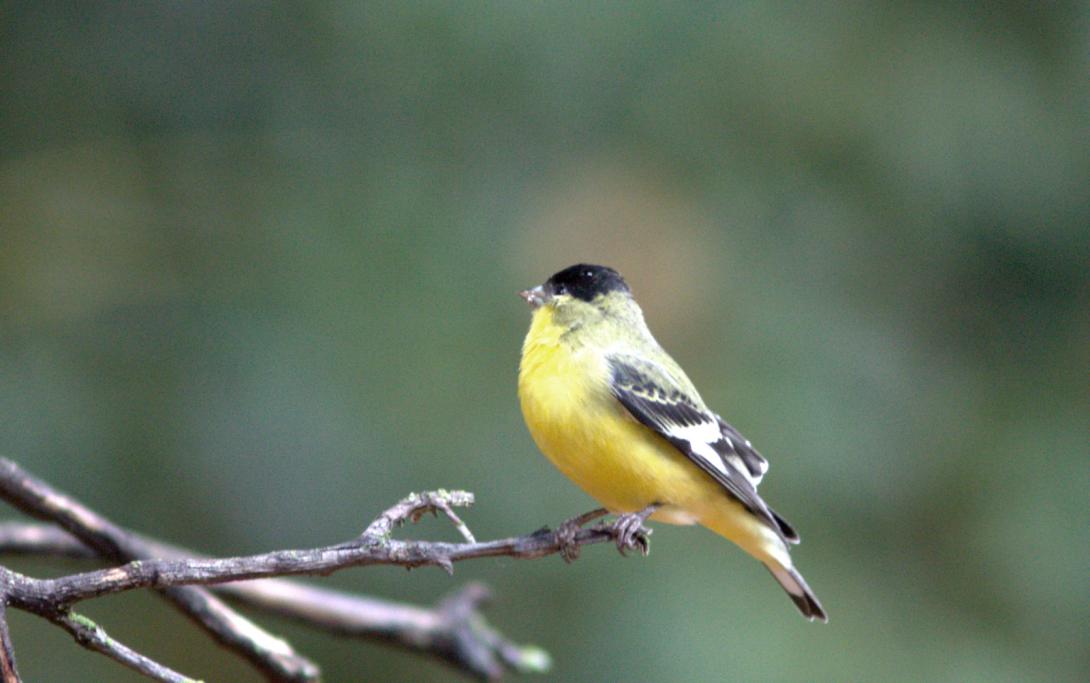
Taken by Steve Bennett at Milwaukie, OR on
.
Male Lesser Goldfinch
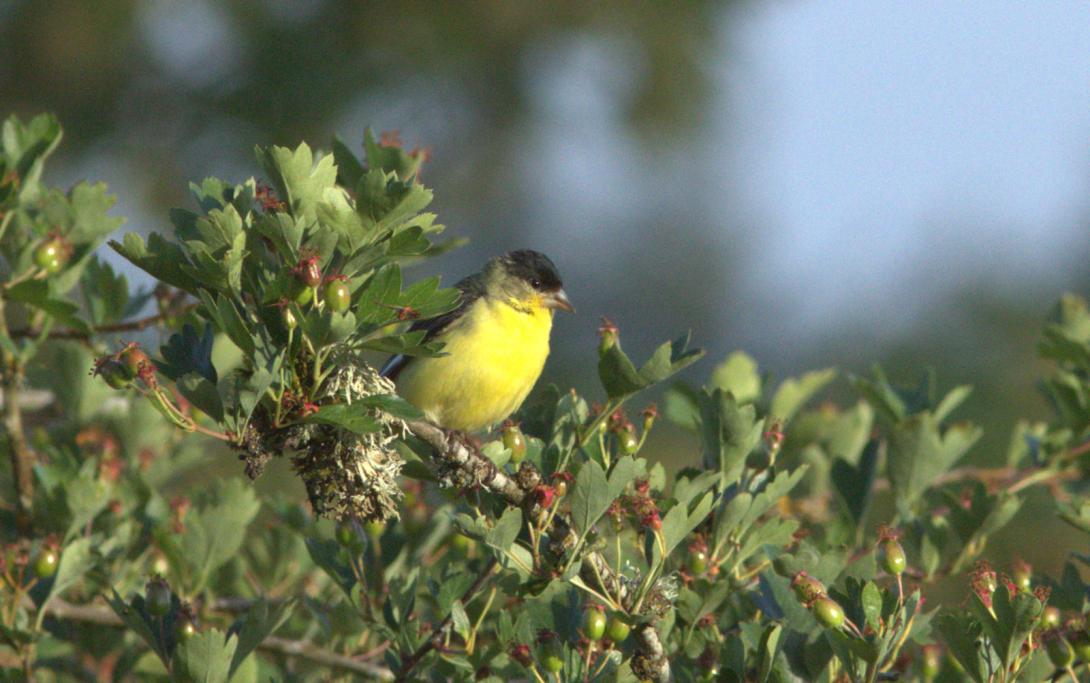
Taken by Steve Bennett at Willamette View on
.
Male Lesser Goldfinch