
Nashville Warbler
Leiothlypis ruficapilla
Nashville Warblers are migratory birds found in Oregon, particularly in the foothills of interior southwestern Oregon, the Columbia Gorge, and the eastern foothills of the Cascades. While they may appear "plain" compared to some other warblers, they have distinct features and subtle differences between males and females. The western population of Nashville Warblers (subspecies ridgwayi, formerly known as "Calaveras Warbler") tends to be brighter than their eastern counterparts.
Male Nashville Warblers in Oregon
Head: A prominent feature is their distinctive gray head. This gray cap extends down to the nape of the neck.
Eye-ring: They have a bold, complete white eye-ring that really makes their dark eye stand out, giving them a "big-eyed" or "surprised" look.
Throat and Underparts: The throat, breast, and belly are a bright, rich yellow, which transitions to a cleaner white on the lower belly and undertail coverts.
Back and Wings: Their back and wings are a relatively plain olive-green. They lack wing bars.
Crown Patch: They possess a small, rusty or rufous crown patch on the top of their head. This patch is often obscured by surrounding gray feathers and can be very difficult to see in the field unless the bird is agitated or deliberately raises its head feathers.
Bill: A thin, pointed, and relatively short bill, dark on top and paler on the bottom.
Tail Bobbing: Western Nashville Warblers are often noted for a habit of flicking or bobbing their tail while foraging, which is a useful identification clue.
Song: Their song is a distinctive, two-parted trill, often described as "see-wit, see-wit, see-wit, titititi."
Female Nashville Warblers in Oregon:
Overall Color: Females are duller and less intensely colored than males. Their plumage is a more muted version of the male's.
Head: The gray on the head is often paler and less distinct, sometimes appearing more grayish-olive than truly gray.
Eye-ring: The white eye-ring is still present but may not be as crisp or bright as on the male.
Throat and Underparts: The yellow on the throat and underparts is paler and less extensive, often a duller yellow or even yellowish-white, especially on the belly.
Crown Patch: If present at all, the rufous crown patch on a female is usually much smaller, duller, or entirely absent. It is even harder to see than on a male.
Back and Wings: Similar olive-green to the male, but often a duller shade.
Tail Bobbing: Females also exhibit the tail-bobbing behavior.
Key Identification Points for both sexes in Oregon:
Gray Head + Yellow Throat/Breast + White Eye-ring: This combination is the most reliable way to identify Nashville Warblers, especially when combined with the lack of wing bars and tail spots.
Hidden Crown Patch: Do not rely on seeing the orange/rufous crown patch for identification; it's often not visible.
Tail Bobbing: For western birds, this behavior is a good clue.
Habitat: Look for them in shrubby areas, dense undergrowth in mixed conifer/hardwood forests, and regrowing forests.
Song: Learning their song is extremely helpful for detection, as they are often heard before they are seen.
Nashville Warblers are primarily insectivorous, gleaning insects from foliage in the lower to middle levels of vegetation. They are one of the few warblers in the West to build their cup-shaped nests on the ground, typically well-concealed under shrubs or in mossy areas.
Male Nashville Warblers in Oregon
Head: A prominent feature is their distinctive gray head. This gray cap extends down to the nape of the neck.
Eye-ring: They have a bold, complete white eye-ring that really makes their dark eye stand out, giving them a "big-eyed" or "surprised" look.
Throat and Underparts: The throat, breast, and belly are a bright, rich yellow, which transitions to a cleaner white on the lower belly and undertail coverts.
Back and Wings: Their back and wings are a relatively plain olive-green. They lack wing bars.
Crown Patch: They possess a small, rusty or rufous crown patch on the top of their head. This patch is often obscured by surrounding gray feathers and can be very difficult to see in the field unless the bird is agitated or deliberately raises its head feathers.
Bill: A thin, pointed, and relatively short bill, dark on top and paler on the bottom.
Tail Bobbing: Western Nashville Warblers are often noted for a habit of flicking or bobbing their tail while foraging, which is a useful identification clue.
Song: Their song is a distinctive, two-parted trill, often described as "see-wit, see-wit, see-wit, titititi."
Female Nashville Warblers in Oregon:
Overall Color: Females are duller and less intensely colored than males. Their plumage is a more muted version of the male's.
Head: The gray on the head is often paler and less distinct, sometimes appearing more grayish-olive than truly gray.
Eye-ring: The white eye-ring is still present but may not be as crisp or bright as on the male.
Throat and Underparts: The yellow on the throat and underparts is paler and less extensive, often a duller yellow or even yellowish-white, especially on the belly.
Crown Patch: If present at all, the rufous crown patch on a female is usually much smaller, duller, or entirely absent. It is even harder to see than on a male.
Back and Wings: Similar olive-green to the male, but often a duller shade.
Tail Bobbing: Females also exhibit the tail-bobbing behavior.
Key Identification Points for both sexes in Oregon:
Gray Head + Yellow Throat/Breast + White Eye-ring: This combination is the most reliable way to identify Nashville Warblers, especially when combined with the lack of wing bars and tail spots.
Hidden Crown Patch: Do not rely on seeing the orange/rufous crown patch for identification; it's often not visible.
Tail Bobbing: For western birds, this behavior is a good clue.
Habitat: Look for them in shrubby areas, dense undergrowth in mixed conifer/hardwood forests, and regrowing forests.
Song: Learning their song is extremely helpful for detection, as they are often heard before they are seen.
Nashville Warblers are primarily insectivorous, gleaning insects from foliage in the lower to middle levels of vegetation. They are one of the few warblers in the West to build their cup-shaped nests on the ground, typically well-concealed under shrubs or in mossy areas.
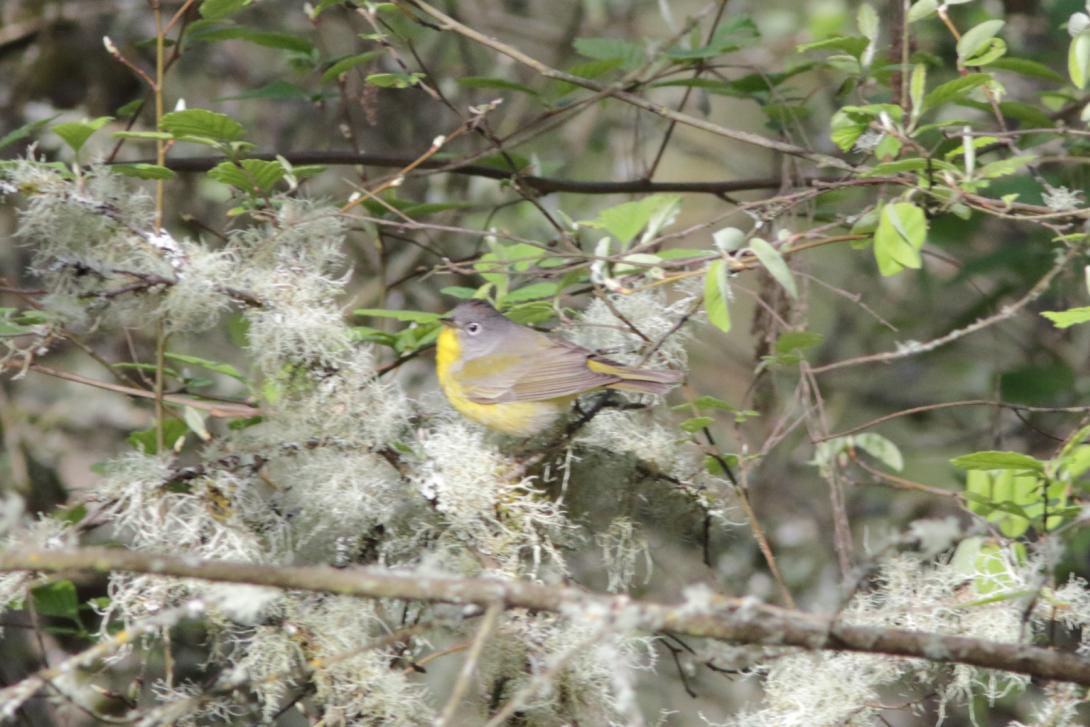
Taken by Steve Bennett at Soldier's Delight, Maryland on
.
Nashville Warbler
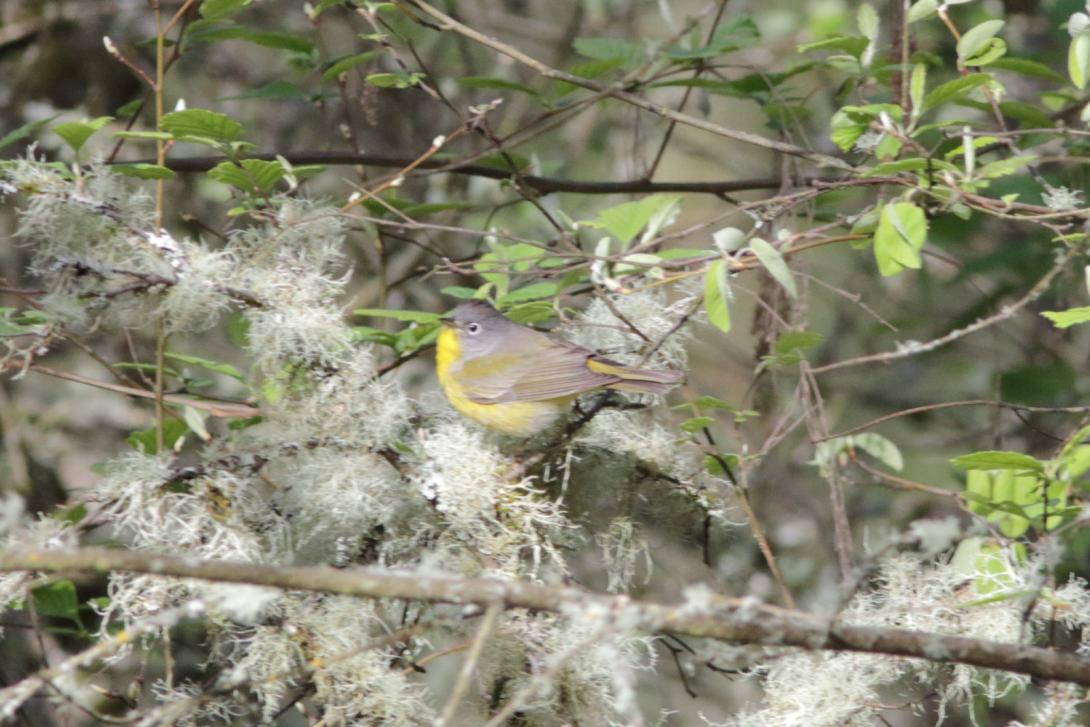
Taken by Steve Bennett at Mt. Talbert, Oregon on
.
Nashville Warbler