
Olive-sided Flycatcher
Contopus cooperi
The Olive-sided Flycatcher is a fascinating long-distance migrant that breeds in the coniferous forests of Oregon. While they are often more heard than seen due to their distinctive "Quick, Three Beers!" song, their appearance is quite consistent between the sexes.
The most important thing to know about male and female Olive-sided Flycatchers is that they are very similar in plumage and difficult to tell apart in the field. They do not exhibit strong sexual dimorphism in their coloration.
General Characteristics (Both Sexes)
Size: A medium-sized flycatcher, larger and stockier than a Western Wood-Pewee, typically 7-8 inches (18-20 cm) long.
Distinctive "Vest" Appearance: This is their most reliable field mark. They have dark, brownish-olive upperparts and sides, with a striking white stripe down the center of their breast and belly. This creates the impression of wearing an "unbuttoned vest." The throat is also whitish to yellowish.
Head: Large head, often with a slightly peaked crown (feathers can be raised).
Bill: Broad, two-toned bill with a blackish upper mandible and a yellow or pale orange lower mandible with a dark tip.
Wings: Long, pointed wings. They often have subtle pale wingbars, though these can be indistinct.
White "Tufts": Look for small, often concealed white patches on their flanks, visible when they preen or stretch. These are located between the wings and the lower back/rump.
Perching Behavior: They are often seen perched upright and motionless on prominent, exposed perches at the very tops of tall conifers or snags (dead trees), from which they sally out to catch flying insects.
Vocalization: Their loud, distinctive three-part whistled song, "Quick, THREE BEERS!", is a hallmark of summer in Oregon's conifer forests. Both sexes give a sharp "pip-pip" call. Only males sing.
Diet: Almost exclusively flying insects, especially wasps, bees, and flies, caught in mid-air.
Male Olive-sided Flycatcher in Oregon
Plumage: Virtually identical to the female in terms of overall coloration, "vest" pattern, and other plumage features.
Size (Subtle): Males are generally slightly larger on average than females, and may have slightly longer wings and tails. However, this difference is usually not discernible in the field unless you have both sexes side-by-side or are measuring them in the hand.
Singing: Males are the primary singers of the characteristic "Quick, Three Beers!" song, which they use to defend their breeding territory.
Female Olive-sided Flycatcher in Oregon
Plumage: Virtually identical to the male in terms of overall coloration and pattern.
Size (Subtle): Females are generally slightly smaller on average than males. Again, this is not a reliable field mark for identification of individual birds.
Nesting: The female builds the nest, usually a shallow cup of twigs and roots high in a conifer, and does all the incubation of the eggs. Males bring food to the female during incubation. Both parents feed the young.
Identifying Them in Oregon
Given the lack of obvious plumage differences, field identification relies heavily on:
1. Overall Shape and "Vest" Pattern: The large head, upright posture, and distinctive white "vest" on the underparts are key.
2. Perching Behavior: Top-of-tree, exposed perches are typical.
3. Vocalizations: Hearing the male's song or either sex's "pip-pip" call is often the easiest way to confirm identity.
4. Habitat: In Oregon, look for them in open coniferous forests, especially areas with snags, forest edges, clearings (including recent burns or logged areas), and riparian zones within forests. They are found from near sea level to timberline in the Cascades and Blue Mountains.
The most important thing to know about male and female Olive-sided Flycatchers is that they are very similar in plumage and difficult to tell apart in the field. They do not exhibit strong sexual dimorphism in their coloration.
General Characteristics (Both Sexes)
Size: A medium-sized flycatcher, larger and stockier than a Western Wood-Pewee, typically 7-8 inches (18-20 cm) long.
Distinctive "Vest" Appearance: This is their most reliable field mark. They have dark, brownish-olive upperparts and sides, with a striking white stripe down the center of their breast and belly. This creates the impression of wearing an "unbuttoned vest." The throat is also whitish to yellowish.
Head: Large head, often with a slightly peaked crown (feathers can be raised).
Bill: Broad, two-toned bill with a blackish upper mandible and a yellow or pale orange lower mandible with a dark tip.
Wings: Long, pointed wings. They often have subtle pale wingbars, though these can be indistinct.
White "Tufts": Look for small, often concealed white patches on their flanks, visible when they preen or stretch. These are located between the wings and the lower back/rump.
Perching Behavior: They are often seen perched upright and motionless on prominent, exposed perches at the very tops of tall conifers or snags (dead trees), from which they sally out to catch flying insects.
Vocalization: Their loud, distinctive three-part whistled song, "Quick, THREE BEERS!", is a hallmark of summer in Oregon's conifer forests. Both sexes give a sharp "pip-pip" call. Only males sing.
Diet: Almost exclusively flying insects, especially wasps, bees, and flies, caught in mid-air.
Male Olive-sided Flycatcher in Oregon
Plumage: Virtually identical to the female in terms of overall coloration, "vest" pattern, and other plumage features.
Size (Subtle): Males are generally slightly larger on average than females, and may have slightly longer wings and tails. However, this difference is usually not discernible in the field unless you have both sexes side-by-side or are measuring them in the hand.
Singing: Males are the primary singers of the characteristic "Quick, Three Beers!" song, which they use to defend their breeding territory.
Female Olive-sided Flycatcher in Oregon
Plumage: Virtually identical to the male in terms of overall coloration and pattern.
Size (Subtle): Females are generally slightly smaller on average than males. Again, this is not a reliable field mark for identification of individual birds.
Nesting: The female builds the nest, usually a shallow cup of twigs and roots high in a conifer, and does all the incubation of the eggs. Males bring food to the female during incubation. Both parents feed the young.
Identifying Them in Oregon
Given the lack of obvious plumage differences, field identification relies heavily on:
1. Overall Shape and "Vest" Pattern: The large head, upright posture, and distinctive white "vest" on the underparts are key.
2. Perching Behavior: Top-of-tree, exposed perches are typical.
3. Vocalizations: Hearing the male's song or either sex's "pip-pip" call is often the easiest way to confirm identity.
4. Habitat: In Oregon, look for them in open coniferous forests, especially areas with snags, forest edges, clearings (including recent burns or logged areas), and riparian zones within forests. They are found from near sea level to timberline in the Cascades and Blue Mountains.
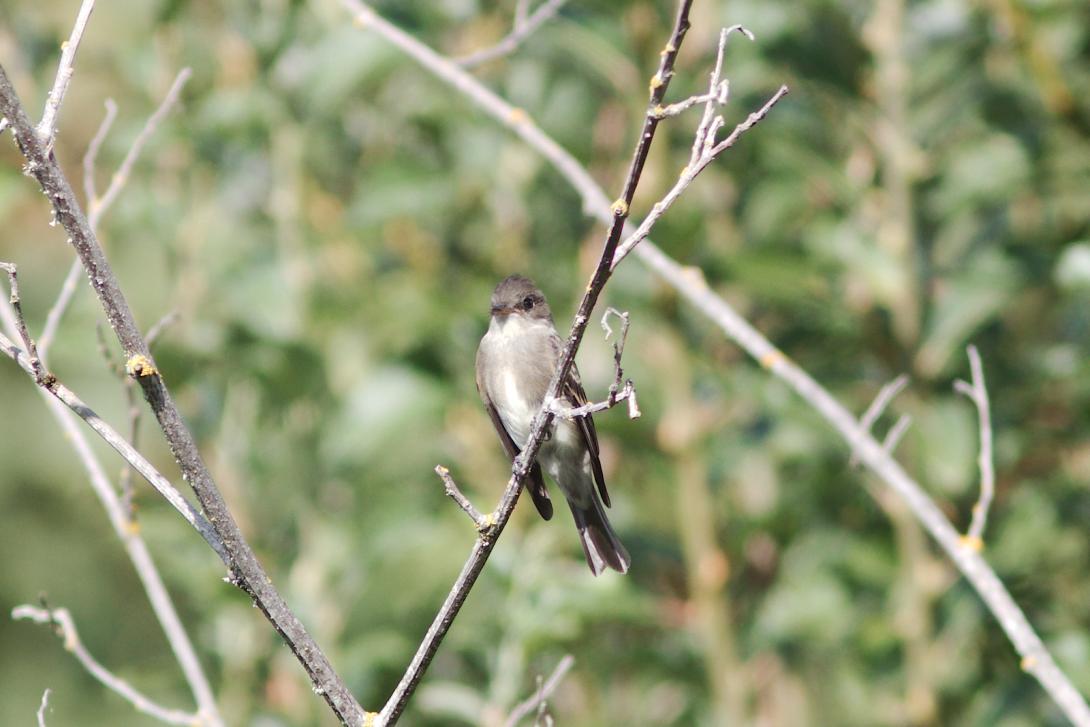
Taken by Steve Bennett at Willamette View on
.
Olive-sided Flycatcher
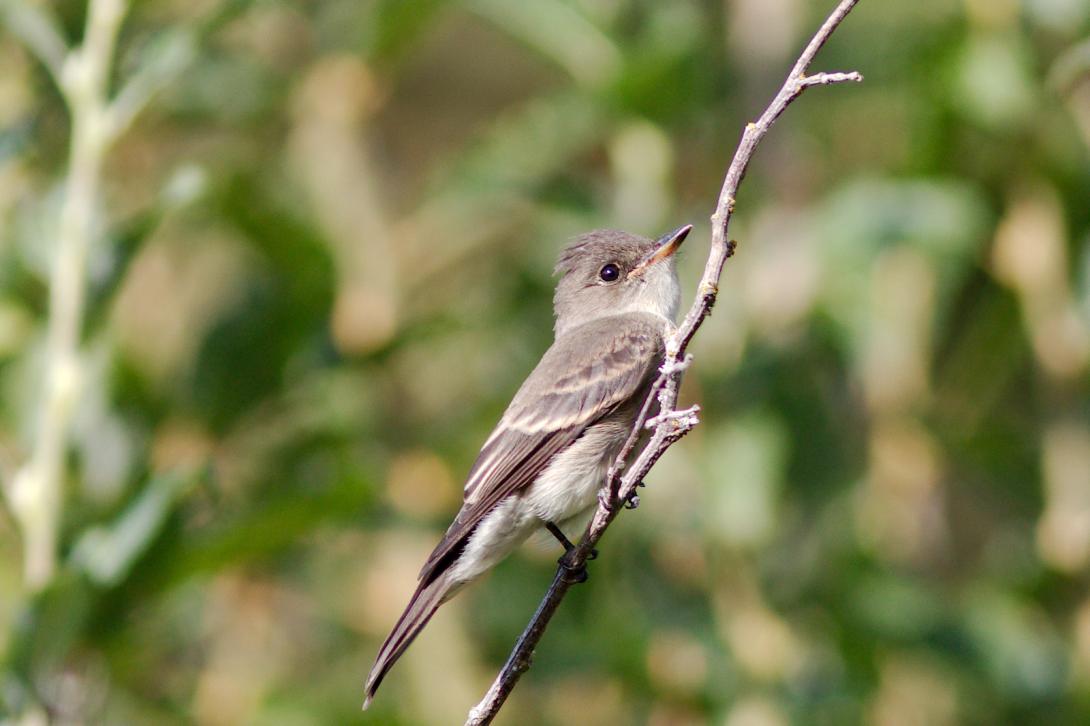
Taken by Steve Bennett at Willamette View on
.
Olive-sided Flycatcher
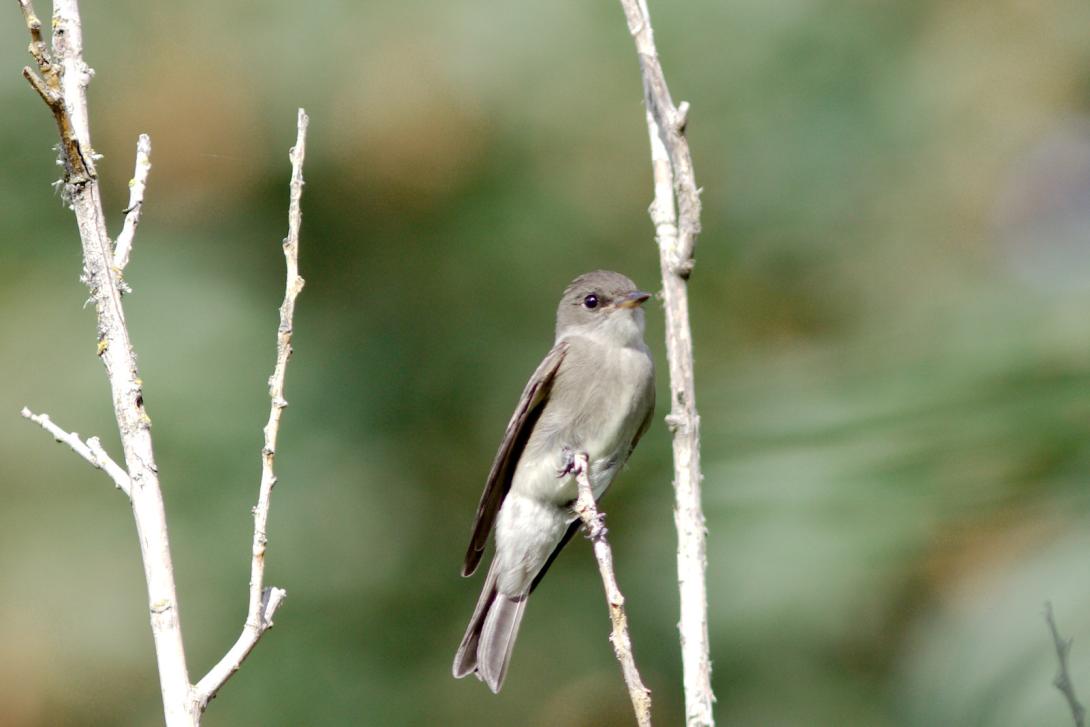
Taken by Steve Bennett at Willamette View on
.
Olive-sided Flycatcher