
Orange-crowned Warbler
Leiothlypis celata
Orange-crowned Warblers are one of Oregon's most common and widespread warbler species, found in a variety of shrubby and open woodland habitats. They are often described as one of the "plainest" warblers, lacking the bold patterns of many other species in their family, but they have subtle distinctions between the sexes.
It's important to note that Orange-crowned Warblers have several subspecies, and the one found in Western Oregon (lutescens) is typically brighter and more yellowish than those found further east.
Male Orange-crowned Warblers in Oregon:
Overall Color: Males are generally a bright, yellowish-olive green above and on their flanks, becoming a brighter yellow on the belly and especially on the undertail coverts. This yellow on the undertail coverts is often a key identification feature.
Head: The head is typically the same yellowish-olive as the body. They have a faint, dusky line through the eye and often a broken or incomplete pale eye-ring.
Orange Crown Patch: This is their namesake feature, but it's rarely visible in the field. It's a small patch of bright orange feathers on the top of the head (crown), which the bird can raise when excited, agitated, or singing. Most of the time, it's concealed by the surrounding olive feathers.
Bill: They have a thin, sharply pointed, and slightly decurved bill, dark on top and paler on the bottom.
Streaking: There might be very faint or obscure streaking on the breast and flanks, but it's much less prominent than on species like Yellow-rumped Warblers.
Behavior: Males are vocal during the breeding season, delivering a distinctive, accelerating, and slightly descending trill. They often forage low in shrubs and trees, gleaning insects.
Female Orange-crowned Warblers in Oregon:
Overall Color: Females are generally duller and less intensely colored than males, particularly in their yellow tones. They are typically a more muted olive-green or grayish-olive above, with a paler, sometimes dingy yellow to whitish belly.
Head: Similar to males, they have a faint eye-line and often an incomplete pale eye-ring. The head color is usually a duller version of the body color.
Orange Crown Patch: If present at all, the orange crown patch on a female is usually much smaller, duller, or entirely absent. It's even less likely to be seen than on a male.
Bill: Similar thin, pointed bill to the male.
Streaking: Any streaking on the underparts would be even fainter than on males.
Behavior: Females also forage in similar ways, gleaning insects from foliage.
Key Identification Challenges and Tips:
Overall Dullness: Their generally drab appearance can make them challenging to identify, especially for beginners.
Hidden Crown: Don't rely on seeing the orange crown patch for identification; it's truly a "hidden" feature.
Yellow Undertail Coverts: This is often the most reliable field mark for both sexes, as it's consistently brighter yellow than the rest of the underparts.
Bill Shape: Their slender, pointed bill is characteristic of warblers and can help distinguish them from sparrows or other small birds.
Behavior: They are often active foragers, flitting through dense vegetation. Their song, an accelerating, descending trill, is also a good clue, especially during spring and early summer.
Orange-crowned Warblers are one of the earliest warblers to arrive in Oregon in the spring and one of the last to leave in the fall, with some even wintering in mild coastal areas.
It's important to note that Orange-crowned Warblers have several subspecies, and the one found in Western Oregon (lutescens) is typically brighter and more yellowish than those found further east.
Male Orange-crowned Warblers in Oregon:
Overall Color: Males are generally a bright, yellowish-olive green above and on their flanks, becoming a brighter yellow on the belly and especially on the undertail coverts. This yellow on the undertail coverts is often a key identification feature.
Head: The head is typically the same yellowish-olive as the body. They have a faint, dusky line through the eye and often a broken or incomplete pale eye-ring.
Orange Crown Patch: This is their namesake feature, but it's rarely visible in the field. It's a small patch of bright orange feathers on the top of the head (crown), which the bird can raise when excited, agitated, or singing. Most of the time, it's concealed by the surrounding olive feathers.
Bill: They have a thin, sharply pointed, and slightly decurved bill, dark on top and paler on the bottom.
Streaking: There might be very faint or obscure streaking on the breast and flanks, but it's much less prominent than on species like Yellow-rumped Warblers.
Behavior: Males are vocal during the breeding season, delivering a distinctive, accelerating, and slightly descending trill. They often forage low in shrubs and trees, gleaning insects.
Female Orange-crowned Warblers in Oregon:
Overall Color: Females are generally duller and less intensely colored than males, particularly in their yellow tones. They are typically a more muted olive-green or grayish-olive above, with a paler, sometimes dingy yellow to whitish belly.
Head: Similar to males, they have a faint eye-line and often an incomplete pale eye-ring. The head color is usually a duller version of the body color.
Orange Crown Patch: If present at all, the orange crown patch on a female is usually much smaller, duller, or entirely absent. It's even less likely to be seen than on a male.
Bill: Similar thin, pointed bill to the male.
Streaking: Any streaking on the underparts would be even fainter than on males.
Behavior: Females also forage in similar ways, gleaning insects from foliage.
Key Identification Challenges and Tips:
Overall Dullness: Their generally drab appearance can make them challenging to identify, especially for beginners.
Hidden Crown: Don't rely on seeing the orange crown patch for identification; it's truly a "hidden" feature.
Yellow Undertail Coverts: This is often the most reliable field mark for both sexes, as it's consistently brighter yellow than the rest of the underparts.
Bill Shape: Their slender, pointed bill is characteristic of warblers and can help distinguish them from sparrows or other small birds.
Behavior: They are often active foragers, flitting through dense vegetation. Their song, an accelerating, descending trill, is also a good clue, especially during spring and early summer.
Orange-crowned Warblers are one of the earliest warblers to arrive in Oregon in the spring and one of the last to leave in the fall, with some even wintering in mild coastal areas.
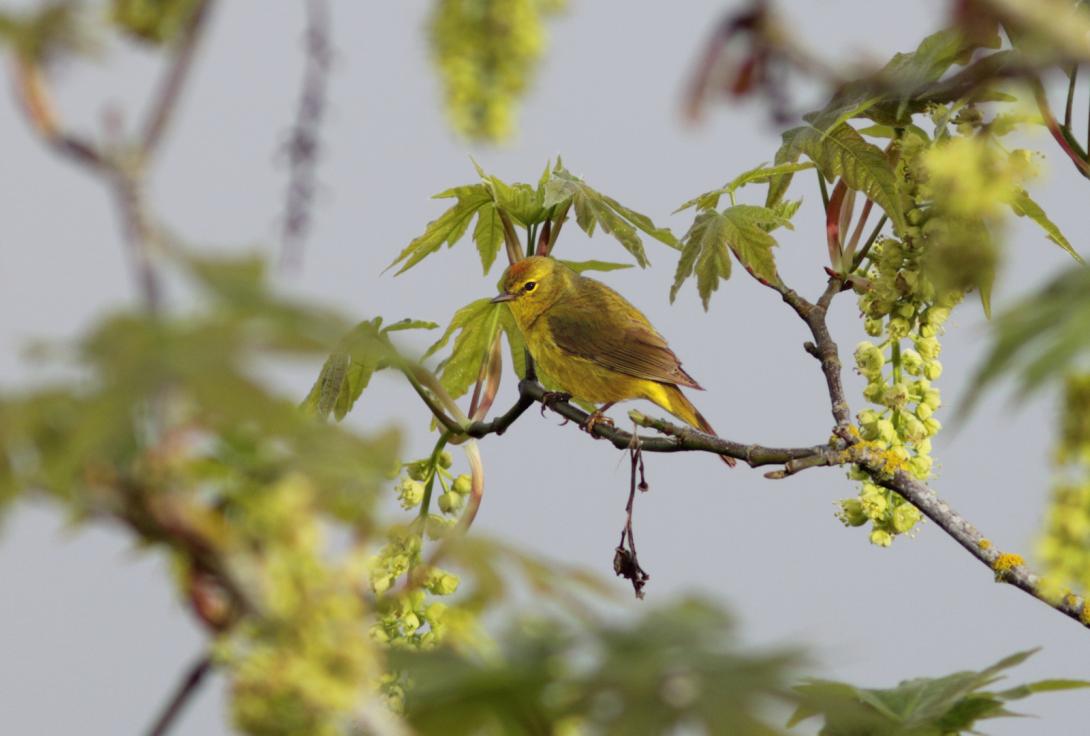
Taken by Steve Bennett at Willamette View on
.
Orange-crowned Warbler
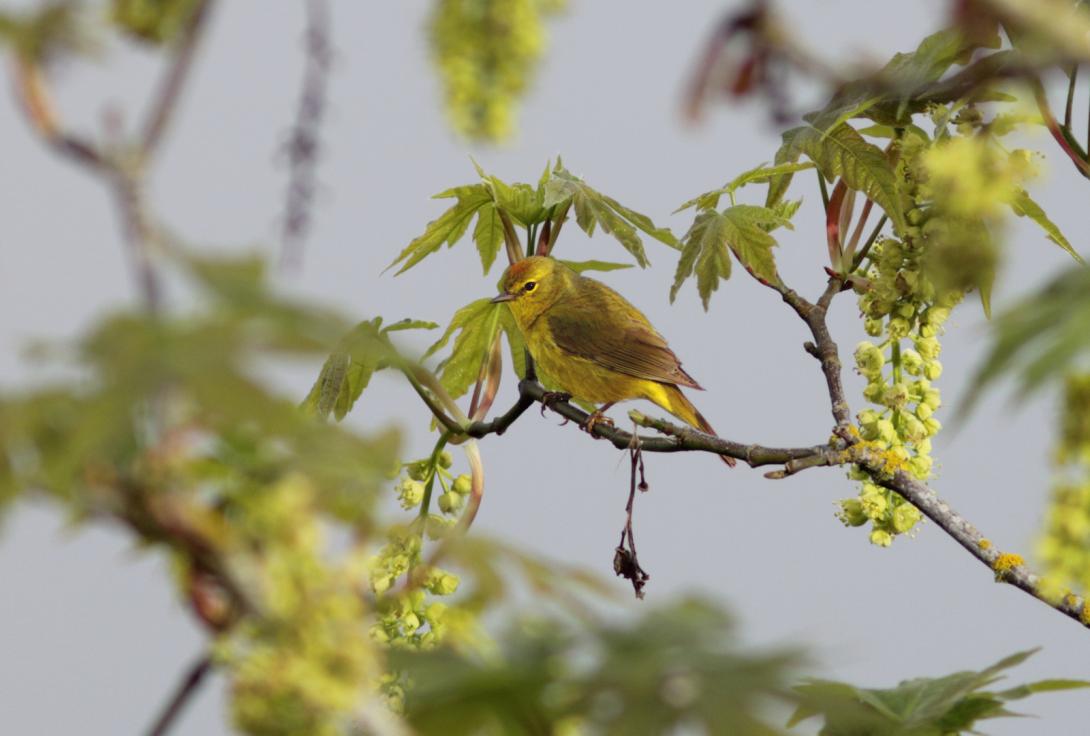
Taken by Steve Bennett at Willamette View on
.
Orange-crowned Warbler