
Pine Siskin
Spinus pinus
Pine Siskins are small, streaky, active finches that are common in Oregon, particularly in coniferous and mixed forests, but they also frequently visit bird feeders, especially during winter irruptions. They can be tricky to distinguish from other small, brown, streaky birds like sparrows or even female goldfinches, but a close look reveals their unique features.
A key challenge with Pine Siskins is that males and females are generally very similar in appearance, making individual sex identification difficult for many observers. However, there are subtle differences, particularly in the extent of yellow plumage.
Male Pine Siskin in Oregon:
Overall Coloration: They are heavily streaked birds, with a brownish or grayish-brown background color.
Streaking: Dark, coarse streaking covers their whitish underparts (belly and breast) and also extends onto their back and flanks.
Yellow Patches: The most distinguishing feature of a Pine Siskin, and often more pronounced in males, is the presence of yellow in their plumage. This yellow is typically found:
On the edges of their flight feathers (primaries and secondaries), creating subtle yellow edgings or patches on the wings.
Forming yellow wingbars (though these can be subtle and sometimes just appear as yellow flashes).
At the base of their tail feathers, particularly visible in flight or when the tail is fanned.
In some males, this yellow can be more extensive, occasionally appearing as a slight yellowish wash on the underparts, or more vivid on the wings and tail.
Bill: They have a distinctive, fine, sharply pointed, conical bill, which is more slender than that of most other finches. This bill is adapted for extracting small seeds from conifer cones and other plants.
Overall Impression: A small, busy, streaky brown bird with noticeable flashes of yellow on the wings and tail.
Female Pine Siskin in Oregon:
Overall Coloration: Very similar to the male, with a brownish or grayish-brown streaky body.
Streaking: Heavily streaked on the underparts, back, and flanks.
Yellow Patches: Females also possess yellow in their plumage, but it tends to be less extensive and less vivid than in males. The yellow on the wing edgings and at the base of the tail may be present but more muted, or sometimes barely visible.
Bill: Like the male, they have the characteristic slender, pointed, conical bill.
Overall Impression: Essentially a duller version of the male, often making it hard to confidently sex them without direct comparison to a brighter individual or very good views.
Key Identification Points for Both Sexes in Oregon:
Size: They are small, often described as sparrow-sized or even smaller than an American Goldfinch.
Bill: The slender, sharply pointed bill is a crucial identification feature, differentiating them from other small, streaky finches or sparrows which usually have thicker bills.
Streaking: Consistent, heavy streaking over their body.
Yellow: Look for the yellow flashes on the wings and tail, especially in flight.
Vocalizations: Their calls are highly distinctive and often the first clue to their presence. They produce a characteristic, often buzzy, rising "zweeee" or "zzzzzzzt" note, as well as rapid "chittering" sounds. They are very vocal birds, especially in flocks.
Behavior: They are highly active foragers, often hanging upside-down on cones or seed heads. They are typically found in flocks, which can be quite large, especially during winter irruptions.
Habitat and Diet in Oregon:
Habitat: Pine Siskins are found across Oregon wherever coniferous or mixed forests are present, from the Coast Range and Cascades to eastern Oregon. In winter, their movements are erratic and irruptive, meaning their numbers at lower elevations or feeders can vary dramatically year to year, depending on food availability in their northern breeding grounds. They will descend into more open areas, parks, and backyards.
Diet: Their primary diet consists of small seeds, particularly those of conifers (like hemlock, spruce, and fir), as well as alder and birch. They are very fond of Nyjer (thistle) seed and black oil sunflower seeds at feeders. They can be quite aggressive at feeders, often chasing off other birds.
A key challenge with Pine Siskins is that males and females are generally very similar in appearance, making individual sex identification difficult for many observers. However, there are subtle differences, particularly in the extent of yellow plumage.
Male Pine Siskin in Oregon:
Overall Coloration: They are heavily streaked birds, with a brownish or grayish-brown background color.
Streaking: Dark, coarse streaking covers their whitish underparts (belly and breast) and also extends onto their back and flanks.
Yellow Patches: The most distinguishing feature of a Pine Siskin, and often more pronounced in males, is the presence of yellow in their plumage. This yellow is typically found:
On the edges of their flight feathers (primaries and secondaries), creating subtle yellow edgings or patches on the wings.
Forming yellow wingbars (though these can be subtle and sometimes just appear as yellow flashes).
At the base of their tail feathers, particularly visible in flight or when the tail is fanned.
In some males, this yellow can be more extensive, occasionally appearing as a slight yellowish wash on the underparts, or more vivid on the wings and tail.
Bill: They have a distinctive, fine, sharply pointed, conical bill, which is more slender than that of most other finches. This bill is adapted for extracting small seeds from conifer cones and other plants.
Overall Impression: A small, busy, streaky brown bird with noticeable flashes of yellow on the wings and tail.
Female Pine Siskin in Oregon:
Overall Coloration: Very similar to the male, with a brownish or grayish-brown streaky body.
Streaking: Heavily streaked on the underparts, back, and flanks.
Yellow Patches: Females also possess yellow in their plumage, but it tends to be less extensive and less vivid than in males. The yellow on the wing edgings and at the base of the tail may be present but more muted, or sometimes barely visible.
Bill: Like the male, they have the characteristic slender, pointed, conical bill.
Overall Impression: Essentially a duller version of the male, often making it hard to confidently sex them without direct comparison to a brighter individual or very good views.
Key Identification Points for Both Sexes in Oregon:
Size: They are small, often described as sparrow-sized or even smaller than an American Goldfinch.
Bill: The slender, sharply pointed bill is a crucial identification feature, differentiating them from other small, streaky finches or sparrows which usually have thicker bills.
Streaking: Consistent, heavy streaking over their body.
Yellow: Look for the yellow flashes on the wings and tail, especially in flight.
Vocalizations: Their calls are highly distinctive and often the first clue to their presence. They produce a characteristic, often buzzy, rising "zweeee" or "zzzzzzzt" note, as well as rapid "chittering" sounds. They are very vocal birds, especially in flocks.
Behavior: They are highly active foragers, often hanging upside-down on cones or seed heads. They are typically found in flocks, which can be quite large, especially during winter irruptions.
Habitat and Diet in Oregon:
Habitat: Pine Siskins are found across Oregon wherever coniferous or mixed forests are present, from the Coast Range and Cascades to eastern Oregon. In winter, their movements are erratic and irruptive, meaning their numbers at lower elevations or feeders can vary dramatically year to year, depending on food availability in their northern breeding grounds. They will descend into more open areas, parks, and backyards.
Diet: Their primary diet consists of small seeds, particularly those of conifers (like hemlock, spruce, and fir), as well as alder and birch. They are very fond of Nyjer (thistle) seed and black oil sunflower seeds at feeders. They can be quite aggressive at feeders, often chasing off other birds.
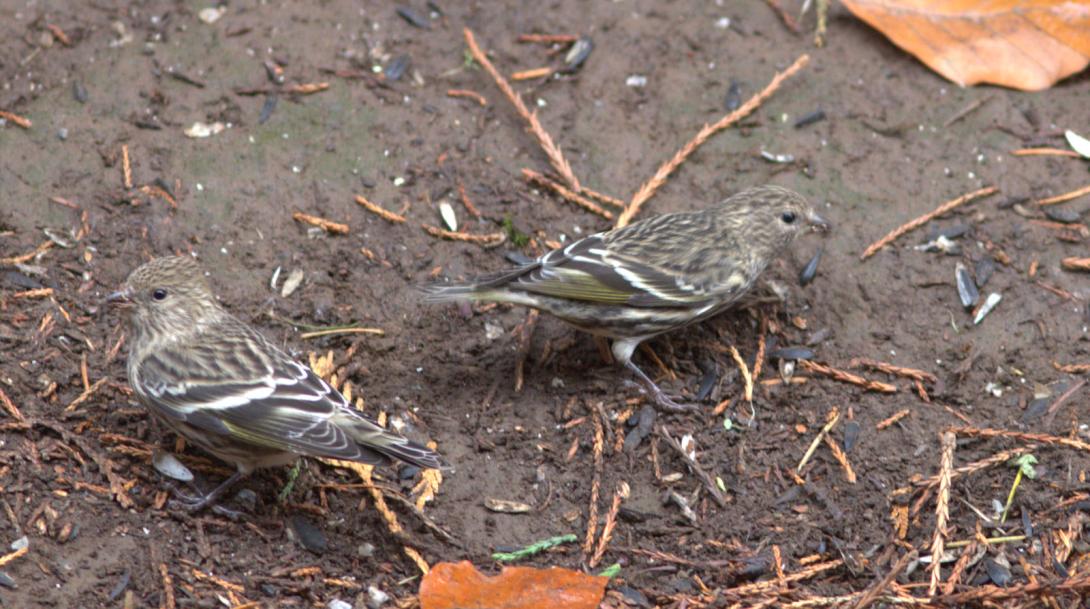
Taken by Steve Bennett at Milwaukie, OR on
.
Pine SIskins