
Spotted Sandpiper
Actitis macularius
Male and female Spotted Sandpipers are visually very similar, but females tend to be slightly larger and have bolder spots on their breast and belly during the breeding season. Both sexes have a brown back with faint black bars, a white underbelly with black spots (more prominent in breeding season), and an orange bill with a black tip. They also share a white stripe above the eye and a thin white stripe on the wings in flight.
Key Differences:
• Size: Females are generally larger than males.
• Spots: While both have spots on their underparts, females tend to have larger, more noticeable spots, especially during the breeding season.
• Weight: Females are also heavier, weighing 43-50g compared to males 34-41g.
• Behavior: Females tend to be more aggressive and territorial during the breeding season.
Other Notable Features:
• Bill: Orange with a black tip in the breeding season, yellowish with a black tip in winter.
• Legs: Yellowish.
• Teetering: Spotted Sandpipers are known for their distinctive teetering or bobbing motion, especially when perched or walking.
• Flight: They have a distinctive stiff-winged flight low over the water.
Breeding Season Differences:
• During the breeding season, the black spots on the underparts of both sexes are more pronounced.
• Females become more aggressive and territorial, actively defending their chosen area.
• Females may also exhibit higher testosterone levels during this period.
Key Differences:
• Size: Females are generally larger than males.
• Spots: While both have spots on their underparts, females tend to have larger, more noticeable spots, especially during the breeding season.
• Weight: Females are also heavier, weighing 43-50g compared to males 34-41g.
• Behavior: Females tend to be more aggressive and territorial during the breeding season.
Other Notable Features:
• Bill: Orange with a black tip in the breeding season, yellowish with a black tip in winter.
• Legs: Yellowish.
• Teetering: Spotted Sandpipers are known for their distinctive teetering or bobbing motion, especially when perched or walking.
• Flight: They have a distinctive stiff-winged flight low over the water.
Breeding Season Differences:
• During the breeding season, the black spots on the underparts of both sexes are more pronounced.
• Females become more aggressive and territorial, actively defending their chosen area.
• Females may also exhibit higher testosterone levels during this period.
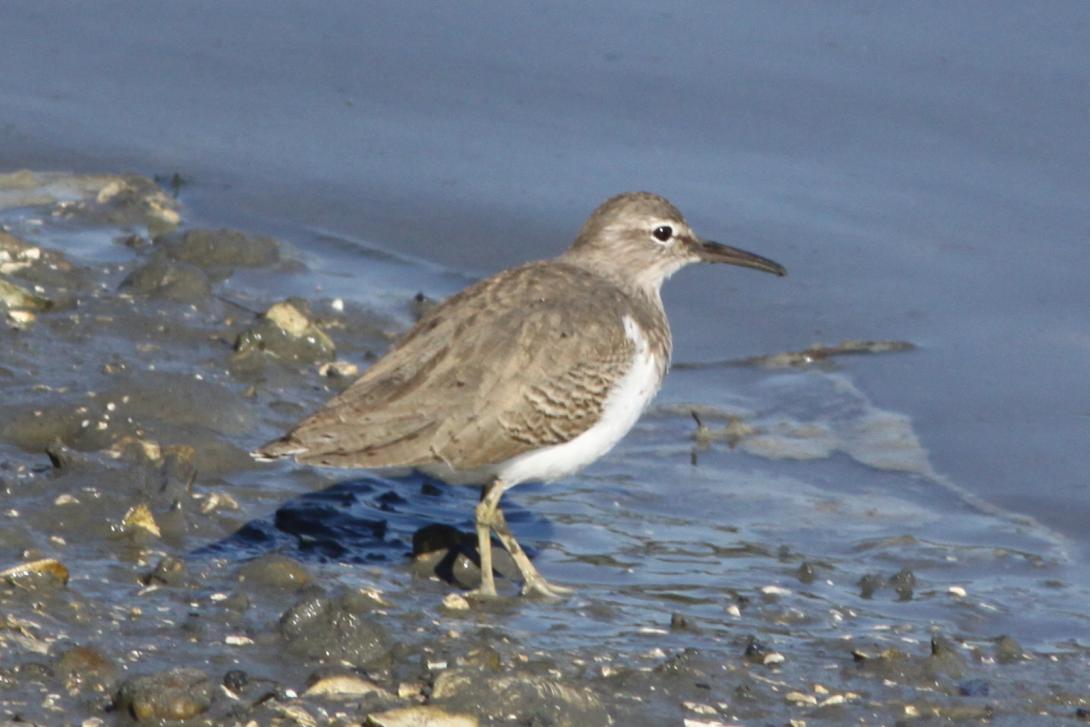
Taken by Steve Bennett at Huntington Beach, South Carolina on
.
Spotted Sandpiper