
Townsend’s Warbler
Setophaga townsendi
Townsend's Warblers are truly a Pacific Northwest specialty, common in Oregon's coniferous forests, especially during the breeding season. They are known for their bold black and yellow patterns and can be quite a striking sight. They also winter along the Oregon coast and in western Oregon's mixed woodlands, making them a bird that can be seen year-round in some parts of the state.
Male Townsend's Warblers in Oregon (Breeding Plumage):
Head: A highly distinctive pattern. They have a black cap and a prominent, broad black cheek patch (or ear patch) that contrasts sharply with the surrounding yellow.
Face: The black cheek patch is bordered by vibrant yellow. There's a broad yellow supercilium (eyebrow) above the eye, and a prominent yellow crescent or patch below the eye that extends onto the malar (whisker) area. A tiny yellow spot at the base of the bill (lores) is often visible.
Throat: A solid, prominent black throat and upper breast.
Underparts: The rest of the underparts are bright yellow, becoming whiter towards the lower belly and undertail coverts. They have bold black streaks on their flanks (sides).
Upperparts: The back is olive-green, often with distinct black streaks.
Wings: Dark wings with two thick, clean white wing bars.
Tail: Dark tail feathers with white patches on the outer tail feathers, visible when fanned.
Bill: A thin, pointed bill, dark above and paler below.
Song: Their song is buzzy, high-pitched, and often seems to speed up, sometimes described as "zee-zee-zee-zoo-zee" or similar to the Black-throated Green Warbler's song but often with a rising inflection.
Female Townsend's Warblers in Oregon (Breeding Plumage):
Overall: Females share the same general pattern as the males but are duller and have less intense black markings.
Head and Face:
The cap is dark gray or olive-green with some dusky streaking, not solid black.
The cheek patch is still present but a duller, dusky gray or dark olive, not jet black, making the contrast with the yellow less stark.
The yellow supercilium and sub-ocular crescent are still visible but may be slightly less bright. The yellow spot at the lores is usually present.
Throat: This is the most variable part for females. The throat is typically mostly yellow, but it may have some dusky mottling or fine streaking, especially where the male has solid black. It does not have the male's solid black bib.
Underparts: The yellow on the underparts is generally paler than the male's, and the black streaks on the flanks are less prominent and fewer.
Upperparts: The back is olive-green, often with less distinct streaking than the male.
Wings: Two white wing bars are present, similar to the male, but perhaps slightly less bright.
Tail: Dark tail with white outer tail feathers.
Key Identification Points for both sexes in Oregon:
Yellow and Black Face Pattern: This is their most distinctive feature. Even on duller females, the contrasting yellow surrounding a dark cheek patch is key.
Two White Wing Bars: Always present and noticeable.
Olive-Green Back and Streaked Sides: Common to both sexes.
Habitat: Primarily found in coniferous forests (Douglas-fir, grand fir, spruce, hemlock) in Oregon, especially mature stands. In winter, they may move to lower elevations and can be seen in mixed woodlands and even visit suet feeders in backyards along the Pacific Coast.
Song: Their buzzy, high-pitched song is a great way to locate them, particularly when they are foraging high in the canopy.
Hybridization with Hermit Warblers: In parts of Oregon and Washington where their breeding ranges overlap, Townsend's Warblers can hybridize with Hermit Warblers. These hybrids can show intermediate plumages, often combining the yellow face of a Townsend's with a whiter throat and more extensive black on the back, making identification more challenging. However, pure Townsend's and Hermit Warblers are usually quite distinct.
Male Townsend's Warblers in Oregon (Breeding Plumage):
Head: A highly distinctive pattern. They have a black cap and a prominent, broad black cheek patch (or ear patch) that contrasts sharply with the surrounding yellow.
Face: The black cheek patch is bordered by vibrant yellow. There's a broad yellow supercilium (eyebrow) above the eye, and a prominent yellow crescent or patch below the eye that extends onto the malar (whisker) area. A tiny yellow spot at the base of the bill (lores) is often visible.
Throat: A solid, prominent black throat and upper breast.
Underparts: The rest of the underparts are bright yellow, becoming whiter towards the lower belly and undertail coverts. They have bold black streaks on their flanks (sides).
Upperparts: The back is olive-green, often with distinct black streaks.
Wings: Dark wings with two thick, clean white wing bars.
Tail: Dark tail feathers with white patches on the outer tail feathers, visible when fanned.
Bill: A thin, pointed bill, dark above and paler below.
Song: Their song is buzzy, high-pitched, and often seems to speed up, sometimes described as "zee-zee-zee-zoo-zee" or similar to the Black-throated Green Warbler's song but often with a rising inflection.
Female Townsend's Warblers in Oregon (Breeding Plumage):
Overall: Females share the same general pattern as the males but are duller and have less intense black markings.
Head and Face:
The cap is dark gray or olive-green with some dusky streaking, not solid black.
The cheek patch is still present but a duller, dusky gray or dark olive, not jet black, making the contrast with the yellow less stark.
The yellow supercilium and sub-ocular crescent are still visible but may be slightly less bright. The yellow spot at the lores is usually present.
Throat: This is the most variable part for females. The throat is typically mostly yellow, but it may have some dusky mottling or fine streaking, especially where the male has solid black. It does not have the male's solid black bib.
Underparts: The yellow on the underparts is generally paler than the male's, and the black streaks on the flanks are less prominent and fewer.
Upperparts: The back is olive-green, often with less distinct streaking than the male.
Wings: Two white wing bars are present, similar to the male, but perhaps slightly less bright.
Tail: Dark tail with white outer tail feathers.
Key Identification Points for both sexes in Oregon:
Yellow and Black Face Pattern: This is their most distinctive feature. Even on duller females, the contrasting yellow surrounding a dark cheek patch is key.
Two White Wing Bars: Always present and noticeable.
Olive-Green Back and Streaked Sides: Common to both sexes.
Habitat: Primarily found in coniferous forests (Douglas-fir, grand fir, spruce, hemlock) in Oregon, especially mature stands. In winter, they may move to lower elevations and can be seen in mixed woodlands and even visit suet feeders in backyards along the Pacific Coast.
Song: Their buzzy, high-pitched song is a great way to locate them, particularly when they are foraging high in the canopy.
Hybridization with Hermit Warblers: In parts of Oregon and Washington where their breeding ranges overlap, Townsend's Warblers can hybridize with Hermit Warblers. These hybrids can show intermediate plumages, often combining the yellow face of a Townsend's with a whiter throat and more extensive black on the back, making identification more challenging. However, pure Townsend's and Hermit Warblers are usually quite distinct.
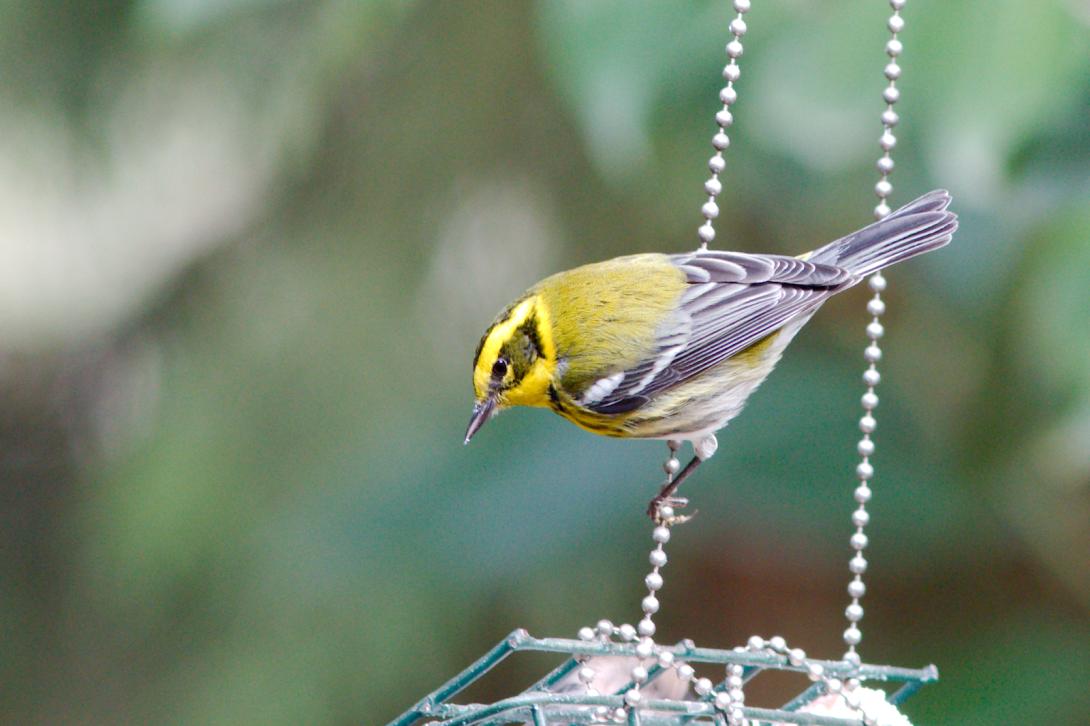
Taken by Steve Bennett at Milwaukie, Oregon on
.
Townsend’s Warbler
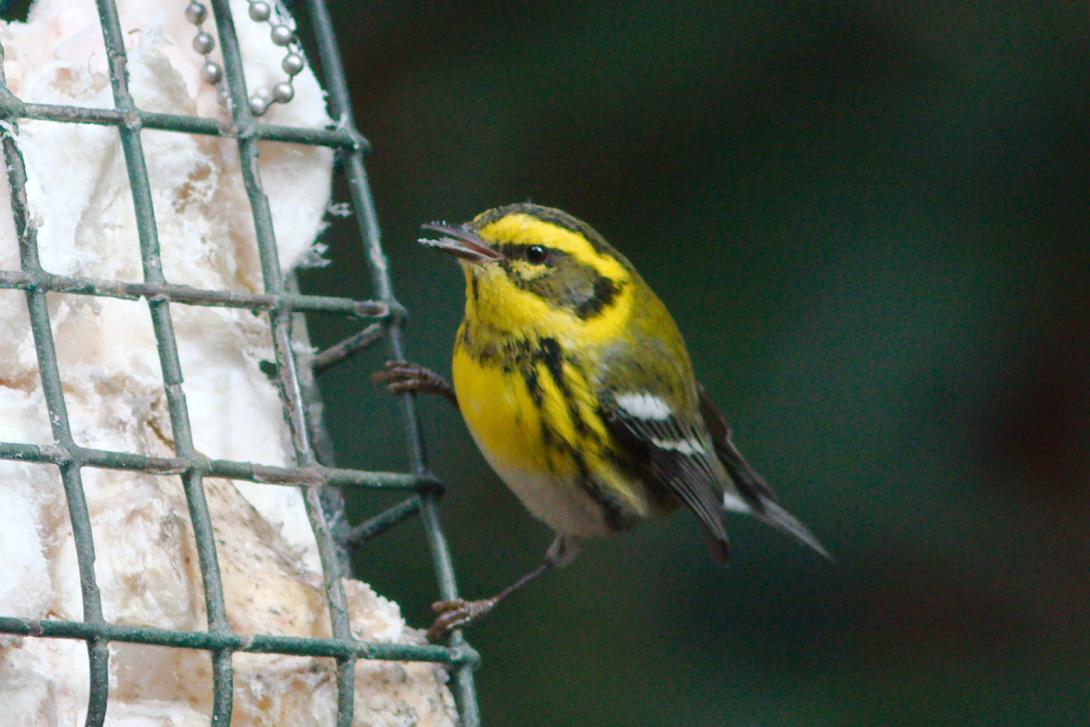
Taken by Steve Bennett at Milwaukie, Oregon on
.
Townsend’s Warbler
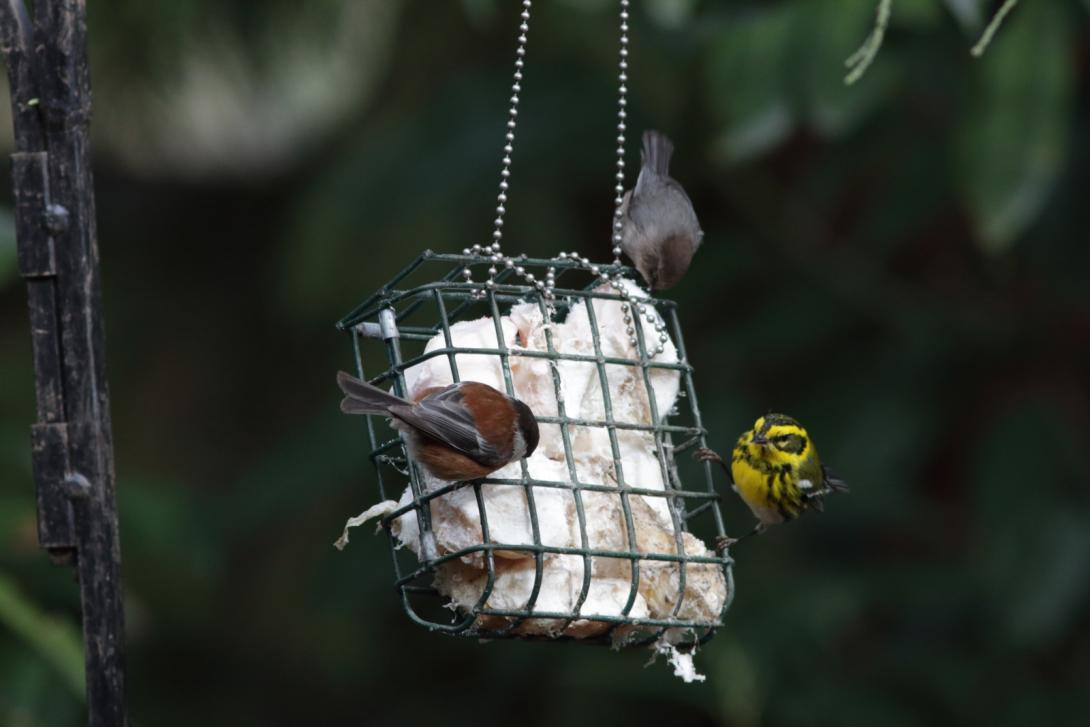
Taken by Steve Bennett at Milwaukie, Oregon on
.
Townsend’s Warbler, Chestnut-backed Chickadee, Bushtit