
Turkey Vulture
Cathartes aura
Turkey Vultures are a common sight in Oregon, particularly during the warmer months, as they soar overhead on thermal air currents. When it comes to distinguishing between males and females, there are no significant visual differences in plumage or size.
General Appearance (Both Sexes):
Size and Shape: Turkey Vultures are large birds, typically weighing between 2-5 pounds with a wingspan of 5.5 to 6 feet (around 68-72 inches). They have a relatively small, featherless head in proportion to their body, a long tail, and broad wings.
Plumage: Their body feathers are dark brown to black. In flight, the underside of their wings shows a distinctive two-toned pattern: the leading edge and wing linings are dark, while the flight feathers (primaries and secondaries) appear a lighter, silvery-gray, giving them a "two-toned" look.
Head: Adult Turkey Vultures have a striking **bald, red head and upper neck**, which can appear wrinkled or warty. This featherless head is an adaptation for hygiene, as it prevents feathers from getting soiled while feeding on carrion.
Beak: Their beak is ivory-colored, relatively short, and hooked at the tip. They have large, oval, perforate nostrils (meaning you can see through their beak from one side to the other).
Flight: They are renowned for their graceful, soaring flight. They typically hold their wings in a shallow "V" shape (dihedral) and often appear to "teeter" or wobble from side to side as they ride thermals. They rarely flap their wings.
Legs and Feet: Their legs and feet are pinkish, but often appear whitish due to their habit of defecating on them to help regulate body temperature in the heat.
Plumage: Both male and female Turkey Vultures have the same brownish-black plumage and distinctive red, bald head.
Size: While there can be slight individual variation, males and females are generally similar in size and weight. Any size difference is usually not enough to reliably distinguish them in the field without direct comparison of a known pair.
Juvenile Differences:
Young (juvenile) Turkey Vultures are the only ones that look noticeably different from adults. Their heads are dark gray or black rather than red, and they have more feathers on their heads compared to adults. As they mature, their heads gradually turn red and become more featherless.
Behavior (Both Sexes):
Scavenging: Turkey Vultures are obligate scavengers, meaning they primarily feed on carrion (dead animals). They have an exceptionally keen sense of smell, which allows them to locate carcasses from great distances, even under a forest canopy. They also use their excellent eyesight when soaring at higher altitudes.
Roosting: They often gather in large communal roosts, particularly at night, in large dead trees or man-made structures.
Defense Mechanism: When threatened, Turkey Vultures may vomit their stomach contents as a defense mechanism, which can be quite an effective deterrent due to its foul smell and stinging nature.
General Appearance (Both Sexes):
Size and Shape: Turkey Vultures are large birds, typically weighing between 2-5 pounds with a wingspan of 5.5 to 6 feet (around 68-72 inches). They have a relatively small, featherless head in proportion to their body, a long tail, and broad wings.
Plumage: Their body feathers are dark brown to black. In flight, the underside of their wings shows a distinctive two-toned pattern: the leading edge and wing linings are dark, while the flight feathers (primaries and secondaries) appear a lighter, silvery-gray, giving them a "two-toned" look.
Head: Adult Turkey Vultures have a striking **bald, red head and upper neck**, which can appear wrinkled or warty. This featherless head is an adaptation for hygiene, as it prevents feathers from getting soiled while feeding on carrion.
Beak: Their beak is ivory-colored, relatively short, and hooked at the tip. They have large, oval, perforate nostrils (meaning you can see through their beak from one side to the other).
Flight: They are renowned for their graceful, soaring flight. They typically hold their wings in a shallow "V" shape (dihedral) and often appear to "teeter" or wobble from side to side as they ride thermals. They rarely flap their wings.
Legs and Feet: Their legs and feet are pinkish, but often appear whitish due to their habit of defecating on them to help regulate body temperature in the heat.
Plumage: Both male and female Turkey Vultures have the same brownish-black plumage and distinctive red, bald head.
Size: While there can be slight individual variation, males and females are generally similar in size and weight. Any size difference is usually not enough to reliably distinguish them in the field without direct comparison of a known pair.
Juvenile Differences:
Young (juvenile) Turkey Vultures are the only ones that look noticeably different from adults. Their heads are dark gray or black rather than red, and they have more feathers on their heads compared to adults. As they mature, their heads gradually turn red and become more featherless.
Behavior (Both Sexes):
Scavenging: Turkey Vultures are obligate scavengers, meaning they primarily feed on carrion (dead animals). They have an exceptionally keen sense of smell, which allows them to locate carcasses from great distances, even under a forest canopy. They also use their excellent eyesight when soaring at higher altitudes.
Roosting: They often gather in large communal roosts, particularly at night, in large dead trees or man-made structures.
Defense Mechanism: When threatened, Turkey Vultures may vomit their stomach contents as a defense mechanism, which can be quite an effective deterrent due to its foul smell and stinging nature.
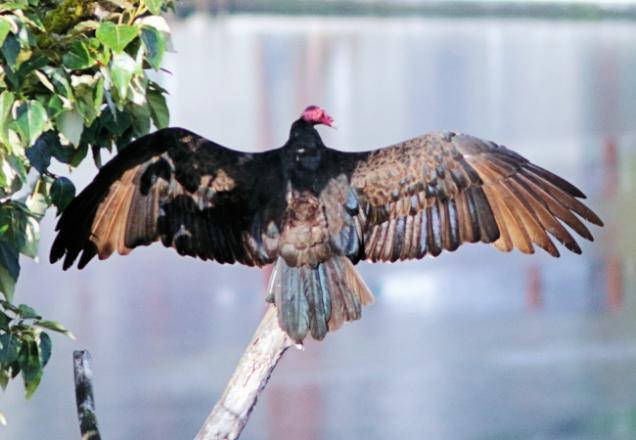
Taken by Steve Bennett at Willamette View on
.
Adult Turkey Vulture
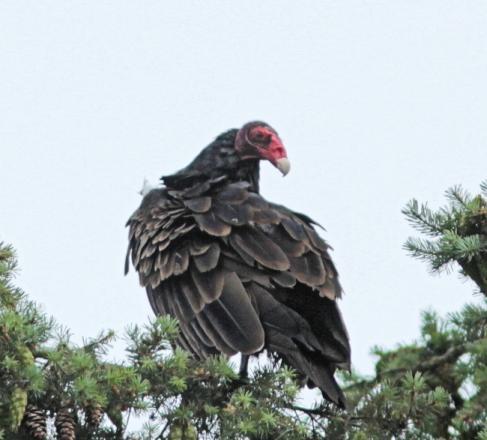
Taken by Steve Bennett at Willamette View on
.
Adult Turkey Vulture