
Wilson’s Warbler
Cardellina pusilla
Wilson's Warblers are common and energetic warblers found throughout Oregon during the breeding season, particularly in dense, wet, deciduous thickets, riparian areas, and regenerating forests. They are highly active, constantly flitting and gleaning insects, and their striking color (especially the male) makes them a favorite among birders.
Male Wilson's Warblers in Oregon (Breeding Plumage):
Overall Color: Males are a vibrant, uniform bright yellow on their underparts (throat, breast, belly, undertail coverts). Their upperparts (back, wings, tail) are a contrasting bright olive-green.
Cap: The most distinctive feature of the male is its neat, glossy black cap on the crown of the head. This cap is sharply defined and looks almost like a little beret.
Face: The face is clear yellow, making their relatively large, dark eye stand out prominently. They lack any strong facial stripes or eye-ring.
Bill: They have a small, very thin, and sharply pointed bill, dark on top and paler on the bottom.
Tail: The tail is olive-green.
Behavior: Very active, constantly twitching their tail and flitting through dense low vegetation. They often hover briefly to glean insects.
Song: Their song is a rapid, accelerating series of "chi" or "chup" notes, often described as "chi-chi-chi-chi-CHUP-chup-chup."
Female Wilson's Warblers in Oregon (Breeding Plumage):
Overall Color: Females are also predominantly yellow on their underparts and olive-green on their upperparts, but their colors are generally duller and less intense than the males.
Cap: This is the key difference. The black cap of the male is absent or greatly reduced in females. Instead, the crown is either:
Olive-green, similar to the back, with no black.
Or, in some females (especially older ones), a faint, dusky, or grayish olive cap may be present, but it will never be the sharp, glossy black of the male. It blends in much more with the surrounding plumage.
Face: The face is duller yellow, with a dark eye.
Bill: Similar to the male's small, thin bill.
Tail: Olive-green.
Behavior: Like males, they are highly active foragers in dense vegetation.
Key Identification Points for both sexes in Oregon:
Overall Bright Yellow Underparts and Olive-Green Upperparts: This distinct two-toned look is characteristic.
Lack of Wing Bars or Tail Spots: Unlike many other warblers, they are very plain in these areas.
Male's Black Cap: Unmistakable for the male.
Female's Lack of Strong Cap: The absence of a prominent black cap on a yellow and olive warbler is key for identifying females.
Small, Thin Bill: Their delicate bill is suited for insect-gleaning.
Habitat: Look for them in dense, low, often wet, deciduous vegetation, such as willow thickets, alder swamps, and shrubby areas along streams.
Active Foraging: Their constant movement and tail-twitching are good clues.
Song: Their accelerating "chi-chi-chi" song is a great way to locate them.
Wilson's Warblers are entirely insectivorous. They build well-concealed cup nests on or very close to the ground, often among roots or in a tussock of grass within dense cover. They are common summer residents throughout much of Oregon, arriving in late April to May and departing by September.
Male Wilson's Warblers in Oregon (Breeding Plumage):
Overall Color: Males are a vibrant, uniform bright yellow on their underparts (throat, breast, belly, undertail coverts). Their upperparts (back, wings, tail) are a contrasting bright olive-green.
Cap: The most distinctive feature of the male is its neat, glossy black cap on the crown of the head. This cap is sharply defined and looks almost like a little beret.
Face: The face is clear yellow, making their relatively large, dark eye stand out prominently. They lack any strong facial stripes or eye-ring.
Bill: They have a small, very thin, and sharply pointed bill, dark on top and paler on the bottom.
Tail: The tail is olive-green.
Behavior: Very active, constantly twitching their tail and flitting through dense low vegetation. They often hover briefly to glean insects.
Song: Their song is a rapid, accelerating series of "chi" or "chup" notes, often described as "chi-chi-chi-chi-CHUP-chup-chup."
Female Wilson's Warblers in Oregon (Breeding Plumage):
Overall Color: Females are also predominantly yellow on their underparts and olive-green on their upperparts, but their colors are generally duller and less intense than the males.
Cap: This is the key difference. The black cap of the male is absent or greatly reduced in females. Instead, the crown is either:
Olive-green, similar to the back, with no black.
Or, in some females (especially older ones), a faint, dusky, or grayish olive cap may be present, but it will never be the sharp, glossy black of the male. It blends in much more with the surrounding plumage.
Face: The face is duller yellow, with a dark eye.
Bill: Similar to the male's small, thin bill.
Tail: Olive-green.
Behavior: Like males, they are highly active foragers in dense vegetation.
Key Identification Points for both sexes in Oregon:
Overall Bright Yellow Underparts and Olive-Green Upperparts: This distinct two-toned look is characteristic.
Lack of Wing Bars or Tail Spots: Unlike many other warblers, they are very plain in these areas.
Male's Black Cap: Unmistakable for the male.
Female's Lack of Strong Cap: The absence of a prominent black cap on a yellow and olive warbler is key for identifying females.
Small, Thin Bill: Their delicate bill is suited for insect-gleaning.
Habitat: Look for them in dense, low, often wet, deciduous vegetation, such as willow thickets, alder swamps, and shrubby areas along streams.
Active Foraging: Their constant movement and tail-twitching are good clues.
Song: Their accelerating "chi-chi-chi" song is a great way to locate them.
Wilson's Warblers are entirely insectivorous. They build well-concealed cup nests on or very close to the ground, often among roots or in a tussock of grass within dense cover. They are common summer residents throughout much of Oregon, arriving in late April to May and departing by September.
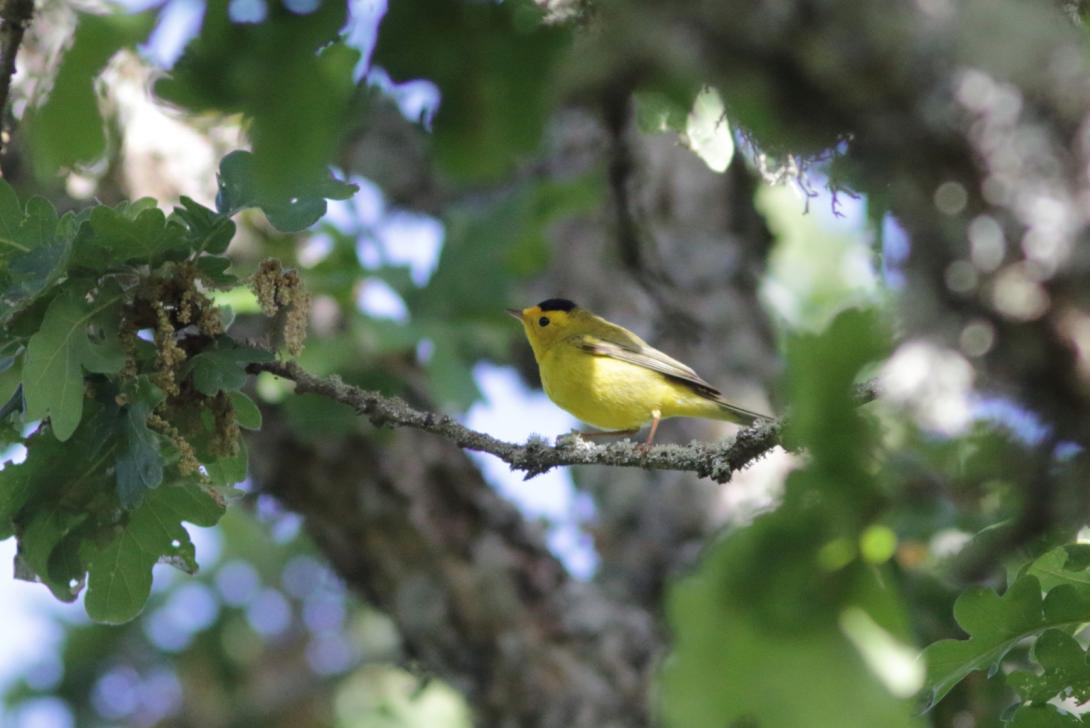
Taken by Steve Bennett at Willamette View on
.
Wilson’s Warbler
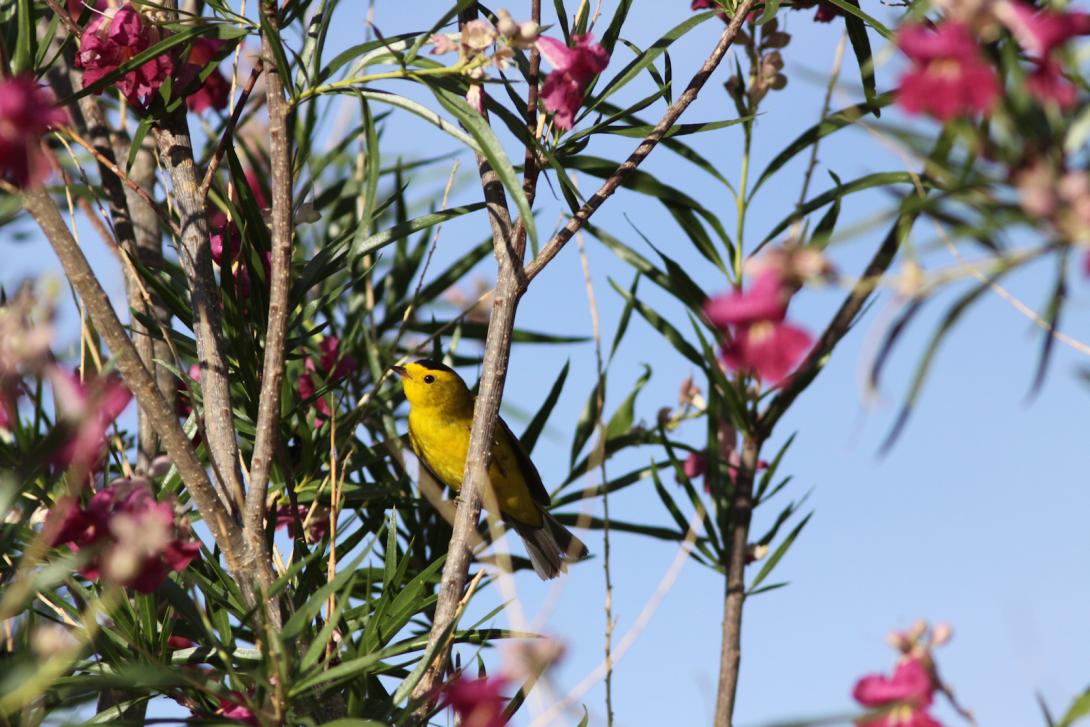
Taken by Steve Bennett at Willamette View on
.
Wilson’s Warbler