
Yellow-rumped Warbler
Setophaga coronata
Yellow-rumped Warblers are perhaps the most common and widespread warblers in Oregon, particularly outside of the breeding season. What makes them especially interesting in Oregon is that two distinct subspecies groups are regularly found: the "Audubon's" Warbler (which breeds in western North America, including much of Oregon) and the "Myrtle" Warbler (which breeds in eastern North America and the boreal forest, and migrates through and winters in Oregon).
While they are now considered the same species, their plumage differences are quite noticeable. Intergrades (hybrids) between the two forms can also occur.
1. "Audubon's" Yellow-rumped Warbler (Common breeding form in Oregon)
Male "Audubon's" Yellow-rumped Warbler (Breeding Plumage):
Overall: A striking combination of gray, black, white, and yellow.
Rump Patch: The defining feature for the species – a bright, almost neon yellow patch on the rump (just above the tail). This is visible on both sexes and all plumages.
Throat: A prominent bright yellow throat. This is the key difference from the "Myrtle" form.
Head: Generally gray, with a small but distinct yellow crown patch on the top of the head (often hard to see unless the bird is excited). The face may show some dusky markings.
Breast/Sides: Gray breast and flanks, often with yellow patches on the sides of the breast.
Back: Gray with distinct black streaks.
Wings: Two prominent white wing bars. Often also has a large amount of white in the wing, forming a prominent patch, especially on the primaries, which is more extensive than on the Myrtle form.
Tail: Dark tail with white spots on the outer tail feathers, visible when fanned.
Female "Audubon's" Yellow-rumped Warbler (Breeding Plumage):
Overall: Duller than the male, with more brown tones.
Rump Patch: Still has the bright yellow rump patch.
Throat: The throat is typically yellow, but it's a paler, less vibrant yellow than on the male, sometimes appearing yellowish-white.
Head: More brownish-gray on the head, with a duller or absent yellow crown patch. The face is less distinctly marked than the male.
Underparts: Breast and flanks are brownish-gray, with less distinct or absent yellow patches on the sides.
Back: Brownish-gray with streaking.
Wings: Two noticeable white wing bars, but the white is generally less extensive than on the male.
Tail: Dark tail with white spots on the outer feathers.
Winter Plumage (Both Sexes, "Audubon's"):
Much duller overall, with more brown and less distinct patterns.
The yellow rump patch remains bright and is a key identification feature.
Some yellow often persists on the sides of the breast and occasionally on the throat.
The streaking on the back and breast becomes more prominent brown on a buffy-gray background.
2. "Myrtle" Yellow-rumped Warbler (Common migrant/wintering form in Oregon)
Male "Myrtle" Yellow-rumped Warbler (Breeding Plumage):
Rump Patch: Bright yellow rump patch (same as Audubon's).
Throat: The key difference: a clean white throat.
Head/Face: Has a bolder facial pattern compared to Audubon's. The head is dark gray to blackish, often forming a distinct "mask" around the eye, contrasting sharply with the white throat and a white supercilium (eyebrow) that extends behind the eye. It also has a yellow crown patch.
Breast/Sides: Black on the upper breast, with bright yellow patches on the sides.
Back: Dark gray to blackish with streaking.
Wings: Two prominent white wing bars. The amount of white in the wing is generally less extensive than on the "Audubon's" form.
Female "Myrtle" Yellow-rumped Warbler (Breeding Plumage):
Rump Patch: Bright yellow rump patch.
Throat: White throat.
Head/Face: Duller than the male, with a brownish-gray head and a less distinct dark ear patch and white eyebrow.
Underparts: Breast and flanks are brownish, often with some streaking, and less prominent yellow patches on the sides.
Back: Brownish with streaking.
Wings: Two white wing bars.
Winter Plumage (Both Sexes, "Myrtle"):
Very dull and brownish overall, often quite streaky.
The yellow rump patch remains bright and diagnostic.
The throat is usually dull whitish, and there may be a faint yellowish wash on the sides.
Key Differences for ID in Oregon:
Throat Color: Yellow throat = "Audubon's". White throat = "Myrtle". This is the most reliable field mark.
Facial Pattern: "Audubon's" has a plainer gray face (male) or brownish-gray (female) with a less defined dark ear patch. "Myrtle" has a bolder dark mask and a more contrasting white throat and white above the eye.
Wing Pattern: "Audubon's" males tend to show more extensive white in the wing beyond the two wing bars.
Presence in Oregon: Both forms are present. "Audubon's" is the primary breeding subspecies in Oregon, while "Myrtle" is a common migrant and winter resident.
Yellow-rumped Warblers are highly adaptable and can be found in a wide variety of habitats in Oregon, from coniferous forests (breeding) to deciduous woodlands, parks, and even suburban areas (during migration and winter). They are also unique among warblers in their ability to digest waxes from berries, allowing them to winter farther north than most other warblers.
While they are now considered the same species, their plumage differences are quite noticeable. Intergrades (hybrids) between the two forms can also occur.
1. "Audubon's" Yellow-rumped Warbler (Common breeding form in Oregon)
Male "Audubon's" Yellow-rumped Warbler (Breeding Plumage):
Overall: A striking combination of gray, black, white, and yellow.
Rump Patch: The defining feature for the species – a bright, almost neon yellow patch on the rump (just above the tail). This is visible on both sexes and all plumages.
Throat: A prominent bright yellow throat. This is the key difference from the "Myrtle" form.
Head: Generally gray, with a small but distinct yellow crown patch on the top of the head (often hard to see unless the bird is excited). The face may show some dusky markings.
Breast/Sides: Gray breast and flanks, often with yellow patches on the sides of the breast.
Back: Gray with distinct black streaks.
Wings: Two prominent white wing bars. Often also has a large amount of white in the wing, forming a prominent patch, especially on the primaries, which is more extensive than on the Myrtle form.
Tail: Dark tail with white spots on the outer tail feathers, visible when fanned.
Female "Audubon's" Yellow-rumped Warbler (Breeding Plumage):
Overall: Duller than the male, with more brown tones.
Rump Patch: Still has the bright yellow rump patch.
Throat: The throat is typically yellow, but it's a paler, less vibrant yellow than on the male, sometimes appearing yellowish-white.
Head: More brownish-gray on the head, with a duller or absent yellow crown patch. The face is less distinctly marked than the male.
Underparts: Breast and flanks are brownish-gray, with less distinct or absent yellow patches on the sides.
Back: Brownish-gray with streaking.
Wings: Two noticeable white wing bars, but the white is generally less extensive than on the male.
Tail: Dark tail with white spots on the outer feathers.
Winter Plumage (Both Sexes, "Audubon's"):
Much duller overall, with more brown and less distinct patterns.
The yellow rump patch remains bright and is a key identification feature.
Some yellow often persists on the sides of the breast and occasionally on the throat.
The streaking on the back and breast becomes more prominent brown on a buffy-gray background.
2. "Myrtle" Yellow-rumped Warbler (Common migrant/wintering form in Oregon)
Male "Myrtle" Yellow-rumped Warbler (Breeding Plumage):
Rump Patch: Bright yellow rump patch (same as Audubon's).
Throat: The key difference: a clean white throat.
Head/Face: Has a bolder facial pattern compared to Audubon's. The head is dark gray to blackish, often forming a distinct "mask" around the eye, contrasting sharply with the white throat and a white supercilium (eyebrow) that extends behind the eye. It also has a yellow crown patch.
Breast/Sides: Black on the upper breast, with bright yellow patches on the sides.
Back: Dark gray to blackish with streaking.
Wings: Two prominent white wing bars. The amount of white in the wing is generally less extensive than on the "Audubon's" form.
Female "Myrtle" Yellow-rumped Warbler (Breeding Plumage):
Rump Patch: Bright yellow rump patch.
Throat: White throat.
Head/Face: Duller than the male, with a brownish-gray head and a less distinct dark ear patch and white eyebrow.
Underparts: Breast and flanks are brownish, often with some streaking, and less prominent yellow patches on the sides.
Back: Brownish with streaking.
Wings: Two white wing bars.
Winter Plumage (Both Sexes, "Myrtle"):
Very dull and brownish overall, often quite streaky.
The yellow rump patch remains bright and diagnostic.
The throat is usually dull whitish, and there may be a faint yellowish wash on the sides.
Key Differences for ID in Oregon:
Throat Color: Yellow throat = "Audubon's". White throat = "Myrtle". This is the most reliable field mark.
Facial Pattern: "Audubon's" has a plainer gray face (male) or brownish-gray (female) with a less defined dark ear patch. "Myrtle" has a bolder dark mask and a more contrasting white throat and white above the eye.
Wing Pattern: "Audubon's" males tend to show more extensive white in the wing beyond the two wing bars.
Presence in Oregon: Both forms are present. "Audubon's" is the primary breeding subspecies in Oregon, while "Myrtle" is a common migrant and winter resident.
Yellow-rumped Warblers are highly adaptable and can be found in a wide variety of habitats in Oregon, from coniferous forests (breeding) to deciduous woodlands, parks, and even suburban areas (during migration and winter). They are also unique among warblers in their ability to digest waxes from berries, allowing them to winter farther north than most other warblers.
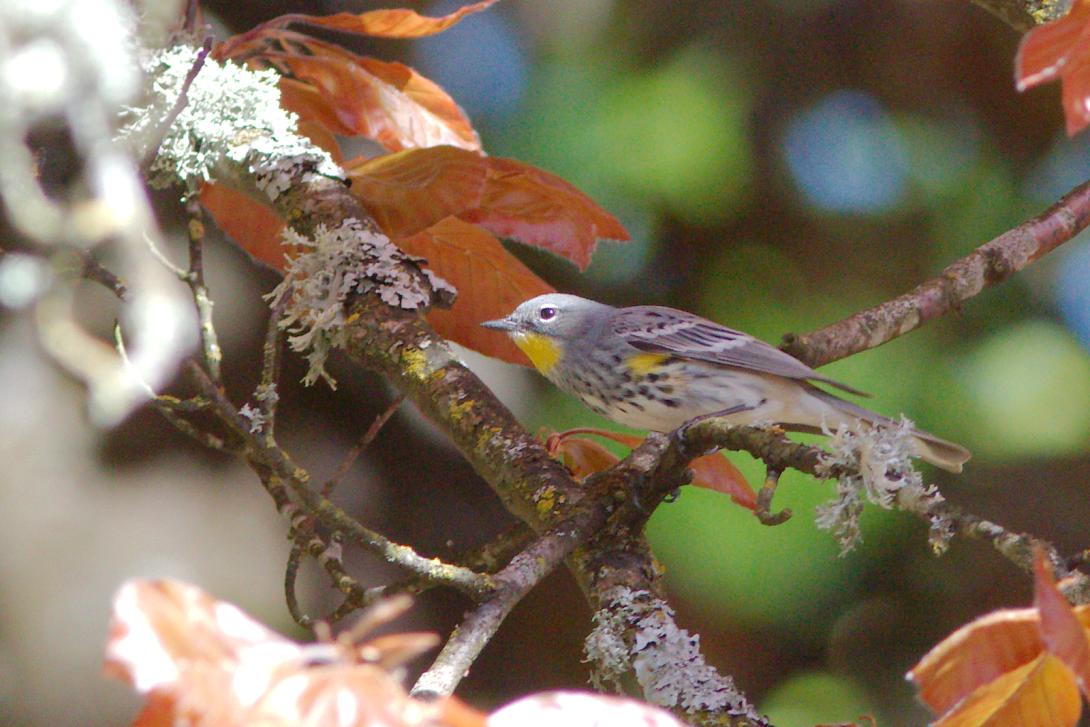
Taken by Steve Bennett at Milwaukie, Oregon on
.
Yellow-rumped Warbler (Audubon's)